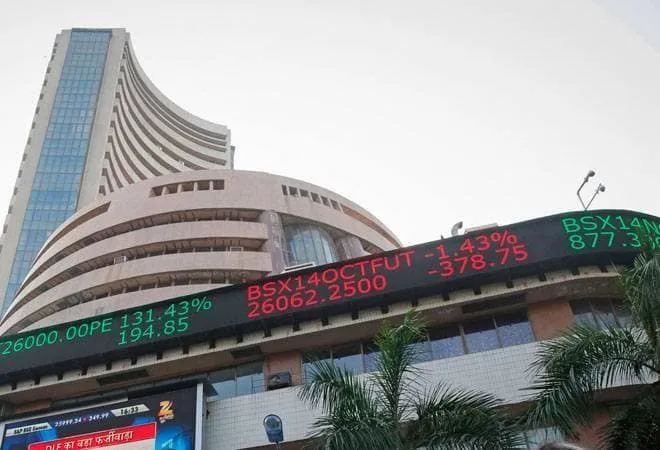
Indian equity benchmarks opened lower on Monday as geopolitical tensions and rising crude oil prices weighed on investor sentiment. The BSE Sensex started the session at 77,130.73 and was trading 224 points, or 0.29 percent, lower at 77,040.47 by 9:25 a.m. The Nifty 50 opened at 24,117.55 and declined 111 points, or 0.46 percent, to 24,064.80 in early trade. Despite the broad weakness, HDFC Bank stood out with gains of more than 2 percent, providing limited support to the indices.
Global Cues and Oil Price Pressure
The cautious start reflected renewed escalation in tensions involving Iran, which pushed crude oil prices above 90 dollars a barrel. Higher energy costs raise concerns for India, a major oil importer, as sustained increases can pressure inflation and corporate margins. Global markets showed a risk-off tone, with Asian equities also under pressure. Investors additionally monitored elevated bond yields and comments pointing to possible shifts in United States interest-rate expectations.
Domestic factors added to the mix. Market participants prepared for potential volatility linked to an MSCI index reshuffle and the ongoing adjustment to India’s closing-auction mechanism. These elements combined to create a hesitant opening after the previous session’s modest gains.
HDFC Bank Leads Early Gainers
HDFC Bank emerged as the strongest performer among Sensex stocks, rising around 2.4 percent in early trade. The rally followed the bank’s announcement that Managing Director and Chief Executive Officer Sashidhar Jagdishan would not seek reappointment when his current term ends in late October. The board indicated it would accelerate the process of selecting and appointing a successor.
Some market observers viewed the clarity on succession as constructive. It removed uncertainty around a possible short or restricted extension and opened the path for new leadership to shape the bank’s narrative. As one of the heaviest-weighted stocks in the benchmarks, the gain in HDFC Bank helped cushion the overall decline even as selling pressure remained widespread.
ICICI Bank posted a modest rise, while Eternal also advanced more than 1 percent. A handful of other names, including select energy and auto stocks, traded higher in patches. However, these advances were insufficient to offset broader losses.
Sectoral Weakness Dominates
Selling was broad-based across most sectors. Information technology and metal stocks led the declines. Infosys ranked among the sharpest Sensex losers, falling nearly 2 percent. Tata Steel and NTPC also dropped around 2 percent each. The Nifty Metal index recorded one of the steepest sectoral falls, while the Nifty IT index declined more than 1 percent.
Other major sectoral indices, including FMCG, pharma and PSU banks, traded lower. Mid-cap and small-cap indices also opened in the red, indicating that the weakness extended beyond large-cap heavyweights. Market breadth favoured declines, with more stocks falling than advancing in early trade. The India VIX, a measure of expected volatility, moved higher, reflecting increased caution among participants.
Context of Recent Market Moves
The opening came after a week in which the benchmarks had struggled to hold gains and had recorded weekly declines. Foreign institutional investors had turned net sellers in recent sessions, adding to domestic caution. Domestic institutional buying provided some counterbalance, yet overall sentiment remained sensitive to global developments.
Crude oil’s move above the 90-dollar mark revived concerns about input costs for industries and the broader inflation outlook. At the same time, the focus on leadership transition at HDFC Bank illustrated how stock-specific news can still drive sharp moves even on days dominated by macroeconomic and geopolitical headlines.
What Investors Are Watching
In the near term, market direction is likely to hinge on several factors. Movements in crude oil prices will remain closely tracked given their implications for the trade balance, inflation and corporate profitability. Any further developments on the geopolitical front could influence global risk appetite and capital flows into emerging markets such as India.
On the domestic side, progress on the HDFC Bank succession process and commentary from the incoming leadership will be monitored for clues about strategy and capital allocation. Broader banking sector performance, interest-rate expectations and institutional flows will also shape daily trading patterns. Technical levels around the 24,000 mark on the Nifty and the 77,000 zone on the Sensex are being watched for signs of support or further weakness.
Broader Implications for the Market
The early session underscored the sensitivity of Indian equities to external shocks, particularly energy prices and global monetary policy signals. While selective stocks such as HDFC Bank can defy the trend on company-specific news, the overall tone remains cautious when multiple headwinds align. Investors appear to be balancing the relative resilience of domestic demand against the risks posed by higher oil costs and uncertain global conditions.
For long-term participants, periods of volatility often create opportunities to reassess portfolio positioning. Stocks with strong balance sheets, clear succession or strategic clarity, and exposure to domestic growth themes may continue to attract interest even on weak market days. Conversely, sectors more sensitive to commodity prices or global technology spending could face continued pressure until clarity improves.
Outlook for the Session Ahead
As trading progressed beyond the opening hour, the benchmarks remained under pressure, with the Sensex and Nifty holding lower levels. The combination of elevated crude prices, geopolitical uncertainty and selective stock moves set the tone for a careful session. Whether the early support from banking heavyweights can broaden, or whether selling in IT, metals and other sectors intensifies, will determine the closing direction.
In summary, the market opened lower with the Sensex down more than 200 points and the Nifty trading near the 24,000 zone. HDFC Bank’s gain of over 2 percent stood out against a backdrop of broad-based declines driven by rising oil prices and global caution. The session highlighted both the influence of external factors on Indian equities and the ability of stock-specific developments to generate divergent moves within the benchmarks.
Read more – Instantdua.com