US President Donald Trump’s recent announcement of an agreement with Russian President Vladimir Putin to supply large volumes of diesel fuel to American and global markets has drawn sharp attention to inconsistencies in Washington’s approach to Russian energy trade. The move, which includes a temporary suspension of certain US sanctions on Russian diesel exports, comes only weeks after the signing of legislation empowering the president to impose tariffs of up to 100 percent on major buyers of Russian oil and gas. India, long criticised by the United States for its substantial purchases of Russian crude, finds itself at the centre of this apparent policy divergence.
The decision marks a significant shift from the restrictive stance the United States has maintained since 2022. For years, Washington has argued that purchases of Russian energy effectively provide revenue that supports Moscow’s military actions. That argument underpinned earlier tariff measures against India and formed the rationale for the new legislative authority. The sudden facilitation of Russian diesel flows raises questions about whether the same standard applies when domestic US fuel prices become a political priority.
The Diesel Supply Arrangement
On 9 October 2026, Trump stated that Russia had agreed to release more than 300,000 metric tons of diesel immediately for the US and global markets. Further shipments of 500,000 tons in November and one million tons thereafter were also announced, with the possibility of an additional three million tons depending on the condition of Russian refineries. The US Treasury Department followed with a temporary general licence permitting the sale, delivery and importation of Russian-origin diesel until early April 2027.
The announcement was framed as a response to elevated diesel prices in the United States, which had reached levels near record highs in the weeks preceding the midterm elections. Average retail diesel prices hovered above six dollars per gallon, creating pressure on farmers, truckers and consumers. Trump presented the arrangement as a practical step to increase supply and bring prices down rapidly.
Russian officials confirmed readiness to supply oil and petroleum products to the US and world markets. The volumes involved, while substantial in absolute terms, represent a modest share of overall global diesel trade and US consumption. Analysts noted that the immediate impact on pump prices might be limited, yet the political signal was unmistakable.
Prior US Pressure on India’s Russian Oil Purchases
India has consistently ranked among the largest importers of Russian crude since 2022. Discounted Russian oil helped Indian refiners manage costs and contributed to domestic fuel price stability in a country that relies on imports for the vast majority of its crude needs. By fiscal year 2026, Russian supplies accounted for roughly 30 percent of India’s total crude imports, with monthly shares at times exceeding half of total purchases.
Washington repeatedly criticised these imports. In August 2025, the Trump administration imposed an additional 25 percent tariff on Indian goods, explicitly linking the measure to India’s continued purchases of Russian oil. The tariff was later adjusted, but the underlying message remained: major buyers of Russian energy were seen as undermining efforts to constrain Moscow’s revenues.
In September 2026, the US Congress passed and Trump signed the Lindsey O. Graham Sanctioning Russia and Iran Act of 2026. The legislation authorises the president to impose tariffs of up to 100 percent on goods from countries that rank among the largest importers of Russian crude oil or natural gas and that continue new purchases after the law’s enactment. India and China, as the two biggest buyers, were widely identified as the primary countries potentially exposed to such measures. The law also contains provisions targeting facilitators of sanctions evasion and raises duties on Russian-origin goods themselves.
Indian officials responded by emphasising the country’s energy security needs and the potential damage that secondary tariffs could inflict on bilateral trade relations. India has maintained that its purchases are commercial decisions driven by market availability and price, and that it continues to diversify sources while remaining open to dialogue with the United States.
The Appearance of Divergent Standards
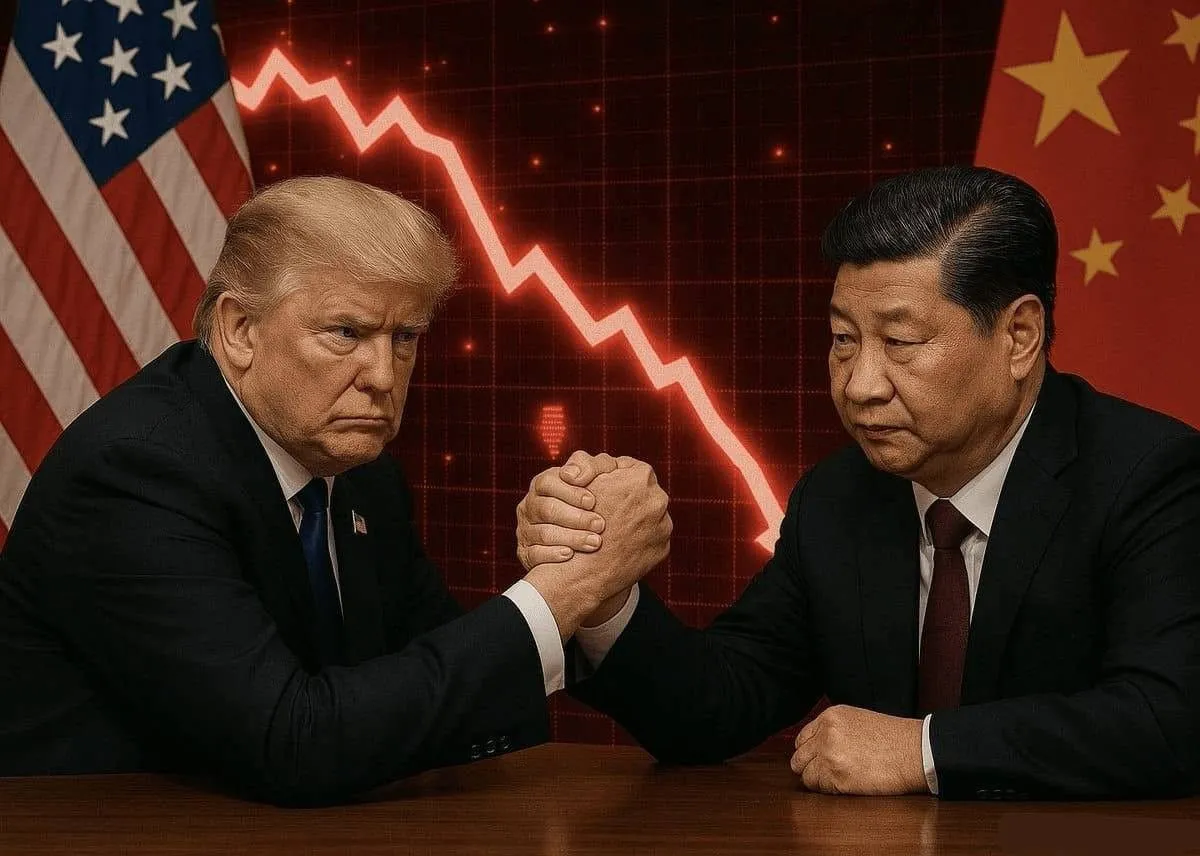
The contrast between the two sets of actions is striking. On one hand, the United States has constructed legal and tariff tools designed to penalise third countries for buying Russian energy. On the other, it has now created a temporary pathway for Russian diesel to enter US and global markets under official licence. The rationale offered for the diesel arrangement centres on domestic price relief and electoral considerations. The rationale previously applied to India centred on the principle that Russian energy revenues sustain military operations.
This difference in treatment has prompted observers to question the consistency of the underlying policy. If the objective is to reduce Moscow’s energy income, facilitating Russian diesel exports appears to undercut that goal. If the objective is flexible enough to accommodate US domestic needs, then the earlier criticism of India’s commercial purchases loses much of its force.
European allies and Ukrainian officials expressed concern that the arrangement could be interpreted as a softening of pressure on Russia. Some US lawmakers from both parties also voiced reservations, arguing that the temporary licence conflicted with the spirit of recently enacted sanctions legislation.
Broader Implications for Energy Diplomacy
The episode illustrates the tension between geopolitical objectives and domestic economic pressures. High fuel prices have political consequences, particularly in election seasons. Governments of all persuasions have historically adjusted energy policies when faced with sharp cost increases for their own citizens. The current US decision fits that pattern, even as it collides with the messaging directed at partner nations.
For India, the development reinforces long-standing arguments about the need for energy realism. New Delhi has repeatedly stated that its foreign policy prioritises the welfare of its population and the stability of its energy supplies. The sudden US willingness to engage Russian diesel suppliers provides additional context for those assertions.
Looking ahead, the temporary nature of the sanctions waiver leaves room for further adjustments. Whether the arrangement remains limited or expands will depend on market conditions, political calculations and the trajectory of broader diplomatic efforts. What is already clear is that the principle of isolating Russian energy revenues is being applied selectively. When the buyer is a third country, penalties are contemplated. When the buyer is the United States itself, a pathway is opened.
This selective application risks weakening the credibility of future sanctions campaigns and complicating coordination with partners who have been asked to bear economic costs in the name of collective pressure. Energy markets remain interconnected. Decisions taken in Washington reverberate in New Delhi, Beijing and beyond. Consistency in the rules applied to all participants will remain essential if those rules are to retain legitimacy over time.
Read more – brandownerdetail.com