India’s economic resilience has once again drawn international attention. In its latest World Economic Outlook, the International Monetary Fund raised India’s growth forecast for the financial year 2026-27 to 7 percent, up from the 6.4 percent projected in July. The fund also lifted the outlook for 2027-28 to 7 percent from the earlier 6.7 percent. These upgrades position India among the fastest-growing major economies even as global conditions grow more challenging.
The revision reflects stronger-than-expected momentum driven by resilient domestic demand and robust activity in the services sector. India’s economy expanded by 7.8 percent in the previous financial year and maintained the same pace in the April-June quarter of the current year. On a calendar-year basis, the IMF projects growth of 7.4 percent in 2026 and 7 percent in 2027. This performance stands out against a backdrop of uneven global recovery and rising external pressures.
Drivers Behind the Upgraded Outlook
Several structural factors underpin the improved forecast. Favourable demographic trends continue to expand the working-age population and support consumption. A large and growing domestic market provides a buffer against external shocks, while ongoing structural reforms have strengthened the economy’s underlying potential. Services have remained a key engine of growth, helping offset pressures from higher energy costs.
The IMF noted that growth stayed robust despite elevated oil prices. Domestic demand has proved particularly resilient, allowing the economy to absorb some of the impact from global energy market volatility. This combination of internal strength and policy continuity has led the fund to highlight India’s relative outperformance compared with many other emerging markets and developing economies, where forecasts have faced downward pressure.
Other major institutions have also revised their projections upward in recent weeks. The World Bank and the Reserve Bank of India both lifted their FY27 growth estimates to 7.1 percent, citing similar themes of strong domestic activity, industrial performance, and export resilience. These converging assessments reinforce the view that India’s near-term trajectory remains solid.
Global Context and Persistent Risks
The upgrade for India occurs amid a more fragile international environment. The IMF projects global growth at 3.1 percent in 2026, a modest improvement from its July estimate of 3 percent but still lower than the 3.5 percent recorded in 2025. Growth is expected to recover only modestly to 3.4 percent in 2027. The outlook is described as uneven, with the economic impact of conflict in the Middle East and higher energy prices varying widely across countries.
For energy-importing economies, sustained high oil prices pose a clear challenge. India imports the bulk of its crude requirements, so prolonged elevation in global oil markets can raise transportation and manufacturing costs, pressure the currency, and complicate inflation management. The IMF’s baseline assumes a gradual return toward pre-conflict conditions over time, yet the duration and intensity of the oil shock remain uncertain. Any extended disruption could feed into higher domestic inflation and widen the current account deficit.
Inflation is projected to remain a point of vigilance. Consumer price pressures are expected to hover near 5 percent in the current financial year before moderating in the following year. While domestic demand strength supports growth, it can also amplify the pass-through of imported energy costs if oil prices stay elevated for longer than anticipated. Policymakers will need to balance support for activity with measures to contain price pressures.
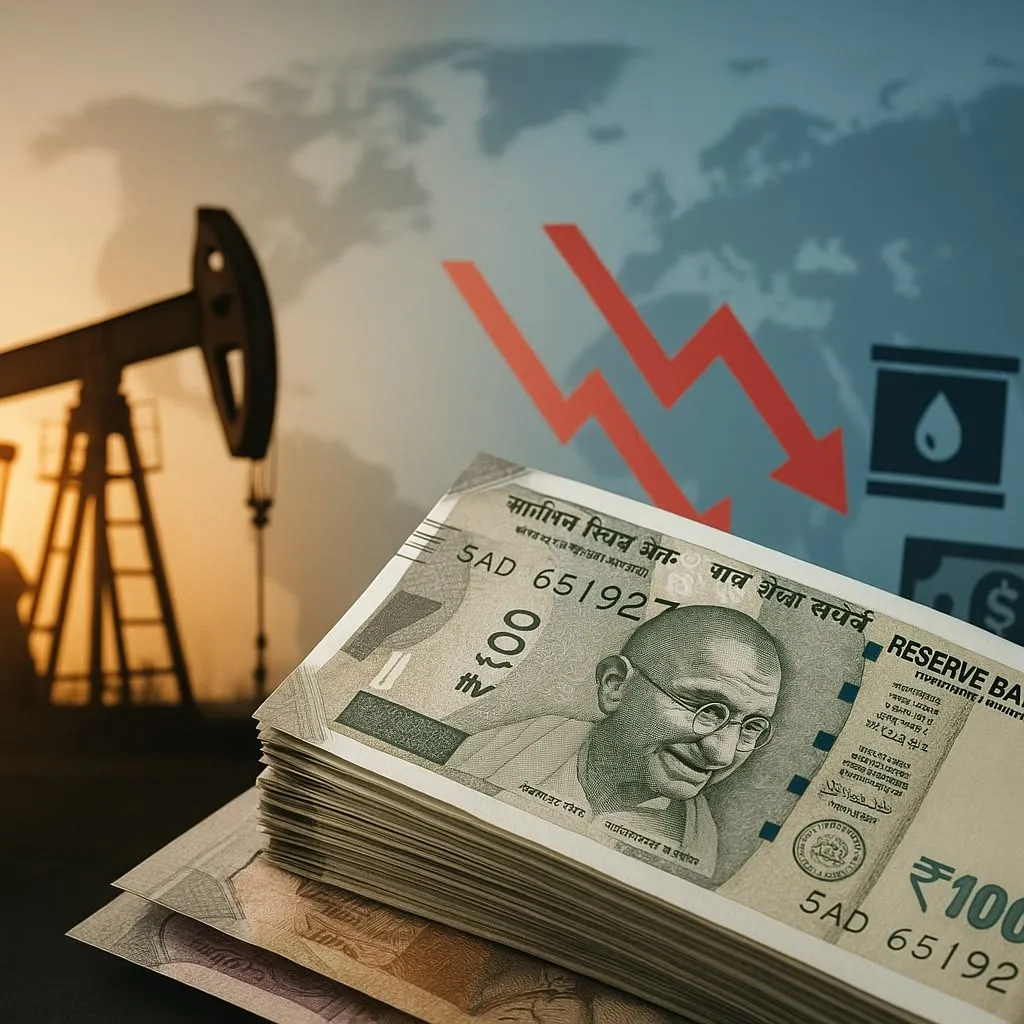
Geopolitical tensions extend beyond energy markets. Trade disruptions, volatile capital flows, and the broader effects of conflict in West Asia contribute to an environment of heightened uncertainty. India’s relatively strong buffers and proactive policy responses have so far limited the damage, yet the economy is not fully insulated. The path of global energy prices and the resolution timeline of regional conflicts will remain critical variables for the remainder of the fiscal year and beyond.
Implications for Policy and the Path Ahead
The upgraded forecasts provide breathing room but do not eliminate the need for careful navigation. Sustained growth near 7 percent would reinforce India’s position as a key contributor to global expansion and support continued progress on employment, investment, and fiscal consolidation. Maintaining the momentum, however, will require ongoing attention to structural reforms, infrastructure development, and measures that enhance productivity across both manufacturing and services.
Energy security and diversification efforts take on added importance in the current environment. Reducing vulnerability to oil price spikes through efficiency gains, alternative energy sources, and strategic reserves can help protect the growth outlook. At the same time, supporting domestic demand through targeted policies while keeping inflation expectations anchored will be essential.
The IMF’s assessment underscores a broader point: India’s growth story is increasingly driven by internal dynamics rather than solely by global tailwinds. Demographic advantages, market size, and reform momentum have created a foundation that has so far proved durable. Yet the fund’s simultaneous warning about global risks serves as a reminder that external shocks can still test this resilience.
Whether the economy fully clears the higher growth bar will depend in large part on how long elevated oil prices persist and the extent of any secondary effects on inflation, the external balance, and private sector confidence. Early indicators of strong domestic activity offer encouragement. Continued policy prudence and structural progress will determine how effectively India converts the upgraded forecast into sustained outperformance over the coming years.
In summary, the IMF’s revision to 7 percent for both FY27 and FY28 reflects confidence in India’s domestic strengths at a time when many other economies face greater headwinds. The outlook remains favourable, but it is tempered by clear external risks centred on energy markets and geopolitical tensions. Navigating those risks successfully will shape the actual growth outcome in the period ahead.
Read more – brandownerdetail.com