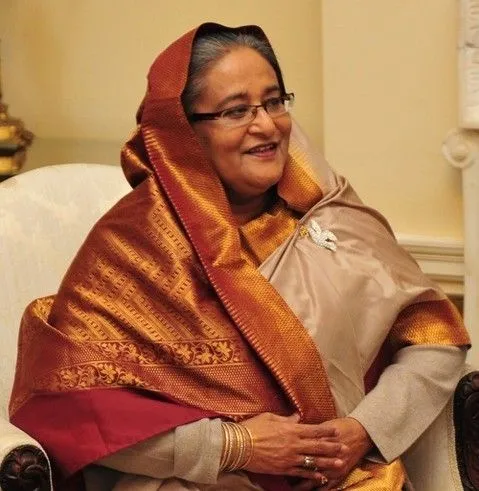
Former Bangladesh Prime Minister Sheikh Hasina has stated that her planned return to the country forms a central part of the broader struggle to restore democracy, the rule of law and the voting rights of the people. In an interview with a news agency, she described the current political situation under the government led by Prime Minister Tarique Rahman as a grave national crisis in which democratic space has been significantly narrowed.
Hasina’s Position on Her Return
Hasina, who has been living in India since August 2024 following her departure from Dhaka, emphasised that her intention to return is not driven by a desire for personal power. Instead, she framed it as a commitment to stand with the people of Bangladesh and to help revive democratic institutions, security and development. She indicated that the specific date, time and route of her return would be announced at an appropriate moment, while reiterating earlier indications of a possible return around December.
She acknowledged the personal risks involved, including the death sentence handed down in absentia by Bangladesh’s International Crimes Tribunal and the possibility of arrest or imprisonment. Drawing on her long political history, Hasina recalled surviving the assassination of most of her family in 1975, repeated attempts on her own life, including the 2004 grenade attack, and periods of imprisonment and exile. She stated that she is not deterred by these threats and remains prepared to face legal consequences if necessary.
Criticism of the Current Government
Hasina launched a strong critique of the Tarique Rahman-led administration. She alleged that democratic space has been closed, the judiciary is being used for political revenge, media freedom has been restricted, and law and order have deteriorated. She further claimed that minorities feel unsafe and that thousands of people associated with her party, the Awami League, have faced imprisonment, forced displacement or loss of livelihoods solely because of their political identity.
According to her assessment, the country is being pulled away from the path of development, democracy and stability that she associates with earlier periods of governance. She rejected the legitimacy of the February election that brought the current government to power, arguing that a vote held after the banning of one of the country’s largest political parties cannot genuinely reflect the will of the people.
Call for Inclusive Elections and Party Ban Lift
A recurring theme in Hasina’s remarks has been the demand for the lifting of the ban on the Awami League. She challenged the government to withdraw what she described as false cases, release political prisoners and create conditions for a free, fair and inclusive election. Only such a process, she argued, would carry democratic legitimacy and allow the people of Bangladesh to decide their own future.
She maintained that the Awami League remains rooted in the history and identity of the Bengali nation and that public support for democratic restoration continues despite the restrictions placed on the party. Hasina expressed confidence that the people would ultimately restore democratic norms.
Context of Exile and Political Trajectory
Hasina’s departure from Bangladesh occurred amid widespread protests in 2024 that led to the fall of her government. She has described her decision to leave as motivated by a desire to prevent greater bloodshed in a rapidly deteriorating situation. Since then, she has remained politically engaged from India, using interviews and public statements to highlight what she sees as the erosion of democratic institutions and the rise of insecurity.
The Awami League, which she led for many years and under which she served multiple terms as prime minister, currently faces a nationwide ban on political activities. Many of its leaders and workers have been subject to legal proceedings and restrictions. Hasina has consistently characterised these measures as politically motivated rather than grounded in genuine accountability.
Broader Implications for Bangladesh’s Politics
Hasina’s insistence on returning underscores the deep polarisation that continues to shape Bangladesh’s political landscape. On one side stands the current government, which came to power after an interim period and subsequent elections, presenting itself as having moved the country beyond the previous era. On the other side, Hasina and her supporters argue that genuine democracy cannot be restored without the full participation of all major political forces, including the Awami League.
Her statements also touch on issues of minority security, freedom of expression and the independence of state institutions. She has linked the current climate of restricted political activity and reported insecurity to longer-term risks for the country’s secular character and regional stability.
Looking Ahead
Hasina’s declaration that her return is inseparable from the restoration of democracy places the focus firmly on the conditions under which political competition can resume in Bangladesh. Whether and how she returns, the response of the authorities, and the possibility of any future inclusive electoral process will remain central questions in the months ahead.
For now, her message is clear: she views her physical return to Bangladesh as more than a personal decision. She presents it as a necessary step in a larger effort to reopen democratic space, reaffirm the rule of law and restore the right of citizens to determine their government through free and credible elections. The coming period will test whether such a restoration becomes possible and what role her presence on Bangladeshi soil will play in that process.
Read more – Peopleinfoz.com