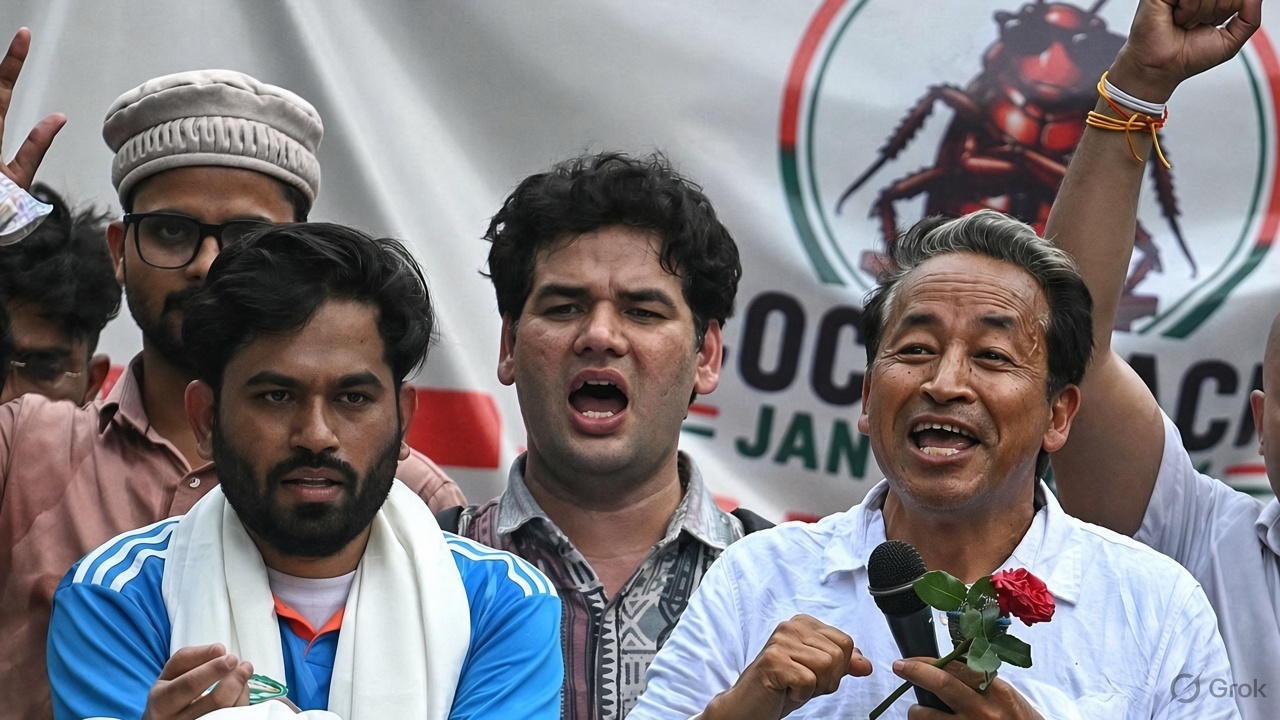
The Supreme Court on Friday declined to issue immediate directions regarding the planned ‘Lehra do Tiranga’ march by the Cockroach Janta Party in Delhi. A bench comprising Chief Justice of India Surya Kant and Justice Joymalya Bagchi refused an urgent hearing on a plea challenging the closure of Central Park in Connaught Place, while expressing hope that “better sense will prevail” among all concerned. The court specifically flagged the potential impact of the demonstration and related restrictions on the livelihoods of small shopkeepers and traders in the area.
Context of the March and the Closure
The Cockroach Janta Party, founded by Abhijeet Dipke, had called on supporters to gather at Central Park in Connaught Place at 5 pm, carrying the national flag. The march was announced after two CJP leaders, Saurav Das and Ashutosh Ranka, were arrested and sent to judicial custody following an incident at Jantar Mantar. The party described the action as punishment for unfurling the Tricolour and asserted that waving the national flag is not a crime.
In the run-up to the event, the New Delhi Municipal Council announced that Central Park would remain closed to the general public on 16 and 17 October for administrative reasons. The closure notice was issued late on Thursday, effectively limiting access to the venue at the heart of the proposed gathering. Delhi Police, meanwhile, pointed to prohibitory orders in force in Connaught Place and adjoining areas and stated that the location is not a designated site for protests.
Supreme Court’s Observations
During the hearing, the bench took note of submissions that the late-night closure order would disrupt business activities in one of Delhi’s busiest commercial zones. The court observed that small shopkeepers earn their livelihood during these days and that entire families could face hardship. Justice Bagchi remarked that the issues surrounding the protest— the right to demonstrate, the concerns of those earning a living by selling goods in the area, and the maintenance of law and order— were interconnected.
The bench indicated that it retained the jurisdiction to intervene if any action was later found to be disproportionate, including through principles of public and compensation law. However, it declined to pass immediate orders and indicated that the matter could be listed for hearing around 26 or 27 October.
Balancing Rights and Practical Realities
The court’s approach reflects a careful weighing of competing interests. The right to peaceful protest is a recognised facet of democratic expression. At the same time, authorities have a duty to regulate public spaces, maintain order and protect the economic activity of those who depend on commercial areas such as Connaught Place. The festive season adds another layer of sensitivity, as traders rely heavily on footfall during this period.
By declining urgent intervention while acknowledging the livelihood concerns, the Supreme Court left room for all parties— organisers, civic authorities and the police— to exercise restraint and good judgment. The remark that “better sense will prevail” underscored an expectation that the situation would be managed without unnecessary escalation or prolonged disruption.
Security Arrangements and Administrative Steps
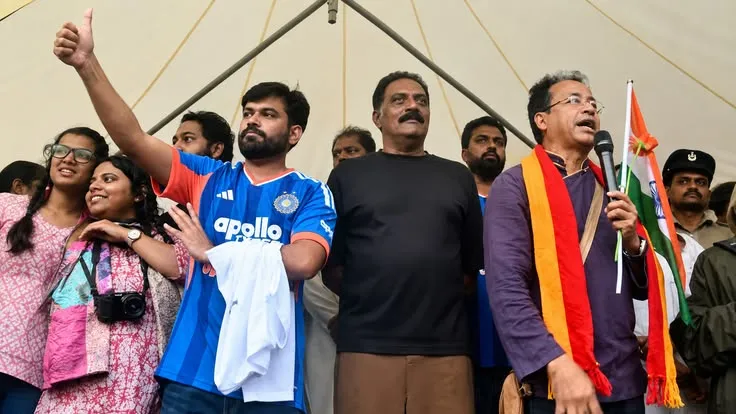
Authorities had already stepped up security in and around Connaught Place, Central Park, Jantar Mantar and nearby locations. Large deployments of Delhi Police personnel and central armed forces, along with expanded surveillance, were put in place. Police also indicated a willingness to facilitate a limited, regulated activity involving the national flag and anthem at a suitable location, while urging the public to avoid unauthorised assemblies.
These measures illustrate the practical challenges of managing protests in a dense, high-traffic commercial and tourist hub. Connaught Place serves both as a symbolic public space and as a vital economic centre. Any large gathering or prolonged closure carries consequences that extend beyond the immediate participants.
Broader Implications
The episode forms part of a wider pattern of contention over protest venues in the national capital. The recent denotification of Jantar Mantar as a designated protest site has itself been the subject of legal challenge. The shift of demonstrative activity toward other locations, including commercial areas, inevitably brings questions of balancing free expression with public order and economic continuity into sharper focus.
Courts have repeatedly affirmed that the right to protest is not absolute and must be exercised in a manner consistent with the rights of others and the requirements of public order. At the same time, administrative actions that restrict access to public spaces are expected to be proportionate, reasoned and open to scrutiny. The Supreme Court’s refusal to grant immediate relief, coupled with its explicit recognition of livelihood concerns, leaves these principles intact while deferring detailed examination to a later date.
Looking Ahead
The matter remains pending. The listing of the plea for a subsequent date will allow a fuller consideration of the issues if the parties pursue it. In the immediate term, the outcome of the planned gathering, the effectiveness of the security arrangements and the actual impact on local businesses will shape the practical reality on the ground.
For organisers, the court’s message is an invitation to calibrate their actions with an awareness of wider consequences. For authorities, it is a reminder that restrictions must remain proportionate. For traders and residents, it is an acknowledgment that their economic interests form a legitimate part of the public interest calculus.
In declining an urgent order while highlighting the human cost of disruption, the Supreme Court has signalled that the competing claims of protest, commerce and order are best resolved through measured judgment rather than precipitate judicial intervention. Whether that judgment prevails on all sides will determine how the events of the day unfold.
Read more – insurancesach.com