Tim Cook is no longer the chief executive officer of Apple. After 15 years leading the company, Cook formally stepped down from the role, with John Ternus assuming the position effective September 1. The transition, announced months earlier, marks the end of one of the most successful periods in Apple’s history and the beginning of a new chapter under a long-time hardware executive.
A Planned and Orderly Handover
Apple first disclosed the succession plan in April. The board of directors unanimously approved the change following an extended period of internal planning. Cook remained in the CEO role through the summer to ensure a smooth handover, working closely with Ternus during the transition period. On September 1, the change became official. Cook moved into the position of executive chairman of the board, while Ternus joined the board as chief executive.
Cook, who joined Apple in 1998 and succeeded Steve Jobs in 2011, leaves the day-to-day leadership role after overseeing extraordinary growth. Under his tenure, Apple’s market value expanded dramatically, annual revenue multiplied, and the company broadened its product range and services business. He is widely credited with strengthening the supply chain, expanding into new categories such as the Apple Watch and AirPods, and building a large and profitable services division.
In public remarks around the transition, Cook expressed deep personal attachment to the company and confidence in his successor. He described Ternus as a leader with engineering insight, innovative thinking and the integrity required for the role.
Who Is John Ternus?
John Ternus is a 25-year Apple veteran. He joined the company’s product design team in 2001 and steadily rose through the hardware ranks. He became vice president of hardware engineering in 2013 and was elevated to senior vice president in 2021, overseeing the engineering of Apple’s major product lines including the iPhone, iPad, Mac, Apple Watch and AirPods.
Ternus is regarded as a detail-oriented engineer with deep knowledge of Apple’s product development process and supply relationships. His background is firmly rooted in hardware rather than the operational, financial or public-policy domains that formed a large part of Cook’s later years as CEO. At the time of the transition he was approximately the same age Cook had been when he took over from Jobs.
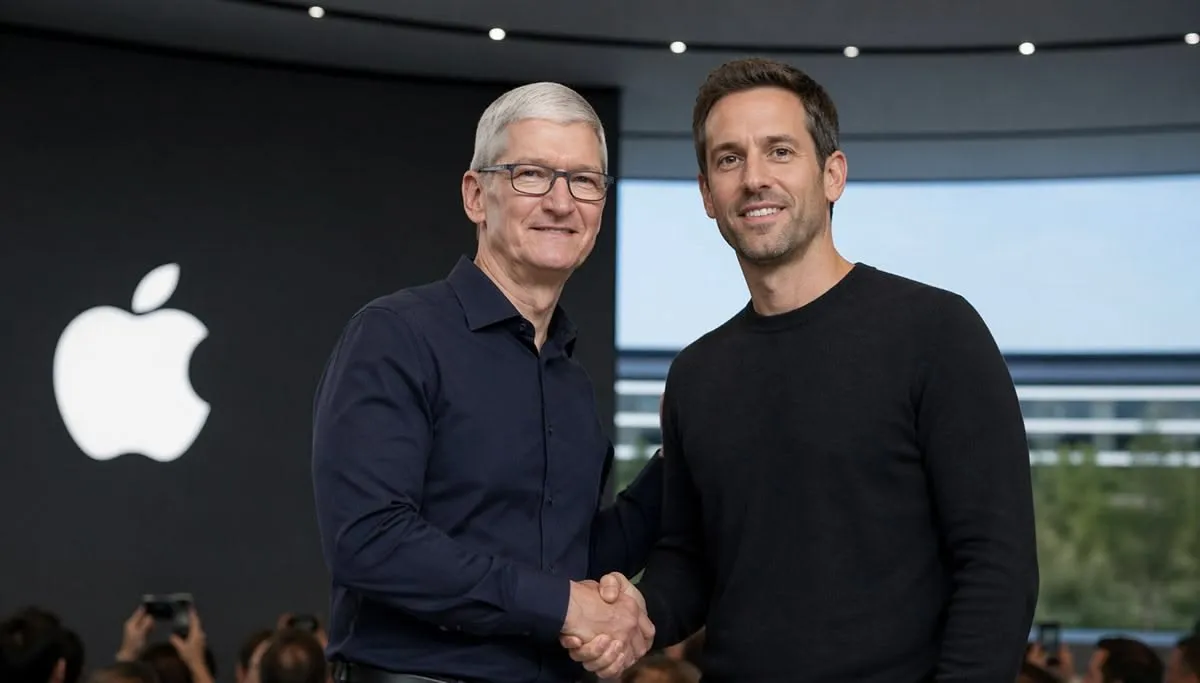
As Ternus assumes the top job, he inherits an organization that remains highly profitable and culturally distinctive, yet faces clear strategic questions. Artificial intelligence has become a central competitive arena across the technology industry, and Apple has been working to integrate more advanced AI capabilities into its devices and software. New product categories, including foldable devices and further developments in spatial computing and wearables, are also expected to feature in the company’s near-term roadmap.
Immediate Priorities and Challenges
Ternus takes charge just days before Apple’s traditional September product event, where new iPhones and other devices are typically unveiled. The timing places immediate public and market attention on the new leadership. Beyond the product cycle, he will need to navigate complex global supply relationships, regulatory scrutiny in multiple markets, and the ongoing effort to balance hardware excellence with software and services innovation.
Cook’s new role as executive chairman is expected to provide continuity, particularly in areas such as engagement with policymakers. This arrangement allows Ternus to focus more directly on product strategy, engineering priorities and internal leadership while still drawing on Cook’s experience and external relationships.
Continuity and Change
Apple has long emphasized internal succession and cultural continuity. Both Cook and Ternus are company veterans who spent decades inside the organization before reaching the highest levels. The transition therefore represents an evolution rather than a sharp break. At the same time, the shift from an operations-focused leader to a hardware engineering leader signals a potential recalibration of emphasis at a moment when product innovation and technological differentiation remain critical.
Observers note that the challenges facing Apple in the mid-2020s differ from those of a decade earlier. Competition in smartphones remains intense, regulatory pressures have increased, and the race to define useful and private AI experiences on personal devices is accelerating. Ternus’s deep product background positions him to influence those areas directly, yet the broader responsibilities of the CEO role—financial stewardship, talent management, geopolitical navigation and public representation—will require rapid adaptation.
Looking Forward
The formal change of leadership closes a defining era for Apple. Tim Cook guided the company from the immediate post-Jobs period into a phase of unprecedented scale and diversification. John Ternus now inherits that platform with a mandate to sustain innovation and growth in a more complex technological and competitive environment.
For employees, customers and investors, the transition has been carefully telegraphed and prepared. The coming product launches and strategic decisions under Ternus will offer the first clear indications of how Apple intends to evolve in the years ahead. While Cook remains involved as executive chairman, day-to-day authority and public leadership of the company have passed to a new chief executive whose career has been built around the design and engineering of the products that define Apple.
Read more – therecipetaste.com , uuploadarticle.com