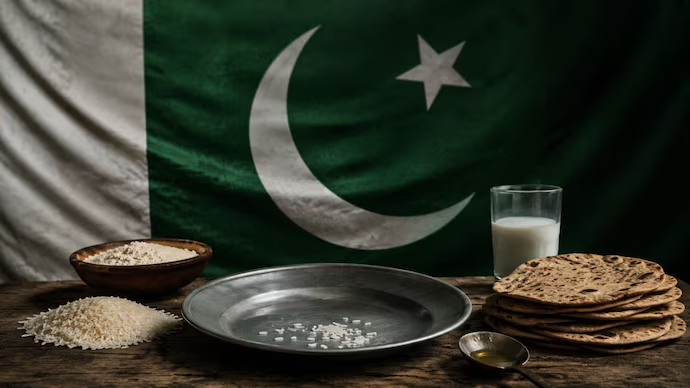
Pakistan’s food crisis is no longer visible only in economic reports or market prices. It is increasingly showing up in household kitchens, where families are reducing portions, buying less milk and meat, and changing the foods they depend on to manage tighter budgets. Recent household consumption data points to a worrying shift in eating habits across both rural and urban Pakistan.
The latest figures show that the Pakistan food crisis is closely linked with affordability. Households may still find food in markets, but many are struggling to purchase the same quantity and variety they consumed several years ago. Wheat, rice, meat, milk and tea have all seen lower household consumption over the six-year period covered by the data.
Food Insecurity Rises Across Pakistan
One of the clearest warning signs is the increase in food insecurity. The proportion of households facing moderate to severe food insecurity rose from 15.92% in 2018-19 to 24.35% in 2024-25. That represents a substantial deterioration in the ability of families to maintain reliable access to sufficient food.
The situation becomes even more concerning when severe food insecurity is considered separately. Its share increased from 2.37% to 5.04% during the same period, meaning the proportion more than doubled over six years.
These figures do not mean every affected household is experiencing starvation or malnutrition. Food insecurity measures whether people have dependable access to enough food, rather than directly measuring nutritional conditions. Still, the direction of the data is difficult to ignore.
For many families, the problem appears to be increasingly about purchasing power. When income does not keep pace with essential expenses, food becomes one of the areas where households start making immediate adjustments.
Why Families Are Eating Less
The changing diet is not limited to one particular food group. Household consumption has declined across several major categories, including wheat, rice, meat, milk and tea. That suggests families are making repeated reductions rather than simply replacing one expensive item with another.
Wheat is especially important because it forms the foundation of many everyday meals in Pakistan. Smaller quantities can mean fewer rotis, smaller portions or greater dependence on other inexpensive foods to make meals stretch further.
Rice is also facing a similar shift. For households already operating under financial pressure, even relatively small changes in monthly grocery spending can influence how frequently certain foods appear on the dining table.
Meat is another obvious area where families can reduce spending. Unlike basic grains, meat can be purchased less frequently without completely changing the structure of a household’s meals. As a result, expensive protein sources can become occasional foods instead of regular purchases.
Milk presents a different concern because it is widely used by children and adults and is also part of tea consumption. Reducing milk purchases can therefore affect more than one part of the daily diet.
Meat and Milk Become Harder Choices
The reduction in meat consumption highlights how inflation can quietly change household nutrition. When budgets are limited, families often have to prioritize foods that provide calories at a lower immediate cost.
Meat provides protein and other nutrients, but it can place considerable pressure on a grocery budget. A household that previously cooked meat several times a month may decide to reduce those meals or use smaller quantities.
Milk can face similar pressure. Families may purchase less of it, dilute household consumption across more people, or reduce its use in tea and other preparations.
This does not automatically mean that every family is facing severe nutritional deprivation. However, sustained reductions in foods such as milk and meat can become an important concern if cheaper replacements do not provide comparable nutritional value.
The broader issue is that dietary choices are increasingly being influenced by affordability rather than preference.
Vanaspati Ghee Shows A Sharp Rise
There is one striking exception to the broader decline. Monthly consumption of vanaspati ghee increased by 81%, rising from around 690 grams to 1.25 kilograms.
That increase stands out because most major food categories moved in the opposite direction.
There can be several reasons why a cheaper, calorie-dense cooking fat becomes more important when household budgets are squeezed. It can add energy to meals and may be easier for families to afford than some other food items.
However, the consumption figures alone cannot prove exactly why households increased their use of vanaspati ghee. The trend needs to be considered alongside household income, food prices and changing purchasing patterns.
Still, the contrast is revealing. Families appear to be reducing several foods while increasing their reliance on one relatively inexpensive source of calories.
Rural And Urban Families Feel Pressure
Food insecurity remains more pronounced in rural areas, but the problem is not restricted to villages. Urban households are also showing lower consumption across several food categories.
That matters because urban families are often assumed to have better access to markets and employment opportunities. But access to shops does not necessarily mean access to affordable food.
Rent, electricity, transport, education and other household expenses compete for the same income. When these costs rise, families may have less money available for groceries even when food remains available in local markets.
In rural communities, households can face additional pressures connected with agricultural income, weather conditions and market prices. The result can be different from one region to another, but the basic problem remains similar: families have to stretch limited resources further.
Pakistan’s Food Problem Is Also Economic
Pakistan has long been associated with agriculture and food production, but producing food is only one part of food security. A household must also have enough purchasing power to obtain it.
The country has been a net food importer since at least 2021, according to reporting based on the latest consumption data. That adds another layer to the food affordability challenge because imports can expose consumers and markets to international prices, currency movements and supply disruptions.
The economic pressure becomes particularly visible when families start changing their normal eating habits. Instead of simply paying higher prices, they may buy fewer items, reduce quantities or select cheaper substitutes.
This is why food inflation in Pakistan cannot be viewed only through the monthly price of individual products. The more important question is how those prices influence what households actually eat.
Smaller Meals Could Become Normal
The most worrying part of the current trend is that temporary adjustments can become long-term habits.
A family may initially reduce meat because prices are high. Later, milk purchases may also be reduced. Portions can become smaller, and cheaper cooking ingredients can become more common. If incomes remain under pressure, these changes may continue for years.
Children can be particularly affected when households have to reduce the variety of foods available at home. Milk, meat and other nutrient-rich foods can become less frequent, while inexpensive calorie sources take up a larger share of meals.
At the same time, it is important not to assume that every change in consumption automatically represents malnutrition. Household food choices can be influenced by many factors, including prices, availability, preferences and seasonal patterns.
What the figures clearly demonstrate, however, is that affordability is playing a much larger role in household food decisions.
What The Data Means Ahead
The latest numbers create a difficult challenge for Pakistan. The issue is not simply increasing food production or ensuring that markets remain supplied. Families also need enough income and purchasing power to buy a balanced diet.
The rise in food insecurity alongside falling consumption of several staple foods creates a particularly important warning signal. If households continue cutting back on wheat, rice, meat, milk and other essentials, the consequences could extend beyond grocery bills.
A prolonged shift toward cheaper, calorie-focused diets can affect household wellbeing, productivity and future economic outcomes. Meanwhile, rising reliance on inexpensive cooking fats shows how families may be adapting to financial pressure rather than choosing foods purely on nutritional or cultural preferences.
Conclusion
Pakistan’s changing food habits reveal how an economic crisis can eventually reach the dinner table. Families are consuming less of several everyday foods, while food insecurity has increased sharply over the past six years. The rise in vanaspati ghee consumption adds another unusual dimension to the story, showing how households may turn toward cheaper sources of calories when budgets become difficult to manage.
The bigger challenge is therefore not only producing enough food. Pakistan must also ensure that ordinary households can afford a varied and nutritious diet. If purchasing power remains under pressure, smaller portions and fewer nutrient-rich foods could become a lasting feature of everyday life.
Read More :- thenumberinfo.com