Fresh cracks have appeared on a recently repaired section of Uttar Pradesh’s Ganga Expressway near Unnao, only days after a major crater formed on another stretch of the same corridor. The repeated damage, occurring within months of the expressway’s inauguration, has raised questions about construction quality and drainage performance under heavy monsoon rain and drawn sharp political criticism.
The Latest Damage Near Unnao
The newest incident was reported around kilometre 421–422 in the Bashiratganj and Sarai Katiyan area of Unnao district. A crack roughly three inches wide and about 25 metres long developed on a portion of the carriageway that had already undergone patch repairs. Concrete on the adjoining slope was also damaged. Local reports indicated that the same stretch had seen multiple instances of sinking or cracking within a short period, with repair teams returning repeatedly.
Heavy rainfall has been identified as the immediate trigger. Water accumulation and soil erosion along the embankment appear to have weakened the surface and sub-structure, allowing cracks to reopen even after earlier interventions. Officials from the Uttar Pradesh Expressways Industrial Development Authority reached the site and began fresh repair work.
Earlier Crater and Pattern of Problems
Earlier in August, a more dramatic failure occurred in the same general vicinity. A crater, described in reports as around 10 metres in depth or extent, opened on the Meerut–Prayagraj carriageway near kilometre 421. Portions of the road and adjoining embankment washed away, and the railing area was affected. UPEIDA teams were deployed for emergency repairs.
This was not an isolated event. In the preceding weeks and months, several other spots along the Unnao stretch and nearby sections reported subsidence, soil erosion, damaged service roads and problems with drainage channels. In one earlier case, a link road connecting the expressway to a toll plaza also suffered collapse after rain. The concentration of incidents within a limited geographical zone has intensified scrutiny of design and construction standards in that segment.
Project Background and Expectations
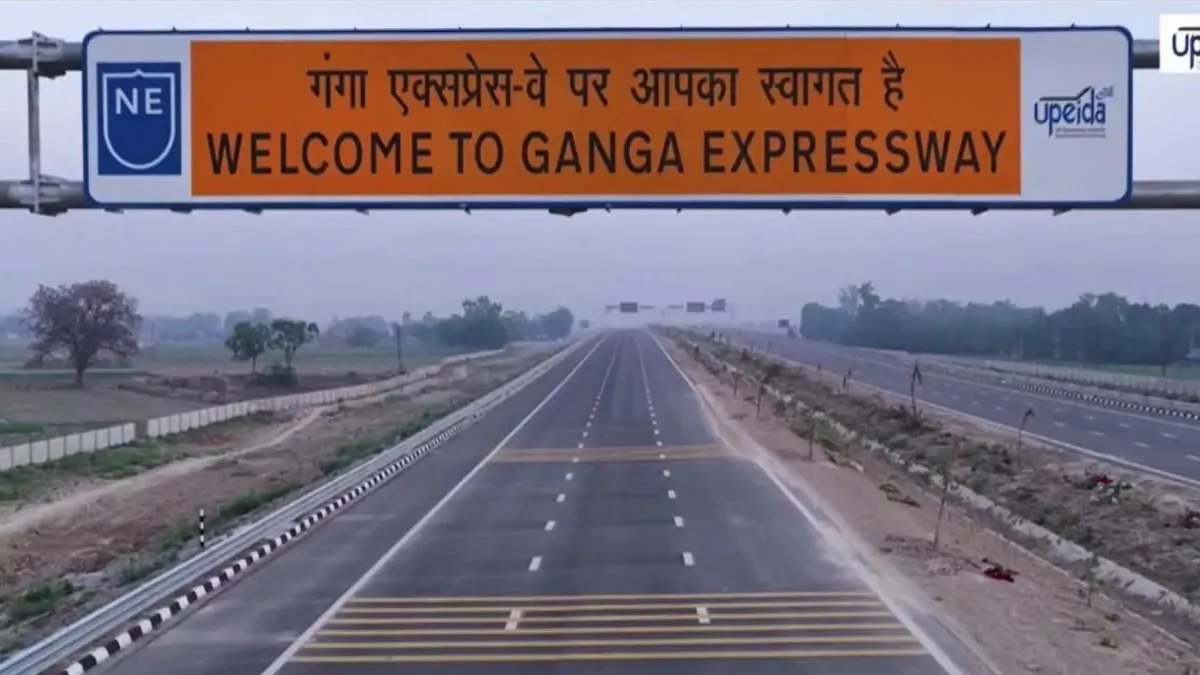
The Ganga Expressway is a major infrastructure project spanning approximately 594 kilometres and built at a cost of around Rs 36,000 crore. Designed to cut travel time between Meerut and Prayagraj significantly, it was inaugurated by the Prime Minister only a few months before the first major rain-related failures. The corridor forms part of Uttar Pradesh’s broader push to expand high-speed road connectivity and support economic activity along its length.
Given the scale of investment and the prestige attached to the project, the early appearance of structural and surface problems has generated public concern. Expressways are expected to withstand seasonal rainfall with robust drainage, proper embankment protection and durable pavement layers. The recurrence of damage on repaired patches has led observers to question whether underlying issues of soil compaction, water drainage or material quality have been fully addressed.
Drainage and Construction Questions
Reports from the affected sites have repeatedly mentioned problems with water management. Concrete slope drains have been found damaged, and in some locations drainage arrangements were described as inadequate or incomplete. When rainwater cannot be channelled away effectively, it saturates the embankment, leading to erosion, settlement and surface cracking. Patch repairs that treat only the visible symptoms without correcting the drainage pathway often prove temporary, as subsequent rains reopen the same weaknesses.
Authorities have stated that repair teams are active and that the damaged sections are being attended to. However, the pattern of repeated interventions at the same kilometre markers suggests that a more comprehensive engineering review may be required, particularly for embankment stability and long-term water management in low-lying or canal-adjacent stretches.
Political Reaction
The sequence of crater formation followed by fresh cracks has provided opposition parties with an opportunity to criticise the state government. Samajwadi Party leader Akhilesh Yadav has used the incidents to highlight what he describes as shortcomings in quality and oversight on high-value infrastructure projects. The visual evidence of damage on a newly opened, multi-thousand-crore expressway has amplified these attacks in the public sphere.
The ruling side has generally pointed to ongoing maintenance and the challenges posed by intense monsoon rainfall. Officials emphasise that repair work is being carried out promptly and that the expressway remains operational on unaffected sections. Nevertheless, the political exchange has kept the focus on accountability and the need for durable construction standards.
Implications for Users and Future Maintenance
For motorists, the immediate impact has been temporary restrictions or cautionary measures on the affected stretches while repairs are completed. Longer-term, repeated closures or speed restrictions reduce the reliability that expressways are meant to provide. Frequent patchwork also raises the eventual maintenance burden and cost.
The incidents underline the importance of rigorous quality control during construction, especially for projects built on varied soil conditions and expected to handle both heavy traffic and seasonal water flows. Independent technical assessments of the problem zones, improved drainage designs and stricter monitoring of repair quality could help prevent further recurrence.
Broader Context of UP’s Expressway Network
Uttar Pradesh has invested heavily in expressways as engines of connectivity and development. The Ganga Expressway was positioned as a flagship addition to this network. Early durability issues therefore carry reputational as well as practical consequences. How the authorities diagnose the root causes—whether related to design, materials, execution or extreme weather—and how thoroughly they remediate them will shape public confidence in similar projects.
In the near term, the priority remains restoring the damaged sections safely and ensuring that repaired patches do not fail again under the next spell of heavy rain. Clear communication about the nature of the defects and the corrective measures being taken would help address concerns among users and the wider public.
The appearance of fresh cracks on already repaired portions of the Ganga Expressway near Unnao, coming soon after a significant crater opened on the same corridor, has turned a monsoon maintenance issue into a larger conversation about construction quality and long-term resilience. With a project of this scale and cost, the expectation is that such problems should be rare and swiftly resolved at the root rather than through repeated surface interventions.
Read more – wisdomsuvichar.com