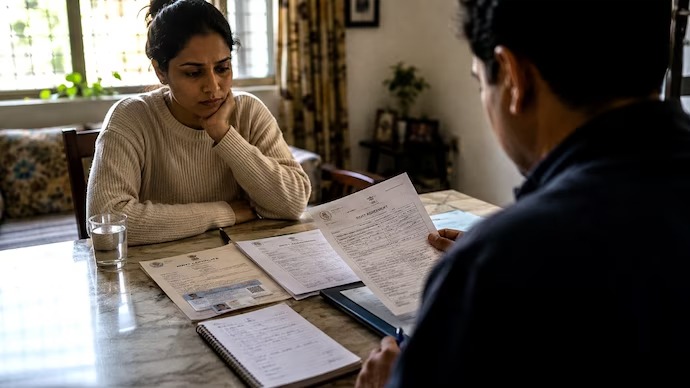
There are plenty of ordinary moments that can suddenly make someone question where they belong. For some people, that feeling starts at a border, while for others it begins inside a government office. Passport verification can seem like a routine administrative step, but the experience can feel much heavier when every document, address, and personal detail becomes something that needs proving.
When Identity Becomes A Question
A passport is generally treated as one of the strongest documents proving identity and nationality. It carries a person’s name, photograph, date of birth, nationality, and other important information. Yet the process of obtaining or renewing one can sometimes make people feel strangely disconnected from their own identity.
The uncomfortable part is not always the paperwork itself. It can be the feeling that your own answers are suddenly being examined with unusual suspicion. You know where you live, where you were born, and who your family members are, but the process still asks you to establish those basic facts through official records.
That experience can feel especially strange for people whose lives do not fit neatly into government paperwork. Addresses change, families move, names get spelled differently, and old records sometimes contain mistakes. A simple verification process can therefore expose complicated parts of someone’s personal history.
The Address Can Become Complicated
One of the biggest difficulties during passport verification can involve residential addresses. People frequently move for education, employment, marriage, family responsibilities, or better opportunities. Their current home may be completely different from the address appearing on older documents.
This creates an awkward situation because official systems often depend heavily on consistency. A person might have several documents carrying different addresses without actually having anything suspicious behind those differences. Still, explaining those changes can become another burden during verification.
Sometimes the issue becomes even more confusing when someone has recently moved into rented accommodation. Their employer records may show one address, their bank records another, and their identity documents something completely different. None of these differences necessarily changes who they are, but they can make verification feel unnecessarily complicated.
Family Records Tell Another Story
Family documentation can create another layer of difficulty during passport verification. Names can change slightly between certificates, identity cards, school records, and other official documents. Even a small spelling difference can create questions that seem much larger than the original mistake.
This becomes particularly noticeable when older documents were created many years earlier. Handwritten records, regional spellings, transliteration differences, and clerical mistakes can all produce inconsistencies. A person’s identity remains unchanged despite those differences appearing across paperwork.
For families that have moved between states or cities, records may also exist in different languages. Translating names between scripts does not always produce exactly the same spelling. What appears obvious to one person can therefore look inconsistent inside an administrative database.
The Psychology Behind Verification
There is also a psychological side to passport verification that receives much less attention. Being asked to prove something repeatedly can quietly change how a person feels about themselves. The process may be officially neutral, but the experience can still feel deeply personal.
Nobody enjoys feeling like their explanation is being doubted. Even when officials are simply following procedures, applicants may interpret repeated questions as a sign that something about their background looks unusual. That feeling can stay with someone long after the verification has ended.
For people who already feel socially different, the experience can become more intense. Their language, birthplace, family history, occupation, or address might already make them feel slightly outside the mainstream. Verification can unintentionally bring those insecurities directly into focus.
Belonging Is More Than Paperwork
Citizenship is a legal status, but belonging is much more complicated than legal documentation. A person can have valid citizenship documents while still feeling disconnected from the country around them. They might speak differently, come from another region, or have grown up between several communities.
That is why passport verification can sometimes trigger thoughts that seem much bigger than the appointment itself. Someone may start wondering whether they truly fit into the place they call home. A few questions about documents can unexpectedly turn into questions about identity.
The irony is that paperwork is designed to create certainty. Yet the experience can occasionally produce uncertainty inside the person being verified. That contradiction explains why an otherwise ordinary administrative process can become emotionally memorable.
Small Differences Can Feel Huge
A minor mismatch can appear insignificant to someone looking at paperwork objectively. For the person involved, however, that same mismatch can create considerable anxiety. A spelling variation may require additional documents, explanations, or visits that nobody expected.
Names are particularly complicated in multilingual countries. The same name can have several accepted English spellings depending on how it was translated from another script. Families may also use shortened names at home while official records contain longer versions.
Dates can create similar problems when old records contain incorrect information. Correcting an old document is often not as simple as correcting a typo on a modern digital account. The older the record, the more complicated the correction process can become.
Why The Process Feels Personal
Administrative systems generally work through documents, categories, forms, and verification rules. They cannot easily understand the messy reality of individual lives. That difference between human experience and bureaucratic structure can make ordinary procedures feel strangely cold.
A system does not know that a family moved because their landlord sold the house. It does not know that a spelling changed because a school clerk entered the name differently. It only sees information that matches or does not match.
That is where many applicants experience frustration. They are not necessarily objecting to verification itself. They are reacting to the gap between their lived reality and the limited information available inside official records.
The Outsider Feeling Can Linger
The strongest part of such an experience may happen after the verification ends. Someone can leave the process with their passport approved and still remember how uncomfortable the questioning felt. The practical problem disappears, but the emotional impression can remain.
It may even change how people think about official institutions. A process that should simply confirm identity can sometimes make people feel that their identity needs permission. That feeling is difficult to explain because nothing dramatic necessarily happened during the appointment.
Still, those quiet moments can matter. Feeling like an outsider does not always come from direct rejection. Sometimes it comes from repeatedly realizing that your personal story does not fit perfectly inside the boxes created by institutions.
Technology May Change Verification
Digital records and online verification systems could eventually reduce some of these problems. Better data matching can help identify legitimate differences without immediately treating every mismatch as suspicious. More connected government databases could also reduce the need for applicants to repeatedly submit the same information.
However, technology cannot completely solve the human side of identity verification. Data systems can become more accurate, but people will still have complicated histories. Migration, family changes, language differences, and documentation errors will continue creating situations that require human understanding.
A better system therefore needs both reliable technology and reasonable administrative flexibility. Verification should protect security without making ordinary citizens feel that their belonging is constantly under examination.
Conclusion: Identity Should Feel Less Fragile
Passport verification exists for important reasons, and proper identity checks remain necessary for secure travel and citizenship documentation. Still, the experience can sometimes reveal something uncomfortable about modern bureaucracy. A person’s life is complicated, while official records often reduce that life to names, numbers, addresses, and dates. When those details fail to line up perfectly, people can feel questioned in ways they never expected. Feeling like an outsider should not be an unavoidable part of proving who you are. Better documentation systems, clearer procedures, and more understanding during verification can make the process far less stressful. Readers interested in identity, travel documentation, and changing administrative systems should continue following reliable updates and official guidance.
Read More :-