Direct trade between India and Pakistan has remained suspended since the 2025 Pahalgam terror attack. Official channels stay closed, and both sides have maintained hard positions against resuming normal commercial exchanges. Yet the latest data from Pakistan’s central bank reveals a striking contradiction: Pakistani imports of Indian goods rose sharply in the opening quarter of the current fiscal year.
According to figures compiled by the State Bank of Pakistan, the country imported goods worth 61.74 million dollars from India between July and September of the 2026-27 fiscal year. That represents a 69 percent increase from the 36.55 million dollars recorded in the same period a year earlier. In Indian rupee terms, the value stands at approximately 5,876 crore. During the same three months, Pakistan recorded zero exports to India.
The Official Ban and Its Limits
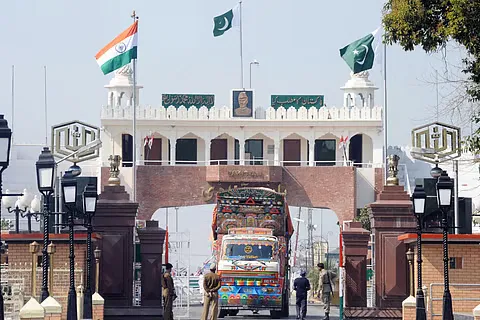
Following the Pahalgam attack, India moved to halt both direct and indirect imports or transit of goods originating in or exported from Pakistan. Pakistan responded by suspending all trade with India, including transactions routed through third countries. Land borders remain shut, and formal bilateral commerce has effectively frozen.
Despite these measures, Indian-origin goods continue to appear in Pakistani import statistics. The data does not specify exact routes or product breakdowns for the latest quarter, but analysts consistently point to indirect channels as the explanation. Goods travel first to intermediate destinations such as the United Arab Emirates or Singapore. There they are held in bonded warehouses, documentation is altered, and the products are re-exported under a different country of origin before reaching Pakistani ports.
This practice is not new. Even before the latest restrictions, informal trade flows through Gulf and Southeast Asian hubs had long supplemented or replaced formal bilateral commerce. The current figures simply show that demand has proven resilient enough to sustain, and even expand, those pathways.
What Pakistan Continues to Buy
Pharmaceutical products have historically formed a major share of Indian shipments to Pakistan. Until early 2025, Indian pharmaceutical exports to the country reached substantial levels. Other categories that have featured in past trade include plastics, organic chemicals, dyes, rubber products, tea, coffee, spices, vegetables, dairy items and certain cereals. These goods meet ongoing industrial and consumer needs that domestic production or alternative suppliers have not fully replaced.
The rise in recorded imports suggests that Pakistani buyers continue to find Indian products competitive on price, quality or availability even after the added costs of third-country routing. Those costs typically include extra freight, handling fees and the margin charged by intermediaries who manage the documentation changes. The fact that volumes have increased rather than collapsed indicates that the premium is still considered acceptable for certain categories.
One-Way Flow and Broader Trade Patterns
The complete absence of Pakistani exports to India in the same quarter underscores the one-sided nature of the remaining commercial link. Pakistan’s overall trade deficit with its nine neighbouring countries widened during the period, driven largely by higher imports from China and other partners. Within that wider regional picture, the jump in Indian-origin goods stands out because it occurs against an explicit bilateral ban.
India’s official position remains that terror and trade cannot coexist. The suspension of commercial ties is presented as a necessary response to security concerns. Pakistani authorities, for their part, have not publicly encouraged the informal channels, yet the statistics show that private traders continue to arrange shipments. Enforcement of origin rules across complex multi-country supply chains remains difficult for both governments.
Economic Reality Versus Political Posture
The persistence of these flows illustrates a familiar tension in South Asian commerce. Political relations can freeze formal trade overnight, but underlying demand for specific products does not disappear with equal speed. When domestic alternatives are limited or more expensive, businesses and consumers seek workarounds. Intermediate hubs with efficient logistics and flexible documentation practices become natural conduits.
At the same time, the higher costs of indirect trade reduce the overall efficiency of the exchange. Goods that once moved across a short land border now travel longer sea or air routes and pass through additional hands. The net result is higher prices for Pakistani importers and reduced volumes compared with what unrestricted bilateral trade might have allowed. Still, the recorded increase shows that the residual demand remains strong enough to overcome those obstacles.
Looking Ahead
As long as official channels stay closed, the pattern observed in the first quarter of 2026-27 is likely to continue. Indian goods will keep reaching Pakistani markets through third countries, and the statistics will continue to register those arrivals under the Indian origin label when the original source remains identifiable. Pakistan will keep recording no corresponding exports in the opposite direction.
The numbers do not signal a thaw in political relations. They simply demonstrate that commercial incentives can survive even the most determined formal restrictions. For policymakers on both sides, the data offers a reminder that trade bans achieve incomplete results when demand remains robust and alternative logistics routes exist. For businesses and consumers in Pakistan, the continued availability of certain Indian products, albeit at a premium, softens the practical impact of the political freeze. The puzzle of how Indian goods keep arriving is less mysterious once the role of third-country routing is taken into account.
Read more – Marathidailyquotes.com