Classrooms and online learning environments have shifted from passive listening to active participation. Digital tools now enable teachers to run live polls, quizzes, simulations and collaborative activities that keep students engaged and provide immediate feedback. These platforms turn traditional lessons into dynamic experiences where every learner can respond, explore and practice in real time.
Research supports the value of this shift. A meta-analysis of 225 studies on undergraduate science, technology, engineering and math courses found that students in active learning settings scored about 6 percent higher on exams, while those in traditional lectures were roughly 1.5 times more likely to fail. Interactive digital tools help create the conditions for that active engagement.
Game-Based Quizzes and Live Polling Platforms
Game-based platforms have become staples in many classrooms. Kahoot! allows teachers to create live quiz sessions that feel like competitive games. Students answer on their devices while a leaderboard updates in real time, turning review sessions into energetic group activities. Similar tools such as Quizizz (also known as Wayground) support both live and self-paced quizzes, giving learners the chance to move at their own speed while teachers track progress instantly.
Live polling services including Poll Everywhere, AhaSlides and Mentimeter let instructors pose questions during a lesson and display collective responses immediately. Every student can contribute without the pressure of speaking aloud. Opening polls can reveal existing misconceptions so teachers can adjust instruction on the spot. Word clouds and multiple-choice questions make participation inclusive and visible.
These tools work across devices and support hybrid or fully remote settings. Teachers gain quick formative assessment data, while students receive instant feedback that reinforces understanding.
Interactive Lesson Platforms and Content Creation
Nearpod stands out as a comprehensive interactive learning platform. Educators build lessons that include slides, videos, quizzes, collaborative boards and virtual field trips. Students join on their devices and interact throughout the session rather than passively watching a presentation. The platform supports multiple operating systems and allows teachers to monitor responses in real time.
Other tools focus on creative expression. Platforms that enable students to build comics or interactive stories help develop literacy, sequencing skills and critical thinking. Students choose characters, write dialogue and arrange panels, turning abstract concepts into visual narratives. Worksheet generators and annotation tools further support customized practice and collaborative markup of texts or images.
Simulations, Virtual Labs and Immersive Technologies
Interactive simulations allow students to experiment with scientific and mathematical concepts without physical equipment. Tools such as PhET interactive simulations from the University of Colorado Boulder let learners adjust variables in physics, chemistry, biology and math models and observe the outcomes immediately. These virtual labs make abstract ideas concrete and give students freedom to test hypotheses safely.
Augmented reality and virtual reality expand the possibilities further. AR overlays digital information onto the real world, helping students visualize structures or processes in context. VR places learners inside simulated environments where they can explore historical sites, practice procedures or examine complex systems up close. As headsets and AR-capable devices become more accessible, these experiences move from specialized labs into everyday classrooms.
Artificial Intelligence for Personalized Interaction
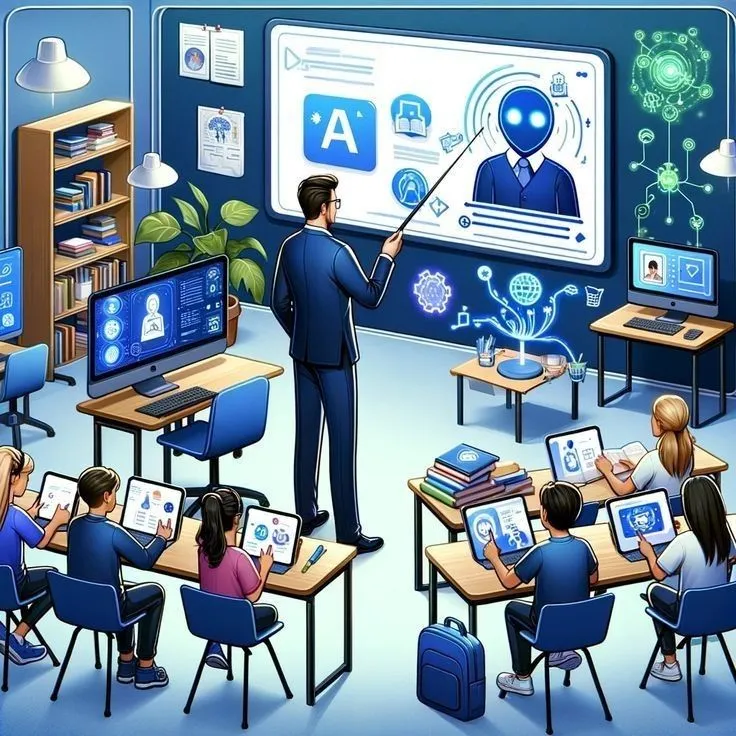
Artificial intelligence adds another layer of interactivity by adapting content to individual learners. AI-driven systems analyze performance patterns and adjust the pace, difficulty or sequence of material. Students receive targeted practice on skills that need reinforcement while stronger areas progress more quickly. Teachers gain insights into class-wide trends and can intervene earlier with struggling learners.
AI also supports content creation, generating discussion prompts, practice questions or lesson outlines that teachers can refine. When combined with game elements or simulations, these adaptive systems keep students in an optimal challenge zone and maintain motivation over longer periods.
Collaborative and Communication Features
Many platforms include shared digital whiteboards, discussion boards and real-time collaboration spaces. Students can contribute ideas, annotate shared documents or respond to peers’ work. Structured debate tools help develop argument mapping and critical thinking by requiring evidence-based claims and replies. These features mirror professional collaboration while building communication skills.
Benefits and Practical Considerations
Interactive tools increase participation because every student can respond rather than a few confident voices dominating. Immediate feedback helps correct misunderstandings before they solidify. Game elements such as points, badges and leaderboards provide visible progress markers that sustain motivation. Immersive simulations deepen understanding of complex topics by allowing exploration and experimentation.
Successful use depends on clear learning goals. Technology alone does not improve outcomes; it must serve specific pedagogical purposes. Teachers need time to design effective activities and to interpret the data the tools generate. Access to devices and reliable connectivity remains essential, particularly in mixed-ability or resource-constrained settings.
Looking Ahead
Digital education tools continue to evolve toward greater personalization, immersion and ease of use. Game-based platforms, interactive lesson builders, virtual simulations and AI adaptation already make learning more participatory and responsive. When thoughtfully integrated, these resources help create classrooms—physical or virtual—where students actively construct knowledge rather than simply receive it. The result is higher engagement, stronger retention and a more inclusive learning environment for diverse groups of learners.
Read more – Hairstylespark.com