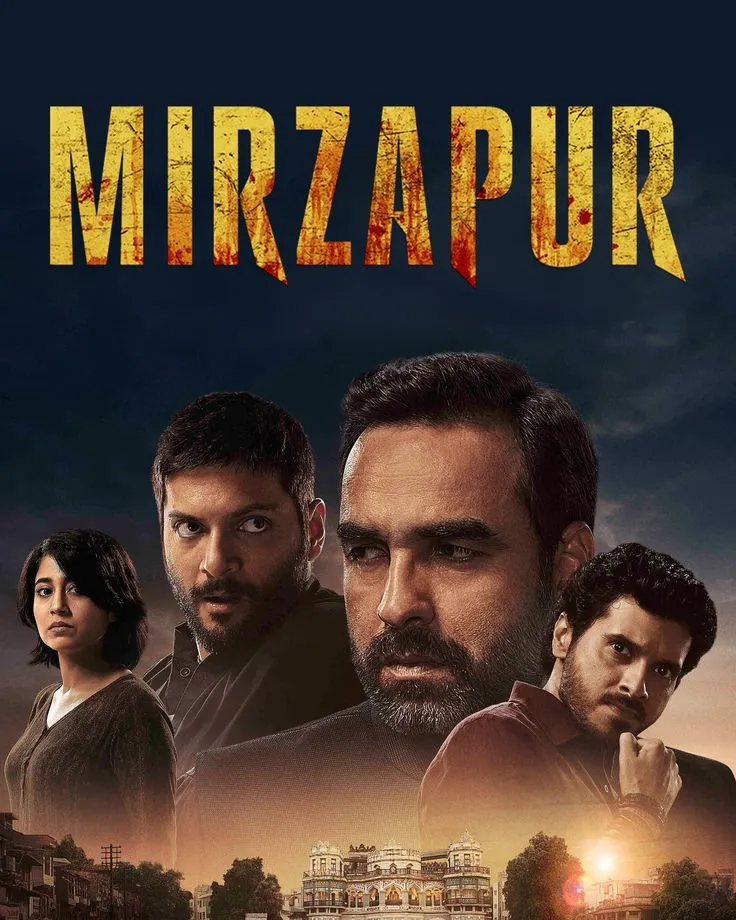
Mirzapur: The Movie marks a significant experiment in Indian entertainment. After three successful seasons on Amazon Prime Video that built a devoted audience and a strong presence in popular culture, the crime saga has moved from streaming screens to cinema halls. The film’s theatrical release on 4 September 2026 tests whether an OTT-built franchise can convert digital fandom into paid collective viewing and what that outcome could mean for future Bollywood strategies.
From Streaming Phenomenon to Big-Screen Ambition
The original Mirzapur series premiered in 2018 and quickly established itself as one of India’s most talked-about streaming properties. Set in a lawless Uttar Pradesh town dominated by illegal arms and carpet trade, the show combined raw violence, power struggles and memorable characters. Pankaj Tripathi’s Kaleen Bhaiya, Ali Fazal’s Guddu Pandit and Divyenndu’s Munna Tripathi became cultural references, generating widespread memes and online discussion. Three seasons cemented the franchise’s hold on a large, engaged audience that primarily experienced the story on personal devices.
The decision to expand that world into a feature film represents a deliberate shift. Produced by Excel Entertainment under Ritesh Sidhwani and Farhan Akhtar in association with Amazon MGM Studios, and directed by Gurmmeet Singh with a screenplay by series creator Puneet Krishna, the project brings the same creative core to a theatrical format. The cast returns in key roles, with Jitendra Kumar stepping into the part of Bablu previously played by Vikrant Massey. The film is being released in Hindi and Telugu, signalling an intent to reach both the core Hindi-speaking audience and a wider regional market.
Why the Move Matters for the Industry
Most major Indian streaming shows have remained on their platforms or received limited theatrical experiments. Taking a fully formed, multi-season OTT property into wide theatrical release is still uncommon. The Mirzapur film therefore functions as a high-profile test case. Success would demonstrate that a digitally cultivated fan base is willing to pay for a shared big-screen experience and could encourage studios and platforms to develop hybrid release strategies. Failure, or even moderate underperformance relative to expectations, could reinforce caution about investing large theatrical budgets in properties whose primary loyalty was formed at home.
The timing adds weight to the experiment. Theatrical windows remain competitive, and audiences have grown accustomed to accessing premium content on demand. Converting passive streaming viewers into active cinema-goers requires more than brand recognition. It demands a scale of spectacle, narrative stakes and marketing that justify the effort and cost of leaving the house.
Strengths the Film Carries into Theatres
The franchise arrives with clear advantages. It possesses ready-made star characters and a pre-existing emotional investment from viewers. The visual language of Mirzapur—gritty, loud and confrontational—lends itself to larger-than-life presentation. Marketing has leaned into the idea of “bhaukaal” on the big screen, promising an amplified version of the intensity fans already know. A substantial runtime allows room for action set pieces and character confrontations that streaming episodes sometimes constrain.
Director Gurmmeet Singh’s prior work on the series provides continuity of tone, while the involvement of Excel Entertainment, known for theatrical hits, brings established distribution and promotional expertise. The dual-language release further expands the potential audience beyond the original Hindi-speaking core.
Risks That Could Undermine the Gamble
Several factors could limit theatrical performance. The core audience has already consumed three seasons at home, often multiple times. Some may feel little urgency to pay again for a continuation, especially if the film is perceived as more of the same rather than a distinct cinematic event. The extreme violence and adult tone that worked in private viewing may face different reception in mixed theatrical crowds or attract certification and marketing constraints.
Competition from other releases, the length of the film, and the need to educate or re-engage casual viewers who never followed the series closely all present challenges. Advance bookings and opening-day figures will therefore be watched closely as early indicators of whether the fandom is converting into footfalls.
Potential Industry Consequences
If Mirzapur: The Movie performs strongly, it could encourage platforms and producers to plan theatrical extensions for other successful streaming properties. Hybrid models—building characters and worlds on OTT before scaling them for cinema—might become more common. It would also strengthen the case for retaining theatrical exclusivity windows even for content that originated digitally.
A disappointing result, conversely, might push the industry back toward keeping major franchise storytelling on streaming platforms, where audience measurement is more direct and risk is differently distributed. It could also influence how budgets are allocated between pure theatrical projects and digital-first properties with theatrical ambitions.
A Larger Question About Audience Behaviour
Beyond box-office numbers, the release raises a broader cultural question: will viewers who formed intense attachments to characters through solitary or small-group streaming experiences seek the communal energy of a cinema hall for the same world? The answer will shape how future franchises are planned and marketed. Mirzapur’s meme-driven popularity suggests a highly engaged base, yet engagement online does not automatically translate into ticket sales.
The film’s reception will also test whether the aesthetic and narrative style developed for episodic streaming can be successfully recalibrated for a single, self-contained theatrical sitting. Pacing, information density and character introductions must work for both long-time fans and newcomers who may enter the story with limited prior knowledge.
Looking Beyond Opening Weekend
Whatever the opening figures, the longer-term impact will depend on word of mouth, sustained occupancy and the film’s ability to expand the franchise’s reach. A successful theatrical chapter could pave the way for further cinematic instalments or reinforce the value of the existing series. A muted response might simply return the story to its original streaming home without closing the door on future experiments.
Mirzapur: The Movie therefore stands as more than a single release. It is a visible trial of whether one of India’s most distinctive OTT worlds can thrive in the communal, ticketed environment of cinema halls. The outcome will be studied by producers, platforms and exhibitors alike as they weigh the risks and rewards of moving proven digital properties onto the big screen. For now, the characters that once commanded living rooms are stepping into theatres, and the industry is watching to see how many viewers choose to follow them there.
Read more – Blessingread.com , pfptrends.com