Becoming a software developer is one of the most rewarding career choices available today. With technology shaping nearly every industry, developers enjoy strong demand, competitive salaries, flexible work options, and continuous opportunities for growth. Whether you are a recent graduate, a career switcher, or someone starting from scratch, this complete beginner’s guide provides a clear, realistic roadmap to enter the field successfully. The journey requires dedication, curiosity, and consistent effort, but the results are well worth it.
Step 1: Understand the Role and Set Realistic Expectations
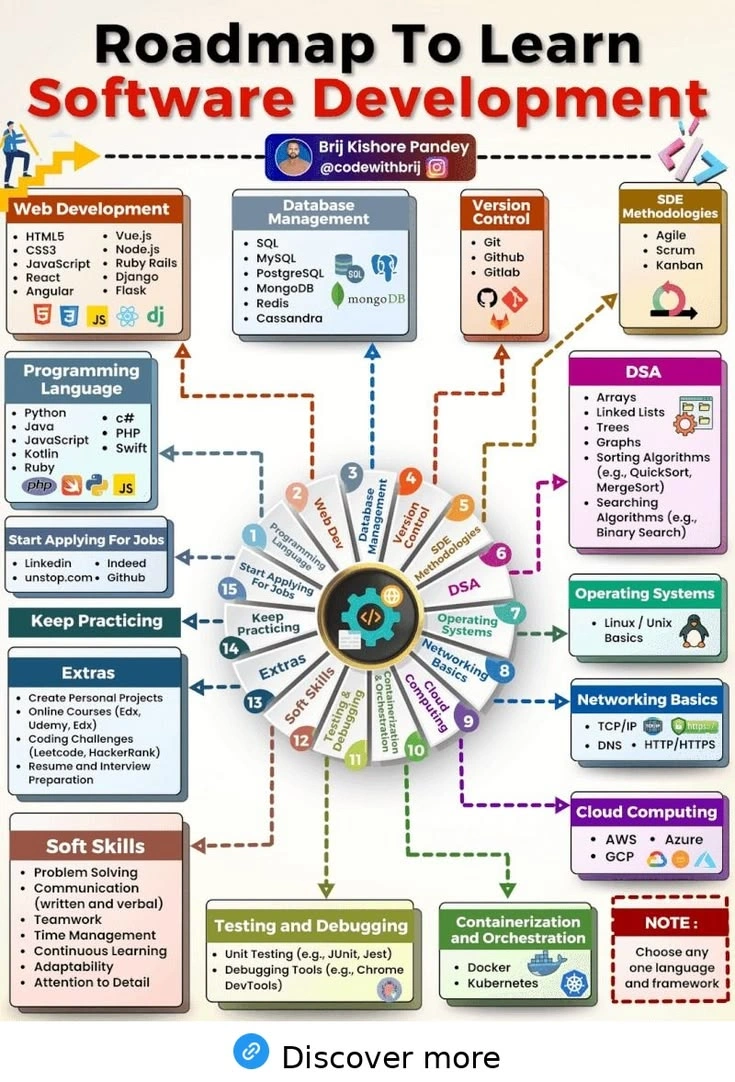
Software development involves designing, coding, testing, and maintaining applications that solve real-world problems. Developers work on websites, mobile apps, enterprise systems, artificial intelligence tools, and more. There are various specializations: front-end (user interfaces), back-end (server logic), full-stack (both), mobile, data, or AI-focused development.
As a beginner, recognize that learning to code is a marathon, not a sprint. Most people need 6–12 months of focused learning to become job-ready, depending on daily time commitment. Set clear goals — decide whether you want a corporate job, freelance work, or startup opportunities. Research salary expectations in your region to stay motivated. In 2026, entry-level developers in India typically start between ₹4–8 lakhs per annum, with rapid growth as skills improve.
Step 2: Build a Strong Foundation in Programming Basics
Start with fundamentals before diving into complex frameworks. Python is widely recommended as the first language for beginners due to its simple, readable syntax. It teaches core concepts like variables, loops, functions, and data structures without overwhelming complexity.
Spend the first 4–6 weeks mastering:
-
Variables and data types
-
Control structures (if-else, loops)
-
Functions and modules
-
Basic data structures (lists, dictionaries)
-
Object-oriented programming principles
Practice daily through interactive platforms that provide immediate feedback. Write small programs like calculators, to-do lists, or simple games to reinforce learning. Consistency matters more than speed — 45–60 minutes daily yields better results than irregular long sessions.
Step 3: Choose Your Development Path
Once comfortable with basics, select a specialization based on your interests:
-
Web Development: Learn HTML, CSS, and JavaScript for front-end. Move to React or Vue.js. For back-end, explore Node.js or Django.
-
Mobile Development: Choose Flutter or React Native for cross-platform apps.
-
Data Science/AI: Build on Python with libraries like Pandas, NumPy, and Scikit-learn.
-
Full-Stack Development: Combine front-end and back-end skills for versatile roles.
Focus on one path initially to avoid overwhelm. Many successful developers start narrow and expand later.
Step 4: Build Real Projects and Portfolio
Theory alone is insufficient. Employers value practical experience. After learning fundamentals, create 4–6 projects that demonstrate your skills:
-
Personal portfolio website
-
Blog or e-commerce application
-
Task management tool
-
Weather app or fitness tracker
-
Simple AI project (chatbot or image classifier)
Host projects on GitHub — this serves as your living resume. Write clean, well-commented code and include README files explaining your approach. Quality matters more than quantity. A few polished projects impress recruiters more than many incomplete ones.
Step 5: Develop Essential Supporting Skills
Technical skills alone don’t guarantee success. Focus on:
-
Problem-Solving: Practice on coding challenge platforms daily.
-
Version Control: Master Git and GitHub for collaboration.
-
Communication: Learn to explain technical concepts clearly.
-
Debugging: Develop patience and systematic troubleshooting skills.
-
Basic Design Principles: Understand user experience basics for better applications.
Soft skills often differentiate candidates during interviews and team collaborations.

Step 6: Prepare for Job Search
Create a professional resume highlighting projects, skills, and learning journey. Tailor it for each application. Build a simple portfolio website showcasing your best work with screenshots, descriptions, and live links.
Network through LinkedIn, developer communities, and local meetups. Contribute to open-source projects to gain visibility. Prepare for common interview questions on data structures, algorithms, and system design. Practice mock interviews to build confidence.
Many companies value demonstrated ability over formal degrees. Highlight self-learning, projects, and problem-solving approach in applications.
Step 7: Continuous Learning and Career Growth
Technology evolves rapidly. Commit to lifelong learning by following industry trends, reading documentation, and exploring new tools. After landing your first job, focus on delivering value, seeking mentorship, and gradually taking on more responsibilities.
Specialize in high-demand areas like cloud computing, cybersecurity, or AI to accelerate career growth. Many developers reach senior positions or transition into leadership roles within 5–7 years.
Overcoming Common Beginner Challenges
-
Feeling Overwhelmed: Break learning into small daily goals. Celebrate progress.
-
Imposter Syndrome: Remember every expert started as a beginner. Focus on consistent improvement.
-
Staying Motivated: Join learning communities, find accountability partners, and work on projects you genuinely care about.
-
Technical Roadblocks: Use online resources, forums, and documentation. Debugging is a core developer skill — embrace it.
The Rewards of Becoming a Software Developer
A career in software development offers intellectual stimulation, creative problem-solving, competitive compensation, and global opportunities. Developers often enjoy flexible work arrangements, continuous learning, and the satisfaction of building solutions that impact millions.
Success depends less on natural talent and more on persistence, curiosity, and smart practice. Start today with small, consistent steps. Choose one language, commit to daily practice, and build your first project. The journey may feel challenging initially, but the skills you develop will open doors to an exciting, future-proof career.
Software development is accessible to anyone willing to learn. Your background, age, or previous experience matter less than your determination to grow. Begin your journey with confidence, stay patient through difficulties, and celebrate every milestone. The tech industry needs diverse perspectives and fresh ideas — your unique contribution could be exactly what the world is waiting for.
Read more – pressnbcnews.com