Introduction
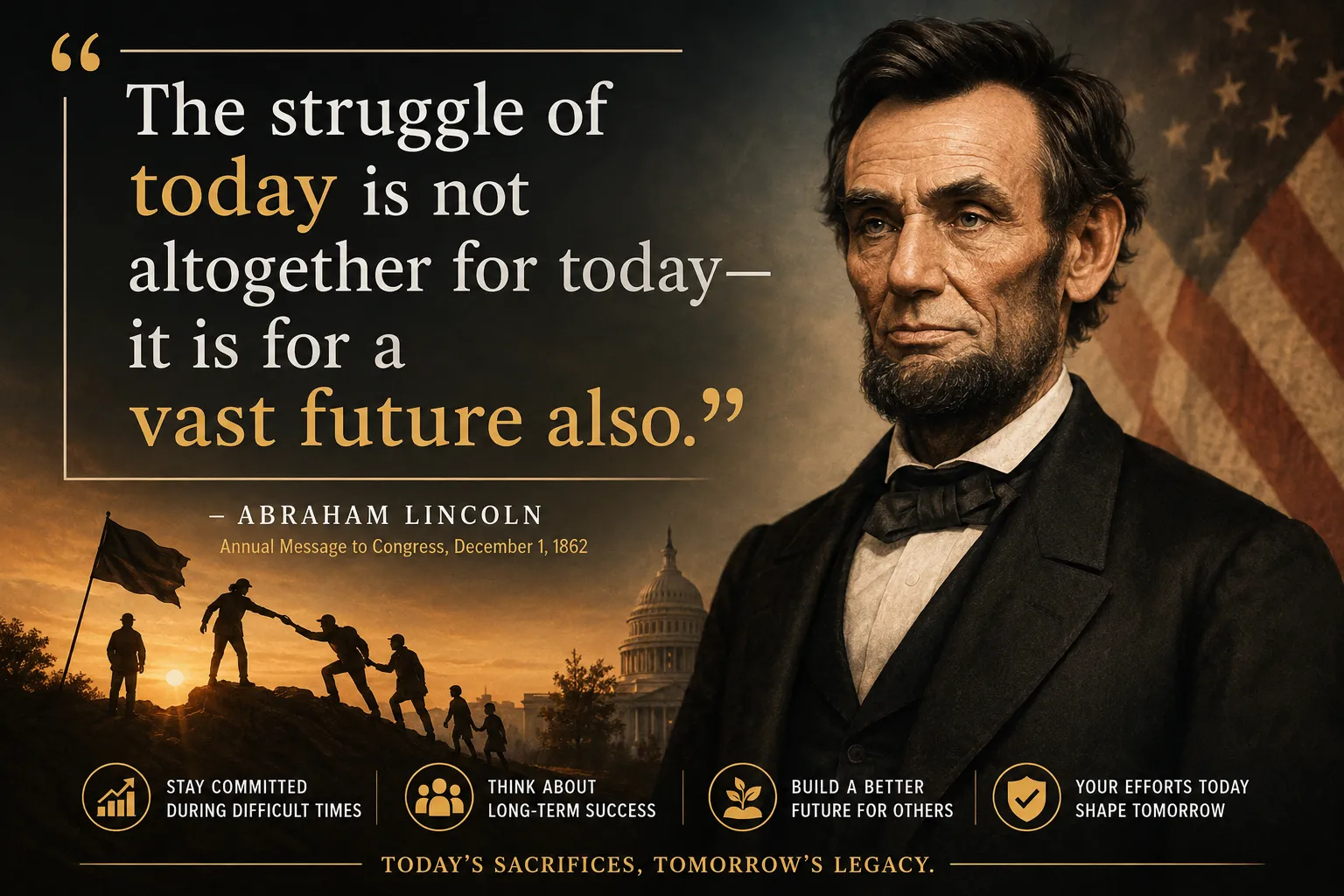
Few historical figures have left behind words as enduring as those of Abraham Lincoln, the 16th President of the United States. One of his most inspiring statements, “The struggle of today is not altogether for today—it is for a vast future also,” continues to motivate people around the world. Originally delivered in Lincoln’s Annual Message to Congress on December 1, 1862, during one of the most difficult periods of the American Civil War, the quote reflected his belief that present sacrifices would shape a stronger and more just future.
Although spoken in a time of national conflict, the message extends far beyond politics and history. It reminds us that perseverance, courage, and responsible decision-making today can positively influence future generations. Whether applied to personal growth, education, careers, leadership, or social progress, Lincoln’s words remain remarkably relevant in the modern world.
The Famous Abraham Lincoln Quote
“The struggle of today is not altogether for today—it is for a vast future also.”
This powerful statement emphasizes that today’s hardships should not be viewed only as temporary difficulties. Instead, they should be seen as investments in a better tomorrow. Lincoln encouraged people to think beyond immediate challenges and remain committed to long-term goals that would benefit future generations.
Historical Background of the Quote
Abraham Lincoln delivered this message on December 1, 1862, during his Second Annual Message to the United States Congress. At the time, America was deeply divided by the Civil War, and the nation faced enormous political, military, and social challenges.
Lincoln’s address focused on preserving the Union while advancing the cause of freedom and equality. His speech encouraged lawmakers to think beyond short-term political concerns and make decisions that would strengthen the nation’s future. Historians consider this message one of Lincoln’s most significant public addresses because it reflected his vision for a united and more just society.
Key historical facts include:
- Delivered on December 1, 1862.
- Presented during the American Civil War.
- Addressed to the United States Congress.
- Focused on national unity and future generations.
- Delivered shortly before the Emancipation Proclamation took effect.
Who Was Abraham Lincoln?
Abraham Lincoln served as the 16th President of the United States from 1861 until his assassination in 1865. He is widely regarded as one of the most influential leaders in American history because of his leadership during the Civil War and his commitment to preserving the Union.
Born into a modest family, Lincoln educated himself through determination and hard work before becoming a lawyer and later entering politics. His honesty, resilience, and dedication earned him the nickname “Honest Abe.” Throughout his presidency, he worked to keep the nation united while supporting the movement that ultimately led to the abolition of slavery.
Lincoln is remembered for:
- Preserving the Union during the Civil War.
- Supporting the abolition of slavery.
- Inspiring leadership during national crisis.
- Powerful speeches and writings.
- Commitment to democracy and justice.
What Does the Quote Really Mean?
The quote teaches that meaningful achievements rarely happen overnight. Success often requires patience, sacrifice, and determination. The struggles people experience today may create opportunities that benefit not only themselves but also future generations.
Lincoln’s message encourages individuals to remain focused on long-term goals rather than immediate rewards. Whether someone is pursuing education, building a business, improving their health, or contributing to society, today’s efforts can create lasting positive outcomes.
The quote also highlights the importance of responsibility. Every generation has an opportunity to leave behind a stronger foundation for those who follow.
Lessons We Can Learn from Lincoln’s Words
Lincoln’s statement contains several timeless lessons that remain valuable in today’s fast-changing world. It encourages people to think beyond temporary setbacks and maintain confidence in the future.
Important life lessons include:
- Stay committed during difficult times.
- Think about long-term success.
- Accept temporary sacrifices.
- Build a better future for others.
- Never lose hope during challenges.
- Value patience and perseverance.
These principles continue to inspire students, professionals, entrepreneurs, and leaders worldwide.
Applying the Quote to Personal Life
Every individual faces challenges, whether related to education, career, relationships, or personal development. Lincoln’s words remind us that these struggles often contribute to future growth.
Students preparing for competitive examinations may spend years studying before achieving success. Entrepreneurs often overcome repeated failures before building successful businesses. Athletes train for countless hours before winning championships.
In each case, present effort creates future opportunities. The quote encourages individuals to remain patient and continue working toward meaningful goals.
Examples include:
- Studying for long-term career success.
- Building healthy habits through consistency.
- Saving money for future financial security.
- Learning new skills for career growth.
- Developing resilience through challenges.
The Importance of Thinking Beyond the Present
Modern society often focuses on immediate results. Social media, technology, and fast-paced lifestyles encourage instant gratification. Lincoln’s quote offers a different perspective by reminding people that lasting success requires long-term thinking.
Many of society’s greatest achievements were built over years or even decades through continuous effort. Scientific discoveries, educational institutions, infrastructure projects, and social reforms all required people who were willing to work for benefits they might never personally experience.
Long-term thinking helps individuals make wiser decisions that create sustainable success.
Why the Quote Remains Relevant Today
Although Lincoln spoke these words more than 160 years ago, they continue to resonate because human challenges remain remarkably similar. People still face uncertainty, setbacks, and difficult decisions.
Whether addressing climate change, education, healthcare, technology, or economic development, societies continue making choices whose effects will be experienced by future generations.
The quote reminds us that leadership is not simply about solving today’s problems but about creating conditions that allow future generations to thrive.
Its relevance can be seen in:
- Education reforms.
- Environmental protection.
- Business leadership.
- Community development.
- Scientific innovation.
- Personal growth.
Leadership Lessons from Abraham Lincoln
Lincoln is widely respected for his leadership qualities. His quote reflects several important characteristics that continue to guide modern leaders.
Effective leaders often make difficult decisions that may not produce immediate rewards but create lasting benefits. They remain committed to principles even during uncertainty and encourage others to work toward shared goals.
Leadership qualities reflected in the quote include:
- Vision for the future.
- Courage during adversity.
- Responsibility toward society.
- Integrity in decision-making.
- Commitment to long-term progress.
These qualities remain valuable for leaders in government, business, education, and communities.
Other Inspiring Quotes by Abraham Lincoln
Lincoln’s speeches contain many memorable statements that continue to inspire people around the world.
Some of his well-known quotes include:
- “Those who deny freedom to others deserve it not for themselves.”
- “With malice toward none; with charity for all.”
- “Let us have faith that right makes might.”
- “The dogmas of the quiet past are inadequate to the stormy present.”
These quotes reflect Lincoln’s commitment to justice, unity, and moral leadership.
Why Inspirational Quotes Continue to Matter
Inspirational quotes often capture complex ideas in simple language. They encourage reflection, strengthen motivation, and provide guidance during difficult times.
Historical figures like Abraham Lincoln continue to inspire because their experiences demonstrate how determination, courage, and vision can overcome extraordinary challenges.
Reading meaningful quotes regularly can encourage positive thinking, improve resilience, and help people stay focused on their goals.
Conclusion
Abraham Lincoln’s timeless statement, “The struggle of today is not altogether for today—it is for a vast future also,” reminds us that today’s sacrifices often create tomorrow’s opportunities. Spoken during one of history’s most challenging periods, the quote continues to inspire individuals, communities, and leaders to think beyond immediate difficulties and work toward lasting progress.
Whether pursuing personal success, supporting family, building a career, or contributing to society, every meaningful effort has the potential to influence future generations. Lincoln’s message encourages us to remain patient, persevere through adversity, and recognize that the work we do today can leave a positive legacy for years to come.