A research proposal is a structured document that outlines a research project before it begins. It explains the research problem, objectives, methodology, and expected outcomes. Universities, academic institutions, and funding organizations require research proposals to evaluate the feasibility, relevance, and originality of a study before granting approval or financial support.
Writing a strong research proposal requires careful planning, clear organization, and a well-defined research focus. A successful proposal demonstrates that the researcher understands the topic, has identified a meaningful research problem, and has designed a realistic plan to investigate it. When written effectively, a research proposal not only gains approval but also provides a clear roadmap for conducting the research itself.
Understanding the Purpose of a Research Proposal
The primary purpose of a research proposal is to convince reviewers that the proposed research is important, feasible, and worth supporting. It demonstrates the researcher’s knowledge of the topic and shows that the project will contribute valuable insights to a specific field of study.
A strong proposal clearly explains what the researcher intends to study and why the topic matters. It also outlines how the research will be conducted and what methods will be used to collect and analyze data. By presenting a well-structured plan, the proposal reassures reviewers that the research can be completed successfully within the available resources and timeframe.
Additionally, the proposal helps guide the researcher throughout the study by providing a detailed framework for the research process.
Choosing a Clear and Relevant Research Topic
Selecting an appropriate research topic is one of the most critical steps in writing a proposal. A strong topic should be focused, researchable, and relevant to the academic discipline. It should address a specific issue or gap in existing knowledge rather than attempting to cover a broad subject.
A well-chosen topic allows the researcher to explore a problem in depth and contribute meaningful findings to the field. Before finalizing the topic, it is important to review existing literature to understand what has already been studied and what questions remain unanswered.
The topic should also be practical in terms of available resources, time, and access to data. A realistic and manageable topic increases the chances of proposal approval.
Writing an Effective Introduction
The introduction is the first section of a research proposal and sets the stage for the entire document. It introduces the research topic, provides background information, and explains the significance of the study.
An effective introduction gradually narrows the focus from a general topic to a specific research problem. This helps readers understand the context and importance of the proposed research. The introduction should clearly state the problem being addressed and explain why it deserves further investigation.
By the end of the introduction, readers should have a clear understanding of the research purpose and the direction the study will take.
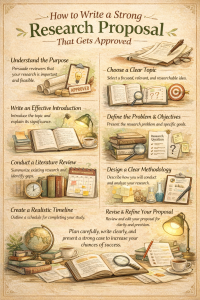
Defining the Research Problem and Objectives
A clearly defined research problem is the foundation of any successful research proposal. The research problem identifies the specific issue or gap in knowledge that the study aims to address.
The proposal should explain why the problem is important and how solving it can contribute to the field. This section often includes research questions or hypotheses that guide the investigation. These questions should be precise, focused, and directly related to the research topic.
Research objectives are closely connected to the problem statement. They outline what the researcher intends to achieve through the study and provide a clear direction for the research process.
Conducting a Literature Review
A literature review demonstrates the researcher’s understanding of existing knowledge related to the topic. It summarizes and analyzes previous studies, theories, and findings that are relevant to the research problem.
This section shows that the researcher has carefully examined earlier work and identified gaps that need further exploration. By discussing existing research, the proposal establishes the academic context for the study and highlights how the new research will contribute to the field.
A strong literature review does not simply list previous studies; it critically evaluates them and explains how they relate to the proposed research.
Designing a Clear Research Methodology
The methodology section explains how the research will be conducted. It describes the methods, tools, and procedures that will be used to collect and analyze data. This section is crucial because it demonstrates the feasibility and reliability of the proposed research.
Researchers must specify whether their study will use qualitative methods, quantitative methods, or a combination of both. They should also explain how participants, samples, or data sources will be selected.
In addition, the methodology should describe the techniques for data analysis and explain why these methods are appropriate for addressing the research questions. A clear and well-structured methodology increases confidence in the research plan.
Presenting Expected Outcomes and Significance
A strong research proposal explains the potential outcomes and contributions of the study. Although the exact results cannot be predicted, researchers should describe the type of findings they expect and how these findings may benefit the field.
The proposal should highlight the practical, academic, or social significance of the research. For example, the study may contribute new knowledge, improve existing theories, or provide solutions to real-world problems.
By demonstrating the value and impact of the research, this section helps persuade reviewers that the project is worthy of approval and support.
Creating a Realistic Timeline and Work Plan
A timeline outlines how the research project will be completed within a specific period. It divides the research process into stages such as literature review, data collection, data analysis, and writing.
A well-organized timeline shows that the researcher has carefully planned each step of the project. It also helps reviewers evaluate whether the research can realistically be completed within the proposed timeframe.
Including a detailed work plan demonstrates professionalism and preparedness, which can strengthen the proposal’s credibility and increase the likelihood of approval.
Writing with Clarity and Academic Precision
The quality of writing plays a major role in the effectiveness of a research proposal. Clear, concise, and well-organized writing allows reviewers to easily understand the research plan.
Academic writing should maintain a formal tone and avoid unnecessary jargon or overly complex sentences. Each section of the proposal should flow logically into the next, creating a coherent and structured document.
Careful proofreading is also essential. Grammar errors, unclear statements, or inconsistent formatting can weaken the proposal and create a negative impression.
Revising and Refining the Proposal
Revision is an essential step in producing a strong research proposal. After completing the first draft, researchers should carefully review the document to improve clarity, organization, and accuracy.
It is often helpful to seek feedback from mentors, supervisors, or colleagues who can provide constructive suggestions. Their insights can help identify weaknesses, unclear sections, or missing details.
Refining the proposal ensures that the research problem, methodology, and objectives are clearly communicated. A polished and well-edited proposal reflects professionalism and increases the chances of approval.
Conclusion
Writing a strong research proposal requires careful planning, thorough research, and clear communication. A successful proposal presents a focused research topic, a well-defined problem, and a detailed plan for conducting the study.
By including key components such as an engaging introduction, a comprehensive literature review, a clear methodology, and a realistic timeline, researchers can demonstrate the feasibility and significance of their work.
Ultimately, a well-written research proposal not only increases the likelihood of approval but also serves as a valuable guide throughout the research process. With thoughtful preparation and attention to detail, researchers can create proposals that effectively communicate their ideas and contribute meaningfully to academic knowledge.