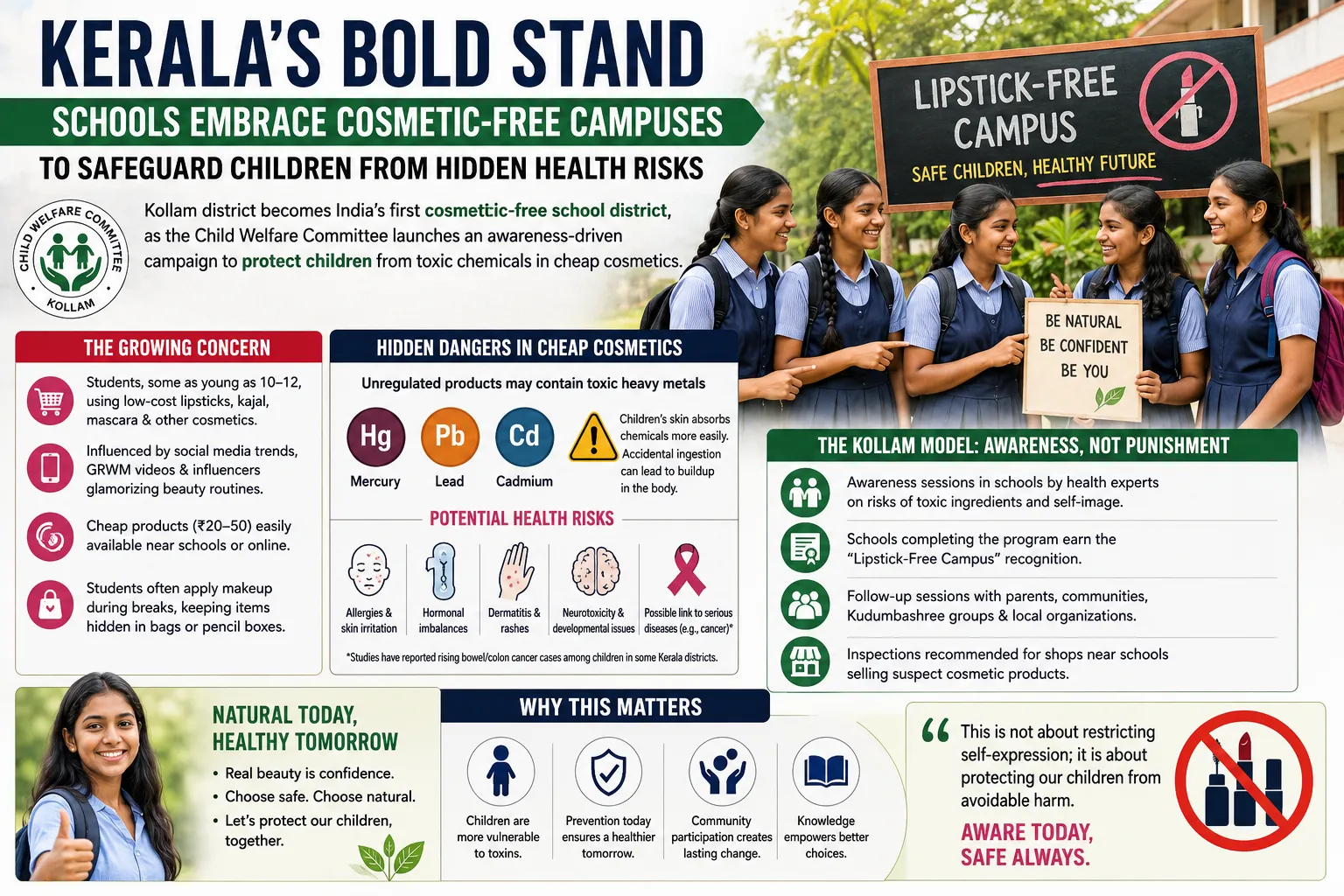
In a pioneering move that has drawn national attention, Kerala’s Kollam district has emerged as India’s first cosmetic-free school district. This initiative, driven by the District Child Welfare Committee (CWC), addresses growing concerns over the use of cheap, unregulated cosmetics by schoolchildren. Inspections revealed students carrying low-cost lipsticks, kajal, mascara, and other makeup items in their school bags, often applying them during breaks. The campaign prioritizes education and awareness rather than punitive measures, aiming to protect young learners from potential exposure to toxic substances, including heavy metals linked to serious health issues.
The trend of early cosmetic use among children, some as young as 10 or 12, has escalated in recent years. Social media platforms, flooded with “Get Ready With Me” (GRWM) videos and influencer content, play a significant role in glamorizing beauty routines for tweens. Many students, influenced by these trends, opt for affordable products priced as low as ₹20–50, readily available near schools or through online channels. While personal grooming is a natural part of growing up, the quality and safety of these mass-market items have raised red flags among educators, parents, and health experts.
Health Concerns Driving the Initiative
The primary catalyst for Kollam’s action stems from reports highlighting potential links between toxic ingredients in low-cost cosmetics and rising health risks, particularly among children. Heavy metals such as mercury, lead, and cadmium—sometimes found in unregulated products—pose significant dangers. Children’s thinner, more permeable skin absorbs these substances more readily than adults’, and accidental ingestion (common with lip products) can lead to accumulation in the body.
Medical professionals note that prolonged exposure may contribute to allergies, hormonal imbalances, skin irritation, dermatitis, and developmental concerns. Broader studies on heavy metals in cosmetics worldwide underscore risks including neurotoxicity and potential carcinogenicity. In the Indian context, previous seizures by drug control authorities revealed mercury levels in some lipsticks and creams far exceeding permissible limits—sometimes thousands of times higher. Such contaminants are especially worrisome for young users whose bodies are still developing.
A study by the Regional Cancer Centre (RCC) in Thiruvananthapuram brought urgency to the issue by noting an increase in bowel or colon cancer cases among children in districts including Kollam, Ernakulam, and Kozhikode. While experts emphasize that direct causation requires further rigorous investigation, the correlation with environmental and habitual factors, including chemical exposures, has prompted proactive steps. The CWC’s campaign explicitly connects these concerns to the unchecked use of cheap cosmetics.
From Inspections to Awareness: The ‘Lipstick-Free Campuses’ Campaign
Rather than imposing blanket bans that might alienate students, the CWC has adopted a collaborative, education-first approach. The campaign was formally launched at Mayyanad Higher Secondary School in Kollam, inaugurated by poet Kureepuzha Sreekumar. Schools conduct awareness sessions led by health experts, covering the science behind cosmetic risks and promoting healthier self-image alternatives. Institutions that complete these programs earn the “lipstick-free campus” designation.
Follow-up sessions extend to parents, residents’ associations, Kudumbashree self-help groups, and community organizations. This holistic strategy addresses the issue at multiple levels. Officials have also recommended inspections of shops near schools selling suspect products and called for potential statewide or national rollout. Some schools in Kozhikode and other areas have already implemented similar directives.
Teachers report observing students using cosmetics discreetly during breaks, sometimes hiding items in pencil boxes. The response from students has been mixed—some view it as a restriction on self-expression—but many appreciate the health-focused dialogue. The emphasis remains on empowerment through knowledge rather than shame or punishment.
The Role of Social Media and Market Dynamics
Social media’s influence cannot be overstated. Platforms expose young users to idealized beauty standards, fostering early experimentation. Cheap knock-offs and counterfeit products exacerbate risks, as highlighted in investigations revealing fake cosmetics sold under popular brand names at steep discounts. These items often bypass quality controls, containing industrial dyes or contaminants.
Parents sometimes remain unaware, assuming minor use is harmless. Pocket money enables easy access, turning a passing fad into a daily habit. Experts like dermatologists and pediatricians stress that regulations in India for cosmetics, especially those targeting or appealing to children, need strengthening to match global standards. Fake and expired products compound the problem in local markets.
Broader Implications and Challenges
Kollam’s initiative highlights a national challenge. India’s booming beauty market includes a growing segment of young consumers, but safety oversight lags, particularly for informal vendors. Heavy metals in cosmetics are a documented global concern, with research indicating potential long-term effects from chronic exposure. For children, vulnerabilities are heightened due to higher absorption rates and developing organ systems.
The campaign also sparks important conversations about childhood, self-esteem, and societal pressures. Psychiatrists note that social media distorts self-worth, pushing appearance over inner qualities. Encouraging natural beauty, healthy habits, and confidence-building activities can counterbalance this. Schools and families play key roles in fostering balanced perspectives.
Challenges persist. Enforcement relies on voluntary compliance, and cultural attitudes toward grooming vary. Some fear overreach into personal choices. However, the consensus among child welfare advocates is clear: protecting vulnerable children from avoidable toxins takes precedence. Collaboration between regulators, manufacturers, educators, and parents is essential for sustainable change. Stronger testing, labeling, and public awareness campaigns could prevent similar issues elsewhere.
A Model for the Future
Kerala’s proactive response positions it as a leader in child health protection. By declaring schools cosmetic-free through awareness, Kollam sets a precedent that balances care with education. As the program expands, it could inspire similar efforts across India, prompting stricter market regulations and greater scrutiny of products aimed at minors.
Ultimately, this is not about denying children self-expression but ensuring their experiments with beauty do not come at the cost of well-being. In