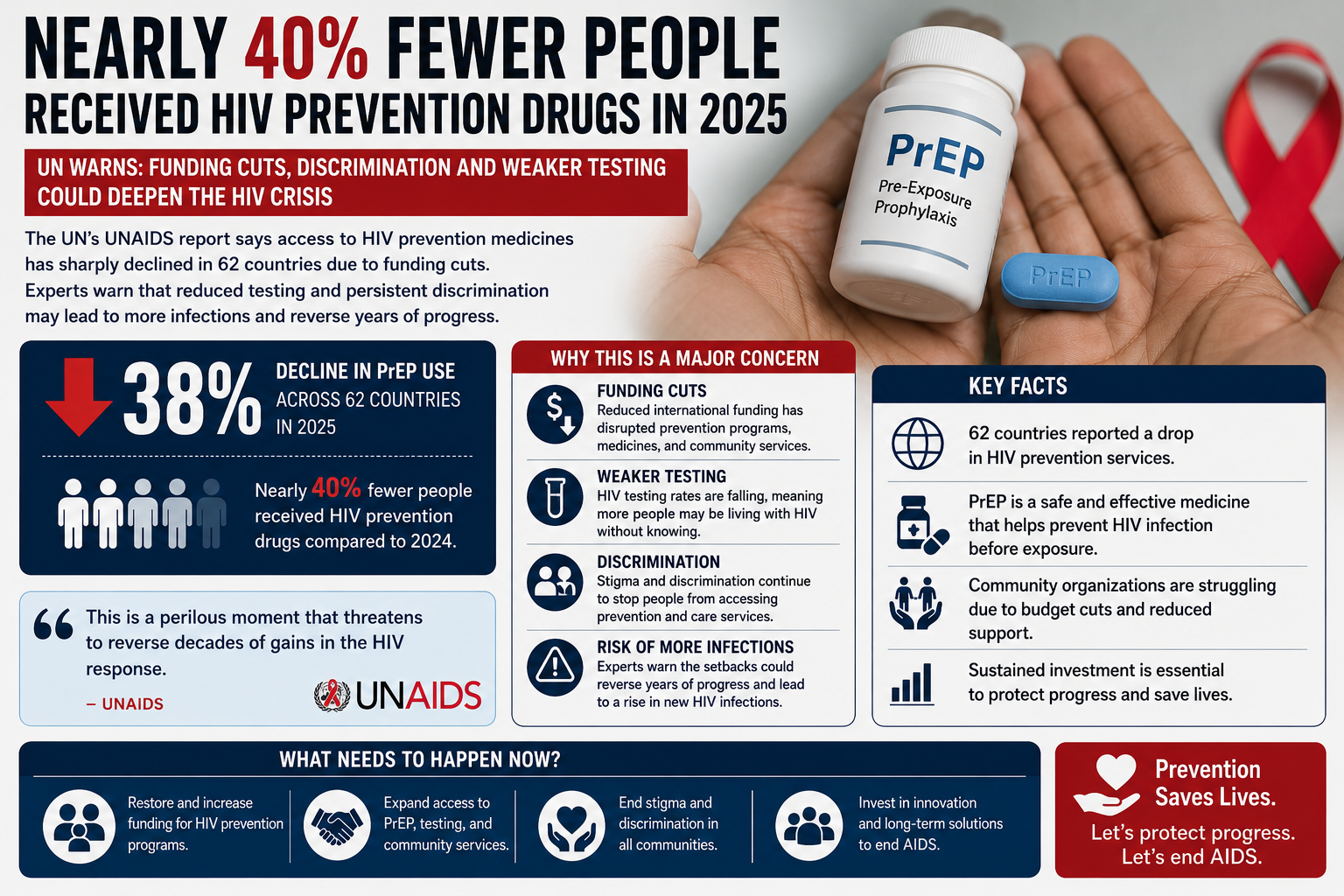
The global fight against HIV has achieved remarkable progress over the past two decades. Millions of lives have been saved through improved treatment, greater awareness, expanded testing programs, and preventive medicines that significantly reduce the risk of infection. However, recent data released by the United Nations has raised serious concerns about the future of HIV prevention efforts worldwide.
According to UNAIDS, nearly 40% fewer people received HIV prevention medicines in 2025 compared to the previous year. The decline has been linked largely to funding cuts that have disrupted prevention programs across dozens of countries. Health experts warn that reduced access to preventive medication, combined with declining HIV testing rates and persistent discrimination, could reverse years of progress and lead to a rise in new infections.
The situation highlights the importance of sustained investment in public health and the need to ensure that HIV prevention remains a global priority.
Understanding HIV Prevention and Why It Matters
HIV prevention is one of the most effective ways to reduce the spread of the virus and protect vulnerable populations. Modern prevention strategies include education, condom distribution, HIV testing, awareness campaigns, and preventive medications known as pre-exposure prophylaxis (PrEP). These interventions help individuals at higher risk avoid infection before exposure occurs.
Over the years, prevention programs have played a critical role in lowering new HIV infections across many regions. Public health experts consistently emphasize that preventing infection is not only more effective but also more cost-efficient than treating HIV after transmission occurs. Successful prevention programs also reduce pressure on healthcare systems and improve long-term community health outcomes. When prevention efforts are weakened, the risk of new infections increases significantly, threatening decades of progress made in controlling the epidemic.
What Is PrEP and Why Is It Important?
Pre-exposure prophylaxis, commonly known as PrEP, is a medication taken by HIV-negative individuals to significantly reduce their risk of contracting HIV. Health organizations around the world consider PrEP one of the most important advancements in HIV prevention in recent years. When used correctly, it offers strong protection against infection and has helped reduce transmission rates among high-risk populations.
PrEP has become a key component of HIV prevention strategies in many countries because it provides an additional layer of protection alongside safer practices and regular testing. Its success has demonstrated that medical prevention tools can play a transformative role in controlling the spread of HIV. The recent decline in PrEP access is therefore particularly concerning because it directly affects millions of people who depend on these medicines to stay protected. UNAIDS reported that PrEP use fell by 38% across 62 reporting countries in 2025.
The Alarming Decline in HIV Prevention Services
One of the most troubling findings from recent reports is the sharp reduction in HIV prevention services. Nearly 40% fewer individuals received HIV prevention medicines in 2025 compared to the previous year. This decline affected countries across multiple regions, particularly those that rely heavily on international funding for healthcare programs.
Health experts warn that prevention services are often the first to suffer when funding becomes limited. While treatment programs may receive emergency support, prevention initiatives frequently face reductions in staffing, outreach activities, medicine availability, and community engagement efforts. These disruptions can have long-lasting consequences because fewer prevention services today may translate into higher infection rates in the future. The decline serves as a warning that progress against HIV remains fragile and dependent on continued investment.
Funding Cuts and Their Impact
Funding remains one of the most critical factors in the success of HIV prevention programs. Many countries depend on international aid and donor support to finance testing services, prevention medicines, educational campaigns, and community outreach programs. When financial resources decline, healthcare systems often struggle to maintain existing services.
Recent reports indicate that significant reductions in international health funding contributed directly to disruptions in HIV prevention efforts. Some countries experienced major reductions in support for preventive tools such as condoms and PrEP. Community organizations that serve vulnerable populations have also faced operational challenges due to budget constraints. These financial pressures limit access to essential services and increase the likelihood that at-risk individuals will go without prevention support. Experts believe that sustained funding is essential for maintaining progress in the global HIV response.
Why HIV Testing Is Also Declining
HIV testing remains one of the most important tools for controlling the spread of the virus. Early diagnosis allows individuals to access treatment sooner, reduce transmission risks, and improve health outcomes. Unfortunately, recent data suggest that HIV testing rates have also fallen in several high-burden countries.
Reduced testing means more people may be living with HIV without knowing their status. This can delay treatment and increase the risk of unknowingly transmitting the virus to others. Testing programs often rely on community outreach, awareness campaigns, and healthcare infrastructure that may be affected by funding reductions. As testing declines, public health authorities lose valuable information needed to track infection trends and respond effectively. Experts warn that lower testing rates could mask the true scale of future HIV transmission.
The Importance of Early Detection
Early detection remains one of the strongest defenses against HIV. Individuals who learn their HIV status early can begin treatment before serious health complications develop. Modern HIV treatments allow many people to live long, healthy lives while significantly reducing the risk of transmitting the virus to others.
Regular testing also supports broader public health goals by identifying new infections quickly and connecting individuals to care. Communities with strong testing programs often experience lower transmission rates because infections are detected and managed earlier. Maintaining accessible and affordable testing services is therefore critical to preventing future outbreaks and ensuring effective disease control strategies.
How Discrimination Continues to Fuel the Crisis
While funding challenges are significant, experts also point to discrimination and social stigma as major barriers to HIV prevention. Many individuals still face fear, judgment, or exclusion when seeking testing, treatment, or preventive services. These social pressures can discourage people from accessing healthcare even when services are available.
Marginalized populations are often disproportionately affected by stigma and discrimination. Fear of being identified, judged, or excluded may prevent individuals from participating in prevention programs. Health organizations emphasize that reducing stigma is essential for improving healthcare access and encouraging people to seek support. Creating inclusive healthcare environments helps ensure that everyone can access prevention and treatment services without fear of discrimination.
Community-Based Programs Are Essential
Community organizations have long played a vital role in HIV prevention efforts. These groups often serve populations that may be difficult for traditional healthcare systems to reach. Through education, counseling, testing support, and outreach initiatives, community-based organizations help connect individuals with critical services.
Funding reductions have placed many of these organizations under significant strain. Some have been forced to reduce services, while others face the risk of closure. Public health experts warn that weakening community networks could undermine efforts to prevent HIV transmission and support vulnerable populations. Strengthening community engagement remains a key strategy for sustaining progress in HIV prevention.
New Opportunities and Future Challenges
Despite current setbacks, there are reasons for cautious optimism. Medical innovation continues to produce new prevention options, including long-acting HIV prevention medicines that may improve accessibility and adherence. Researchers and healthcare providers are working to expand prevention tools and develop more effective approaches to disease control.
However, innovation alone cannot solve the problem. New medicines and technologies require adequate funding, healthcare infrastructure, and public awareness to reach those who need them most. Governments, international organizations, and healthcare leaders must work together to ensure that scientific advances translate into real-world impact. Without strong support systems, even the most promising medical breakthroughs may fail to achieve their full potential.
Conclusion
The decline in HIV prevention services during 2025 represents a significant warning for the global health community. Nearly 40% fewer people receiving HIV prevention medicines is not simply a statistic—it reflects reduced protection for millions of individuals who depend on these services. Funding cuts, declining testing rates, and persistent discrimination have combined to create new challenges in the fight against HIV.
While progress made over the past two decades remains substantial, experts caution that these gains should not be taken for granted. Sustained investment in prevention programs, expanded access to testing, stronger community support, and continued innovation will be essential to maintaining momentum. The global response to HIV has demonstrated what is possible when countries work together. Protecting that progress now requires renewed commitment, resources, and determination to ensure that future generations are not faced with a resurgence of a preventable public health crisis.