Traveling is about creating memories, but documenting those experiences thoughtfully turns fleeting moments into lasting stories. Whether you are a passionate traveler, content creator, or simply want to preserve your journeys meaningfully, learning to document travels professionally elevates personal keepsakes into compelling narratives. In 2026, with advanced smartphones, lightweight gear, and powerful editing tools, anyone can produce high-quality travel documentation that rivals professional work.
This guide offers practical, step-by-step strategies to help you capture, organize, and share your adventures with clarity, creativity, and authenticity.
1. Plan Your Documentation Before Departure
Successful travel documentation begins with preparation. Define your purpose: Are you creating a personal journal, building a blog, or producing social media content? This clarity guides your approach.
Research your destination thoroughly. Identify key experiences, cultural nuances, and photography opportunities. Create a flexible shot list covering landscapes, portraits, details, and daily life. Pack versatile gear: a reliable smartphone with strong camera capabilities, a lightweight mirrorless camera, extra batteries, memory cards, and a portable tripod. Consider a small notebook or note-taking app for observations.
Establish a consistent filing system on your devices before leaving. Use folders labeled by date and location (e.g., “2026-Italy-Rome-Day1”). Enable automatic cloud backups to prevent data loss.
2. Master Photography and Visual Storytelling
Professional travel documentation relies heavily on strong visuals. Focus on composition fundamentals: rule of thirds, leading lines, framing, and varied perspectives. Shoot during golden hour for soft, flattering light. Capture a mix of wide establishing shots, medium scenes, and intimate close-ups.
Tell stories through sequences rather than single images. Document the journey — airports, local transport, meals, interactions — not just landmarks. Include people respectfully to add human connection and scale. Always ask permission before photographing individuals.
Use your smartphone’s advanced features: HDR mode, night photography, and portrait settings. For more control, learn manual camera settings — aperture for depth of field, shutter speed for motion, and ISO for low light. Bracket exposures for challenging lighting conditions.
3. Develop Strong Note-Taking Habits
Great documentation combines visuals with context. Maintain a daily travel journal or voice notes. Record sensory details: sounds, smells, emotions, conversations, and unexpected moments. Note exact locations, dates, and interesting facts. These details bring authenticity to your final stories.
Use apps that allow tagging with GPS coordinates. This makes organizing and searching content much easier later. For professional polish, categorize notes into themes: culture, food, challenges, insights, and recommendations.
4. Capture Authentic Audio and Video
Professional documentarians go beyond still photos. Record short video clips of daily life, local music, or interviews. Capture ambient sounds — market bustle, waves, or temple bells — for immersive storytelling. High-quality audio adds emotional depth when creating vlogs or multimedia presentations.
Keep videos short and purposeful. Focus on natural moments rather than forced performances. Stabilize your shots using built-in features or a small gimbal.
5. Organize and Edit Your Content Efficiently
Post-trip organization separates amateurs from professionals. Download all files immediately and back them up in multiple places. Use consistent naming conventions and metadata tagging.
Editing is where your documentation comes alive:
-
Photos: Adjust exposure, contrast, and colors subtly. Crop for stronger composition. Use presets for efficiency but maintain natural tones.
-
Stories: Weave photos, notes, and videos into cohesive narratives. Focus on emotional arcs — challenges overcome, cultural discoveries, personal growth.
-
Tools: Free and paid editing software can help enhance quality without over-processing.
Create different versions: a detailed personal journal, shorter social media posts, and longer blog articles or video montages.
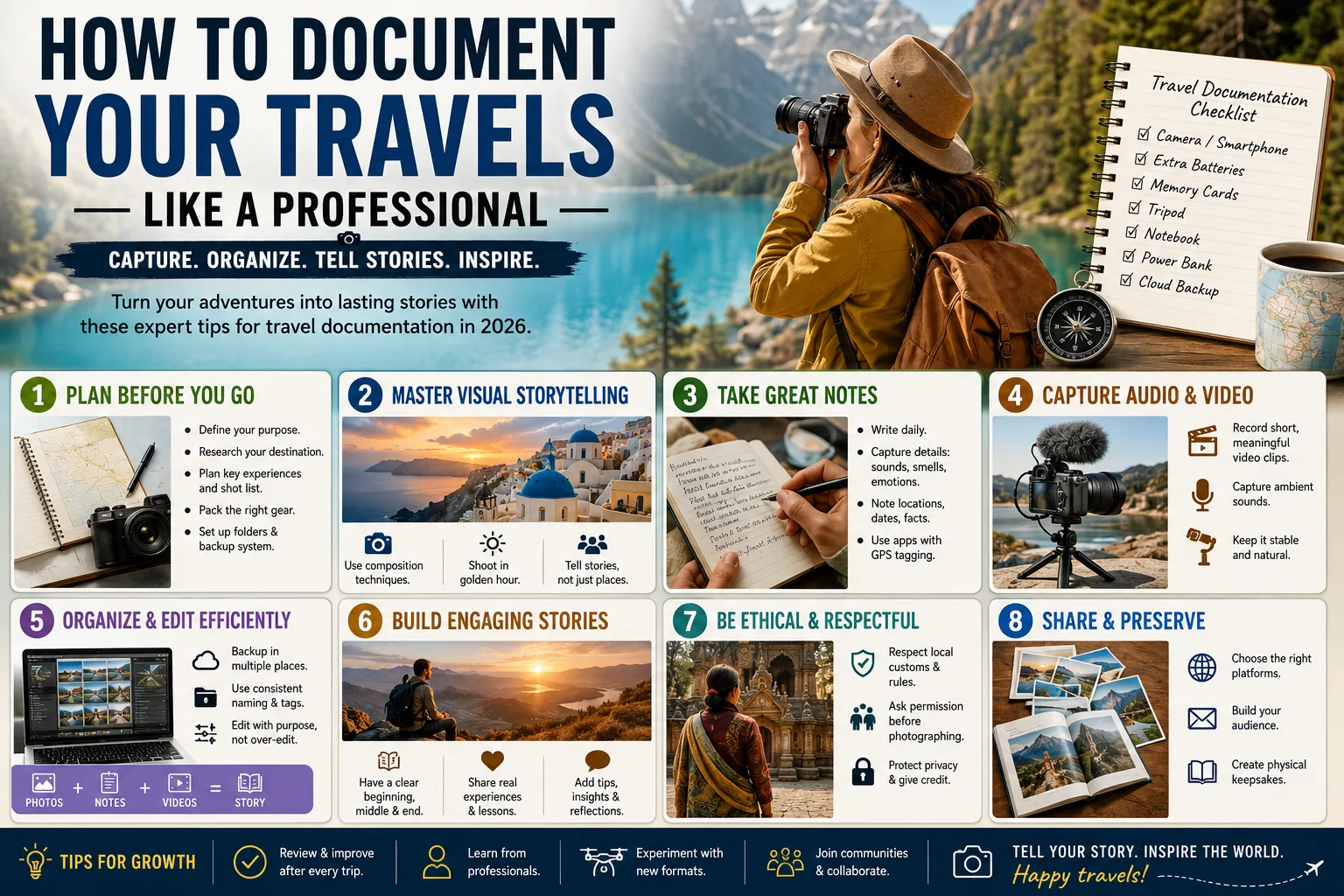
6. Build Engaging Travel Narratives
Professional documentation tells stories, not just lists destinations. Structure your content with a clear beginning, middle, and end. Share vulnerabilities, surprises, and lessons learned. Authenticity resonates more than perfection.
Incorporate practical tips, cultural insights, and honest reflections. Use strong headlines, descriptive captions, and calls-to-action when sharing publicly. For visual platforms, focus on high-quality images with consistent aesthetics.
7. Ethical and Legal Considerations
Respect local customs and photography rules. Never photograph restricted sites or people without permission. Be mindful of cultural sensitivities. When sharing publicly, credit local creators or guides where appropriate.
Protect your intellectual property by adding watermarks or copyright notices if needed. Respect privacy laws when featuring recognizable individuals.
8. Share and Preserve Your Work
Choose platforms that suit your goals. Personal blogs offer depth, while Instagram, YouTube, or Pinterest provide wider reach. Build an email list or portfolio site for long-term ownership of your content.
Create physical keepsakes: printed photo books, scrapbooks, or custom maps. These tangible items often become treasured family heirlooms.
Tips for Continuous Improvement
-
Review your documentation after each trip and note what worked well.
-
Study professional travel photographers and writers for inspiration.
-
Experiment with new formats — 360° photography, drone footage (where permitted), or interactive stories.
-
Join travel creator communities for feedback and collaboration.
Final Thoughts
Documenting your travels like a professional is less about expensive equipment and more about intention, consistency, and storytelling skill. By planning ahead, capturing diverse content, organizing meticulously, and editing thoughtfully, you transform personal adventures into rich, shareable narratives that inspire others and preserve precious memories.
In 2026, with powerful tools readily available, the barrier to high-quality travel documentation has never been lower. The most important ingredient remains genuine curiosity and respect for the places and people you encounter.
Start small on your next trip. Focus on quality over quantity. Over time, you will develop a distinctive style that reflects your unique perspective on the world. Your documented journeys will not only enrich your own life but also contribute to a more appreciative and responsible travel culture.
The world is full of stories waiting to be told. With these practices, you can document yours with the care and professionalism they deserve.