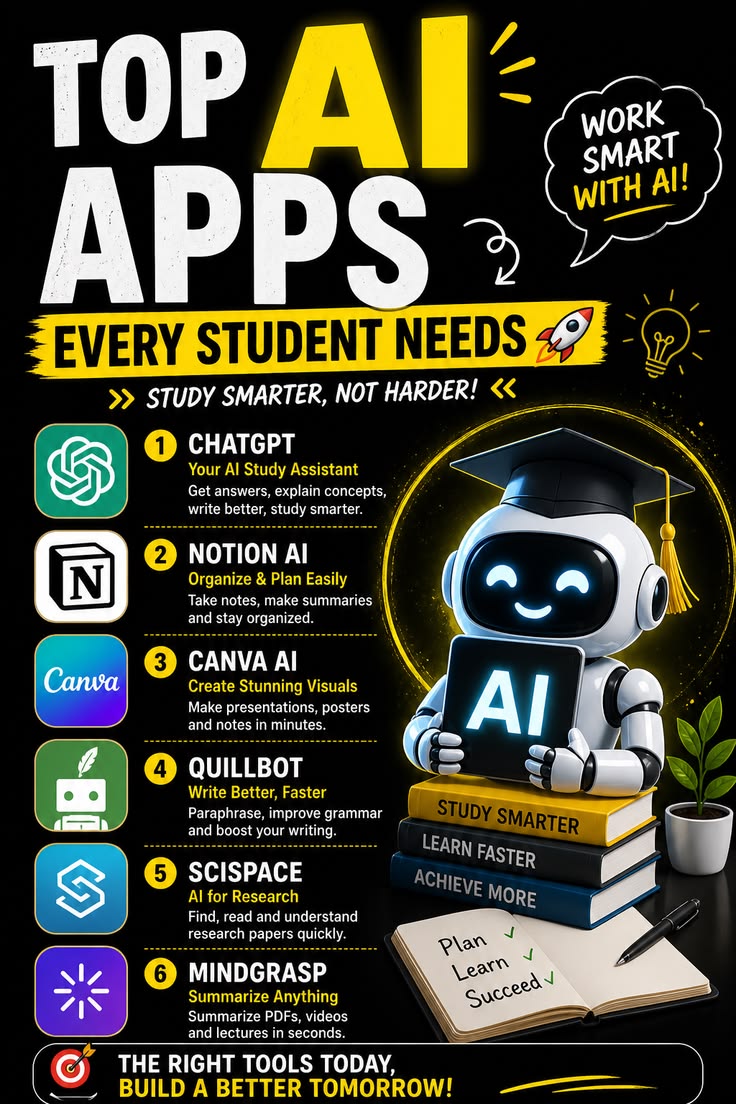
The educational landscape in 2026 has been transformed by artificial intelligence. Students and online learners now have access to powerful tools that enhance note-taking, simplify complex concepts, generate practice materials, and personalize learning experiences. These AI-powered solutions save time, improve retention, and make studying more efficient and engaging. Whether you are a high school student, college learner, or professional taking online courses, the right AI tools can significantly boost academic performance.
Here’s a curated selection of the best AI study tools available in 2026, chosen for their practicality, reliability, and real value to learners.
1. NotebookLM by Google
NotebookLM stands out as one of the most powerful AI study companions. It allows users to upload lecture notes, PDFs, research papers, or textbooks, then generates structured summaries, study guides, FAQs, timelines, and even audio overviews featuring two AI hosts discussing the material in a podcast-style format.
This tool excels at deep comprehension and retention. Students report using it to transform dense reading material into digestible conversations, making revision sessions far more engaging. Its grounded responses — based strictly on uploaded documents — minimize hallucinations and ensure accuracy.
2. ChatGPT and Google Gemini
These general-purpose AI models remain essential for students. ChatGPT is excellent for explaining difficult concepts in simple terms, brainstorming essay ideas, creating practice questions, and providing step-by-step solutions for math or coding problems.
Google Gemini integrates seamlessly with Google Workspace, making it particularly useful for students already using Docs, Drive, and Gmail. Both tools support interactive learning — you can ask follow-up questions, request analogies, or request simplified explanations for advanced topics.
3. Notion AI
Notion AI transforms note-taking and knowledge management. It can summarize long notes, generate action items from meeting transcripts, create study templates, translate content, and even brainstorm project ideas. Its strength lies in organizing scattered information into connected databases, wikis, and dashboards.
For online learners juggling multiple courses, Notion AI serves as a central hub where class notes, assignments, and revision materials live together intelligently.
4. Grammarly
Beyond basic grammar checking, Grammarly’s AI features help students improve academic writing. It offers tone adjustments, clarity suggestions, plagiarism detection, and citation assistance. The tool is especially valuable for non-native English speakers and those working on research papers or reports.
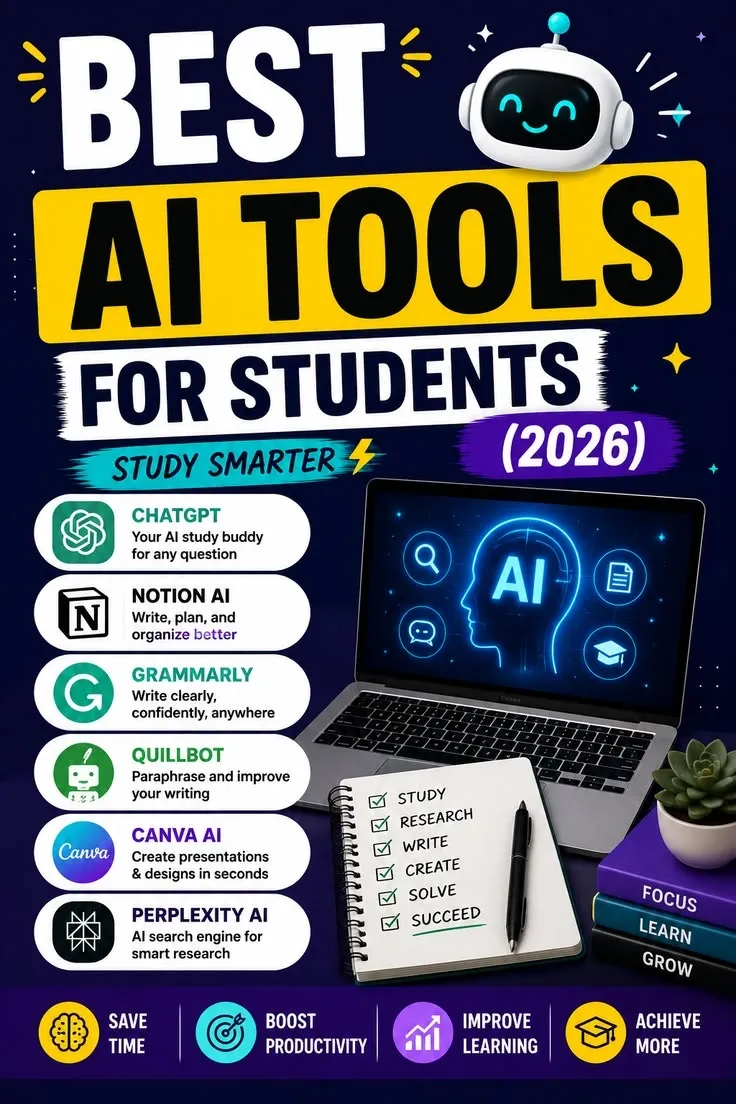
5. Perplexity AI
Perplexity functions as an AI-powered research assistant that provides answers with proper citations from reliable sources. Unlike general chatbots, it excels at academic research by reducing the time spent verifying information. Students use it for literature reviews, understanding current events for social science papers, and gathering quick, trustworthy references.
6. StudyFetch
StudyFetch has gained popularity for turning lecture recordings, PowerPoints, and notes into interactive study materials. It automatically generates flashcards, quizzes, practice tests, and even features an AI tutor (Spark.E) trained specifically on your uploaded course content. This personalization makes it highly effective for exam preparation.
7. QuillBot
QuillBot is a favourite for paraphrasing, summarizing long texts, and improving writing style. Its summarizer condenses lengthy articles or chapters into key points, while the paraphrasing tool helps avoid plagiarism while maintaining original meaning. The plagiarism checker adds an extra layer of academic integrity.
8. MyStudyLife
This AI-powered student planner goes beyond simple scheduling. It uses intelligent algorithms to create personalized study timetables, predict deadlines, suggest optimal revision windows, and send smart reminders. The tool adapts to your learning patterns and helps prevent last-minute cramming.
9. Anki with AI Enhancements
Spaced repetition remains one of the most scientifically proven learning techniques. Modern Anki versions with AI add-ons can automatically generate flashcards from notes or PDFs, optimize review schedules, and create cloze deletions. This combination is particularly powerful for medical, law, and language students who need to memorize large volumes of information.
10. Otter.ai and Similar Transcription Tools
For online learners attending virtual lectures or webinars, Otter.ai provides accurate real-time transcription with speaker identification and intelligent summarization. It highlights key points, creates action items, and allows searching through recorded content later, making revision much more efficient.
How to Choose and Use AI Study Tools Effectively
Start Simple: Begin with 2–3 tools that address your biggest pain points — whether that’s note organization, writing improvement, or exam preparation.
Maintain Academic Integrity: Use AI as a learning aid rather than a replacement for your own thinking. Always review, edit, and understand AI-generated content before submitting it.
Combine Tools: The most successful students create workflows. For example, use Otter.ai for transcription, NotebookLM for summarization, Notion AI for organization, and Anki for memorization.
Protect Privacy: Be cautious when uploading sensitive academic material. Choose tools with strong privacy policies, especially for research or dissertation work.
Develop Critical Thinking: AI tools are excellent at providing information and structure, but human judgment, creativity, and analysis remain irreplaceable. Use AI to enhance — not replace — your learning process.
The Future of Learning with AI
In 2026, AI study tools have moved beyond novelty into essential academic support systems. They democratize education by offering personalized tutoring-like experiences to students worldwide, regardless of their location or financial background.
However, the most effective learners treat AI as a powerful assistant rather than a crutch. They combine these technologies with disciplined study habits, regular practice, and genuine curiosity.
By thoughtfully integrating the right AI tools into your routine, you can study smarter, reduce stress, retain information longer, and achieve better academic outcomes. The key is consistency and critical engagement with the technology.
Start exploring these tools today. Experiment with different options to discover which ones best complement your learning style. The future belongs to students who can effectively collaborate with AI while developing strong foundational knowledge and thinking skills.
Read more – mediyahub.com