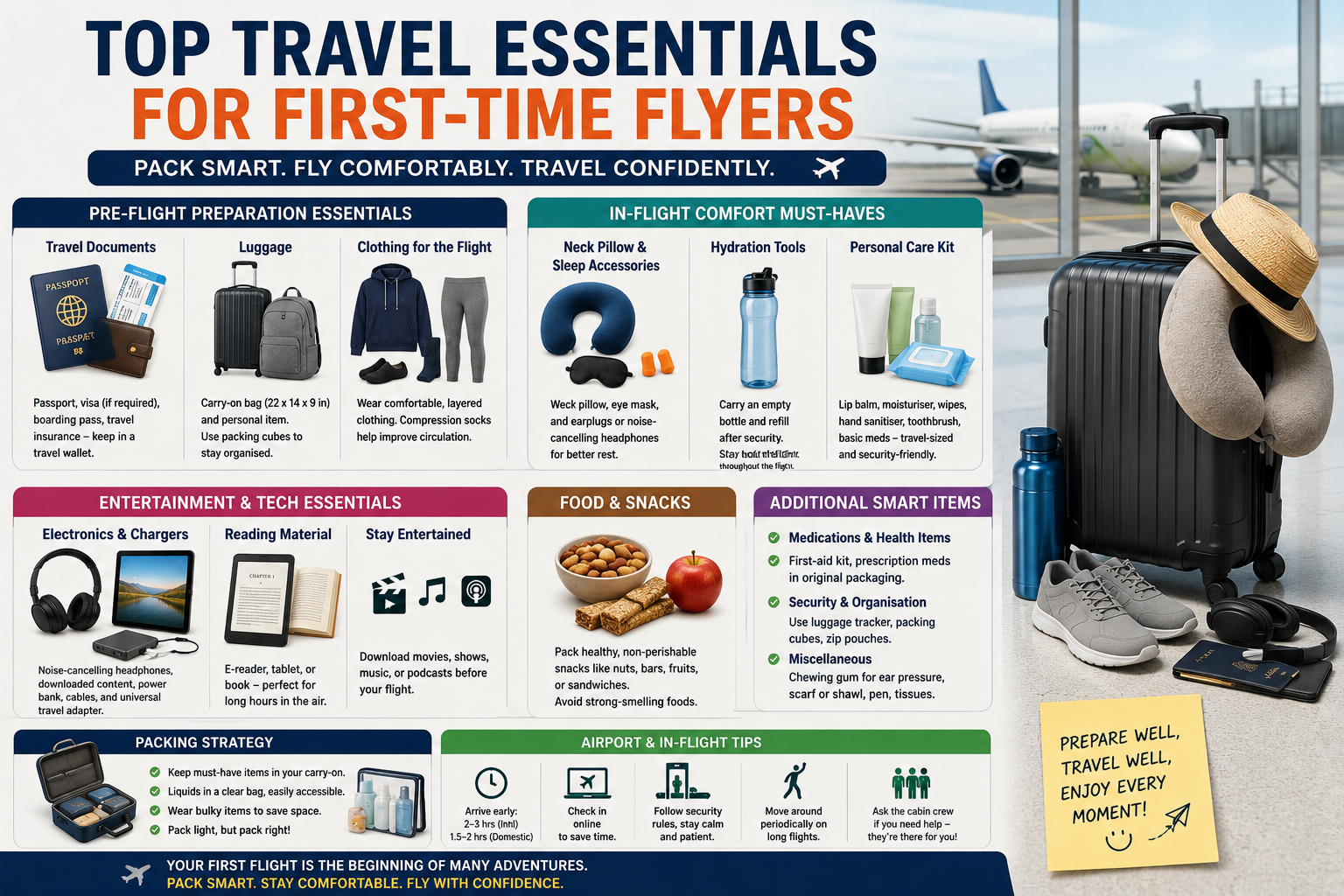
Stepping onto an airplane for the first time is thrilling, yet it can also feel daunting. From navigating airport security to spending hours in a confined cabin, proper preparation makes all the difference between a stressful journey and a comfortable, memorable one. This beginner’s guide focuses on the most practical and essential items every first-time flyer should carry to ensure comfort, convenience, and peace of mind.
Whether you’re heading on a short domestic flight or a long-haul international trip, packing smartly helps you stay hydrated, rested, entertained, and organised. Here’s everything you need to know.
Pre-Flight Preparation Essentials
Start with the fundamentals that keep your journey smooth from the moment you leave home.
Travel Documents: Keep your passport, visa (if required), printed or digital boarding pass, and any travel insurance details easily accessible. Store them in a dedicated travel wallet or pouch. Having both digital and physical copies protects you against phone battery failure or technical glitches.
Luggage: Choose a sturdy carry-on bag that meets airline size restrictions (typically 22 x 14 x 9 inches) and a personal item like a backpack or tote that fits under the seat. Packing cubes help organise clothes and maximise space while keeping items easy to find.
Clothing for the Flight: Wear comfortable, layered outfits. Opt for breathable fabrics, loose pants or leggings, and a light sweater or hoodie. Compression socks are particularly useful for flights longer than four hours as they improve circulation and reduce swelling. Slip-on shoes make security checks faster and allow you to relax once onboard.
In-Flight Comfort Must-Haves
Airplane cabins are dry, noisy, and often cold. These items help you adapt quickly.
Neck Pillow and Sleep Accessories: A good travel neck pillow prevents neck pain during sleep. Pair it with a soft eye mask to block cabin lights and earplugs or noise-cancelling headphones to reduce engine noise. These create a mini rest environment even in economy class.
Hydration Tools: Cabin air has very low humidity, which can cause dehydration, dry skin, and fatigue. Carry an empty reusable water bottle through security and refill it at the airport. Sip water regularly throughout the flight.
Personal Care Kit: Pack travel-sized (under 100ml) toiletries in a clear plastic bag for security screening. Include lip balm, moisturiser, hand lotion, facial wipes, and hand sanitiser. A small toothbrush, toothpaste, and deodorant help you freshen up before landing. Basic medications for headaches, motion sickness, or allergies are also essential.
Entertainment and Tech Essentials
Long hours without distractions can feel endless. Prepare in advance.
Electronics and Chargers: Noise-cancelling headphones are a game-changer for blocking ambient sound and enjoying movies or music. Download offline content — movies, podcasts, books, or playlists — before departure. A portable power bank (with cables) prevents devices from dying mid-flight. A universal travel adapter is useful for international trips.
Reading Material: Bring an e-reader, tablet, or physical book as backup. Many first-time travellers also enjoy journaling their journey or carrying a small notebook.
Food and Snacks
Airline meals may not always suit your schedule or preferences.
Pack non-perishable, easy-to-eat snacks such as nuts, protein bars, fruits, or sandwiches. These keep hunger at bay during delays or when meal service is limited. Avoid strong-smelling foods out of consideration for fellow passengers.
Additional Smart Items for First-Time Flyers
-
Medications and Health Items: Bring any prescription medicines in their original packaging along with a copy of the prescription. Include basic first-aid supplies like bandages and antiseptic wipes.
-
Security and Organisation: Use a luggage tracker or AirTag for checked bags. Packing cubes and zip-top pouches keep your carry-on tidy.
-
Miscellaneous: Chewing gum helps with ear pressure during takeoff and landing. A lightweight scarf or shawl serves multiple purposes — as a blanket, wrap, or pillow cover.
Packing Strategy and Airport Tips
Pack your carry-on with items you might need immediately in case checked luggage is delayed. Place liquids in an accessible clear bag and wear bulky items like jackets to save space.
Arrive at the airport at least 2–3 hours before departure for international flights and 1.5–2 hours for domestic ones. Check in online beforehand to save time. Stay hydrated but be prepared to remove shoes, belts, and jackets at security.
During the flight, move around periodically on longer journeys to improve blood flow. Stay calm, follow crew instructions, and don’t hesitate to ask flight attendants for help — they are accustomed to assisting first-time travellers.
Final Thoughts for a Stress-Free First Flight
The secret to enjoying your first flight lies in thoughtful preparation rather than overpacking. Focus on comfort, hydration, rest, and entertainment while keeping essentials like documents and medications within easy reach. Test your packing list on a short day trip if possible to see what works best for you.
Remember that flying becomes easier with experience. Your first flight marks the beginning of many adventures, and arriving relaxed and prepared sets a positive tone for the entire trip. With these essentials in your bag, you can focus less on worries and more on the excitement of reaching your destination.
Safe travels — your journey begins the moment you step into the airport with confidence and the right gear by your side.
Read more – releaseprcore.com