Customer Lifetime Value (CLV) represents one of the most important metrics for sustainable business growth. It quantifies the total revenue or profit a company can expect from a single customer throughout their entire relationship. Understanding and optimizing CLV helps organizations make smarter decisions about acquisition, retention, and resource allocation. This comprehensive guide explains the concept, calculation methods, and practical applications with real-world examples to help businesses of all sizes leverage this powerful metric effectively.
What Is Customer Lifetime Value and Why It Matters
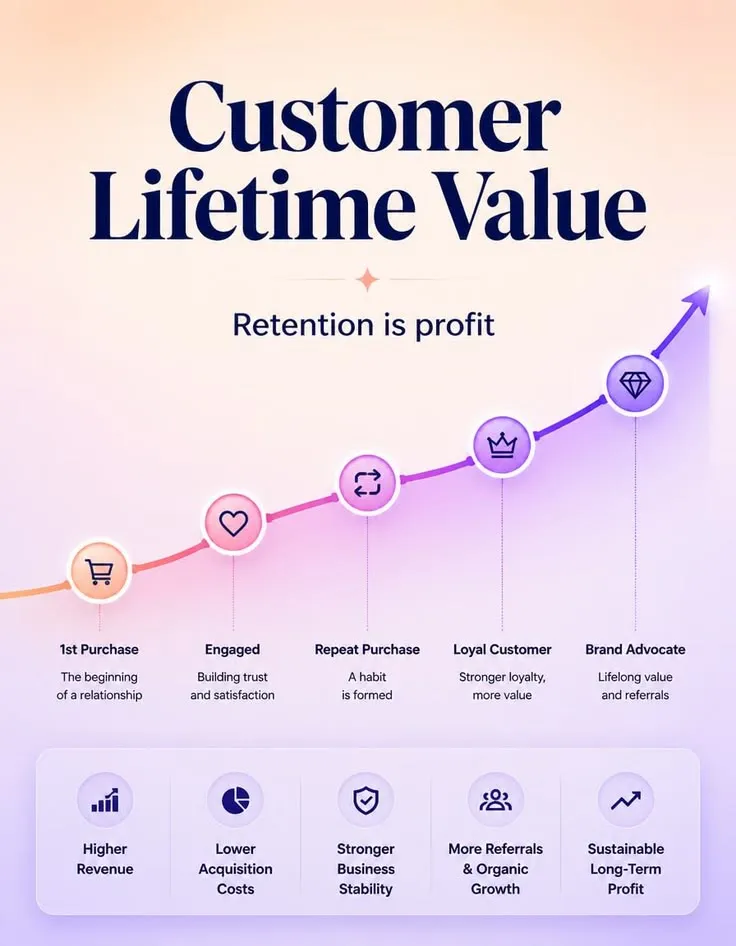
Customer Lifetime Value measures the financial contribution of an individual customer over time rather than focusing solely on single transactions. It shifts perspective from short-term sales to long-term relationships, recognizing that loyal customers often generate far more revenue than initial purchases suggest. Businesses using CLV effectively can identify their most valuable customer segments and tailor strategies accordingly.
The metric proves particularly valuable for subscription-based models, e-commerce, and service industries where repeat business drives profitability. Companies that understand CLV can determine appropriate spending on customer acquisition, invest wisely in retention programs, and forecast revenue more accurately. When CLV significantly exceeds customer acquisition costs, businesses achieve sustainable growth and improved return on marketing investments.
Basic Methods for Calculating Customer Lifetime Value
Several approaches exist for calculating CLV, ranging from simple estimates to more sophisticated models. The most straightforward formula multiplies average purchase value by purchase frequency and customer lifespan. For example, if customers spend $50 on average per transaction, make 12 purchases annually, and remain loyal for five years, their CLV equals $3,000.
A more refined approach incorporates profit margins and retention rates. This method calculates average annual profit per customer, multiplies by expected relationship duration, and adjusts for the percentage of customers who continue doing business each year. The resulting figure provides a clearer picture of actual profitability rather than just revenue.
Advanced models use predictive analytics incorporating customer behavior patterns, demographic information, and engagement metrics. These approaches account for variations between customer segments and adjust projections based on historical churn patterns. While more complex, they offer greater accuracy for businesses with substantial data resources.
Real-World Examples Across Different Industries
Consider a coffee subscription service where customers pay $25 monthly and remain subscribed for an average of 18 months. Simple calculation yields $450 CLV per customer. After subtracting acquisition and service costs, the business determines profitability and appropriate marketing spend levels. This information guides decisions about promotional offers and retention incentives.
In retail, a clothing brand might calculate different CLV values for various customer segments. Occasional shoppers could show $200 lifetime value while loyal customers who purchase multiple times yearly demonstrate $1,200. The company then allocates more resources toward loyalty programs and personalized marketing for high-value segments.
A software company using a freemium model might discover that users who engage with premium features within the first month have significantly higher CLV than those who do not. This insight drives product development priorities and onboarding improvements designed to encourage early upgrades and long-term commitment.
Strategies to Increase Customer Lifetime Value
Businesses can influence CLV through multiple approaches focused on acquisition, retention, and monetization. Attracting the right customers initially sets the foundation for higher lifetime value. Targeting individuals whose needs align well with offerings increases the likelihood of long-term relationships and repeat business.
Retention efforts significantly impact CLV by extending customer lifespan. Loyalty programs, personalized communication, and exceptional service experiences encourage continued engagement. Regular feedback collection helps identify improvement opportunities before customers consider switching providers.
Increasing value per customer through upselling, cross-selling, and premium offerings boosts CLV without necessarily acquiring new customers. Bundled packages, subscription upgrades, and complementary products create additional revenue streams from existing relationships. Success depends on understanding customer needs and timing offers appropriately.
Common Mistakes in CLV Calculation and Usage
Many businesses calculate CLV inaccurately by overlooking important factors or using overly simplistic assumptions. Failing to account for variable retention rates across customer segments leads to misleading averages. Similarly, ignoring acquisition costs or operational expenses produces inflated values that misguide spending decisions.
Over-reliance on historical data without considering market changes or competitive dynamics can result in outdated projections. Economic shifts, technological advancements, or new market entrants often affect customer behavior patterns in ways historical information cannot predict. Regular recalculation and adjustment help maintain relevance.
Some companies focus exclusively on increasing CLV without balancing acquisition efforts. While retaining existing customers proves generally more cost-effective than acquiring new ones, healthy growth requires attention to both metrics. The relationship between CLV and customer acquisition cost provides important guidance for sustainable expansion strategies.
Integrating CLV into Business Decision Making
Smart organizations incorporate CLV analysis into multiple operational areas. Marketing teams use segment-specific CLV data to optimize campaign targeting and budget allocation. Product development priorities reflect insights about which features or improvements would most significantly impact high-value customer retention.
Pricing strategies benefit from CLV understanding by balancing immediate revenue with long-term relationship value. Customer service investments become more targeted when organizations recognize the varying lifetime values of different segments. Executive decisions about expansion or new market entry incorporate projected CLV metrics for more informed risk assessment.
Technology platforms increasingly automate CLV calculations and provide real-time insights for decision support. Integration with customer relationship management systems allows dynamic segmentation and personalized strategies based on evolving lifetime value projections.
Challenges and Considerations for Small Businesses
Smaller organizations may lack extensive data resources for sophisticated CLV modeling. However, even basic calculations using available transaction history provide valuable insights. Starting with simple averages and gradually incorporating additional factors as data accumulates helps build analytical capabilities over time.
Resource constraints often limit the ability to implement comprehensive retention programs. Focusing on high-impact, low-cost initiatives like personalized email communication or loyalty rewards based on purchase history delivers meaningful results. Many free or affordable tools now offer basic CLV tracking functionality suitable for smaller operations.
The Future of Customer Lifetime Value Analysis
Advancements in artificial intelligence and machine learning continue enhancing CLV prediction accuracy. Real-time data processing allows dynamic adjustments to lifetime value estimates as customer behavior evolves. Integration across multiple touchpoints provides more comprehensive views of customer journeys and relationship health.
Privacy considerations and changing regulations affect data collection practices relevant to CLV calculations. Businesses must balance analytical needs with ethical data handling and customer trust. Transparent communication about data usage often strengthens rather than diminishes customer relationships.
As subscription and service-based business models expand, CLV becomes even more central to strategic planning. Companies increasingly view customers as long-term partners rather than one-time transactions, with lifetime value metrics guiding relationship management approaches.
Conclusion: Leveraging CLV for Sustainable Business Growth
Customer Lifetime Value provides a powerful framework for understanding and optimizing customer relationships beyond individual transactions. By calculating CLV accurately, analyzing segment differences, and implementing strategies to increase it, businesses make more informed decisions about acquisition, retention, and resource allocation.
Success requires balancing short-term revenue goals with long-term relationship building. Companies that master CLV analysis typically achieve better customer satisfaction, improved profitability, and more sustainable growth patterns. The metric encourages thinking beyond immediate sales toward creating genuine value that keeps customers engaged over extended periods.
Regular review and refinement of CLV calculations ensure continued relevance as markets and customer behaviors evolve. Organizations embracing this customer-centric approach position themselves for competitive advantages in increasingly relationship-focused business environments. Understanding and optimizing Customer Lifetime Value represents not just good practice but essential strategy for modern business success.
Read more – amherstdelivery.com