Deadly Collision Shocks Pennsylvania Airport
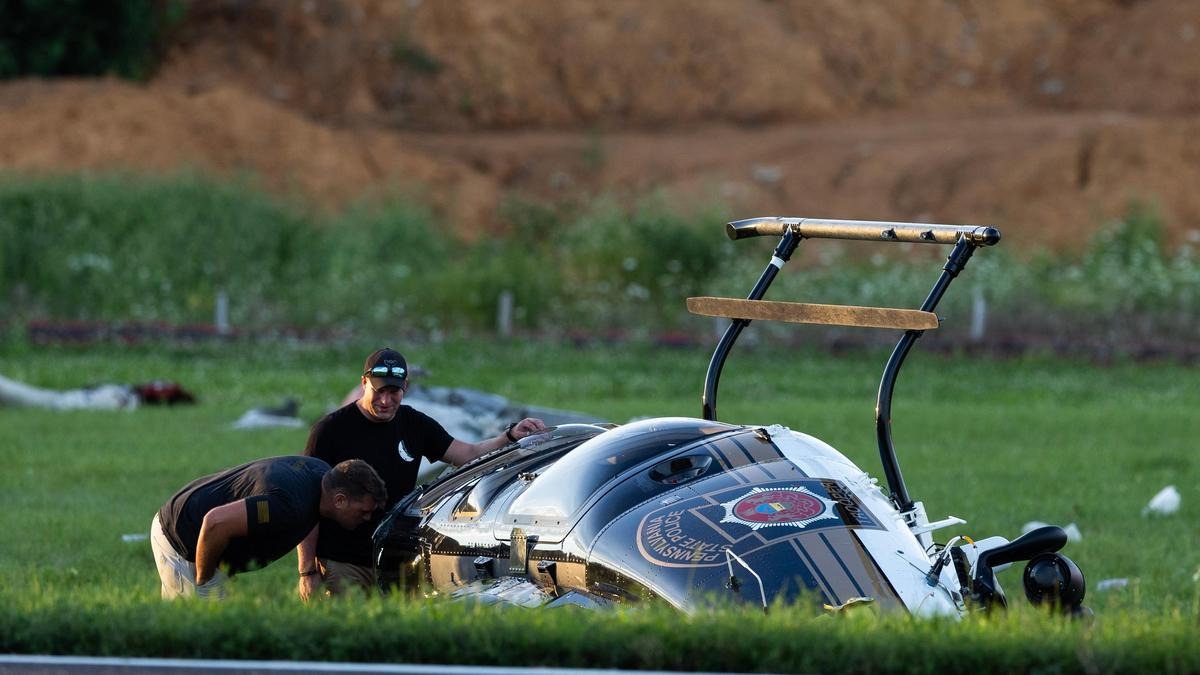
A deadly aircraft collision at Carlisle Regional Airport in Pennsylvania has drawn national attention after a small plane struck a Pennsylvania State Police helicopter during a training operation. The crash happened on Wednesday evening, August 19, leaving the airplane pilot dead and two state police troopers injured. Officials said the helicopter crew survived the violent impact, although both troopers initially became trapped inside the damaged aircraft.
The incident involved a Cessna 150 airplane and a Bell 407 helicopter operated by the Pennsylvania State Police. The helicopter was being used for a routine training exercise when the collision happened near the runway area. Investigators have not yet established exactly why the aircraft ended up on a collision course, making the circumstances surrounding the Pennsylvania plane crash an important part of the continuing investigation.
What Happened Near Carlisle Airport
According to preliminary information released by investigators, the state police helicopter was performing a low-level maneuver near the runway. The aircraft was reportedly hovering only several feet above the ground while conducting what investigators described as a hover taxi operation. Around the same time, the Cessna was approaching the airport during its own flight activity.
Officials later described the airplane’s flight path as unusual and said investigators were examining why the aircraft suddenly changed its movement. Preliminary findings indicated that the Cessna approached in a relatively level attitude before making a significant pitch change and turning toward the helicopter. The plane then struck the rear portion of the police helicopter, creating a devastating collision.
The impact caused serious damage to both aircraft within moments. The police helicopter lost its main rotor blades and tail boom before crashing onto its side. The Cessna broke apart after the collision, with the pilot becoming the only confirmed fatality from the incident. Emergency crews quickly arrived at the airport and began dealing with the wreckage.
Pilot Identified After Fatal Crash
Authorities later identified the deceased pilot as Paul Sokoloski, a 57-year-old man from Hershey, Pennsylvania. Sokoloski was an emergency medicine physician associated with Penn State Health and was also an experienced pilot. Reports said he was flying the Cessna alone when the fatal collision occurred at Carlisle Regional Airport.
The identification added another dimension to an already tragic aviation accident. Sokoloski worked in emergency medicine and had connections with Penn State Health, where colleagues expressed sadness following his death. His professional background also meant that people within the medical community were mourning someone known beyond the local aviation community.
The Cessna 150 involved in the crash is a small aircraft commonly associated with pilot training and recreational flying. It is a two-seat aircraft, making the presence of only one person aboard the plane unsurprising. Investigators are now examining the aircraft’s condition, maintenance history, flight activity, and the pilot’s actions before the collision.
Two State Troopers Survived Impact
The Pennsylvania State Police helicopter had two troopers aboard when the collision occurred. They were identified as Corporal Bryce Corman and Trooper Jason Mills, both members of the state’s aviation unit. Both suffered injuries and were taken to Penn State Health Milton S. Hershey Medical Center for medical treatment following the crash.
The condition of the helicopter crew provided some relief amid the tragedy. One trooper was released from the hospital after receiving treatment, while the other remained hospitalized in stable condition according to officials. The circumstances could have produced a much larger loss of life, especially considering the force involved in the collision.
Reports also described how the helicopter crew escaped from the damaged aircraft. One of the troopers was able to push through a window and help the other person get out. Emergency responders then transported both injured troopers for further medical evaluation and treatment.
Investigation Now Focuses On Flight Paths
The Federal Aviation Administration and National Transportation Safety Board are investigating the Pennsylvania helicopter crash and aircraft collision. Investigators are expected to examine the wreckage, aircraft records, communications, weather conditions, and the movements of both aircraft before impact. Determining the exact sequence will likely take time because several factors could have contributed to the accident.
The NTSB has already begun reviewing available information about the aircraft movements. Investigators are particularly interested in understanding the unusual flight path followed by the Cessna shortly before impact. Officials have not assigned a definitive cause, and early observations should not be treated as a final explanation for the crash.
Investigators also recovered important data cards from both aircraft involved in the collision. According to the NTSB, the recovery was considered useful because these cards could contain valuable flight information. Neither aircraft was required to carry the type of cockpit voice recorder commonly found aboard larger aircraft, making every available source of flight data especially important.
Video Could Help Explain Collision
Video footage of the Pennsylvania plane and helicopter collision has also become an important part of the investigation. Newly released footage appears to show the helicopter operating close to the runway before the Cessna enters the scene. The aircraft then collide, producing a sudden and destructive impact that sends debris and wreckage across the airport area.
Visual evidence can sometimes help investigators understand an accident more clearly than witness descriptions alone. However, investigators still need to combine video observations with aircraft data, communications, physical evidence, and expert analysis. A short video can show what happened visually, but it cannot automatically explain why each pilot made particular decisions beforehand.
That distinction matters in aviation investigations because the final cause often involves several connected factors. Investigators may examine visibility, aircraft positioning, pilot awareness, communication procedures, mechanical conditions, and airport operations. Until that work is completed, officials are unlikely to provide a final determination about responsibility or cause.
Questions Surrounding Airport Operations
The crash has also raised questions about aircraft movements around smaller airports. Carlisle Regional Airport serves general aviation activity, where different aircraft can operate within relatively close areas. Small airplanes, helicopters, training flights, and other operations require careful coordination because their flight patterns and operating altitudes can differ considerably.
The helicopter involved was conducting a training exercise rather than responding to an emergency call. That detail is important because training operations are normally planned activities with specific procedures and objectives. Investigators will likely examine how the helicopter was positioned, what procedures were being followed, and what information was available to the pilots at the time.
The Cessna was also reportedly involved in flight activity before returning toward Carlisle. Investigators are examining what the pilot was doing before the final approach and why the aircraft followed the unusual path described during the preliminary briefing. Those questions could become central to understanding the accident’s final sequence.
Aviation Community Awaits Final Answers
The Pennsylvania aircraft collision has left officials, aviation professionals, and local residents waiting for clearer answers. Fatal accidents involving multiple aircraft are rarely explained by one piece of evidence alone. Investigators generally need to reconstruct the final minutes carefully before determining how the collision occurred.
For now, the confirmed facts remain straightforward but deeply tragic. One pilot died after a Cessna 150 collided with a Pennsylvania State Police Bell 407 near Carlisle Regional Airport. Two state troopers survived with injuries, while federal investigators continue collecting evidence from the scene.
The investigation may eventually provide more information about the aircraft’s movements, communications, and operating conditions. Data recovered from the aircraft could become particularly valuable as investigators reconstruct the final moments. Until the NTSB and FAA release additional findings, speculation about the precise cause should be treated carefully.
Conclusion
The Carlisle Airport collision has become a serious aviation investigation after a small Cessna and Pennsylvania State Police helicopter collided during separate flight operations. The death of pilot Paul Sokoloski has brought a tragic end to an incident that also injured two state troopers. Federal investigators are now examining flight paths, aircraft data, wreckage, communications, and other available evidence to determine exactly what happened. The recovered data cards may provide important clues as the investigation continues. A final explanation could take considerable time, but every finding will matter for aviation safety. For continuing updates and verified developments, stay connected with reliable news coverage and official investigation reports.
Read More :- WebsWisdoms.com