In the expansive waters of Ujani Dam, spanning parts of Solapur and Pune districts in Maharashtra, a quiet but determined struggle is under way. Local fishermen have been enlisted in a pioneering community-driven project aimed at removing invasive fish species that have overrun the reservoir and restoring the native varieties that once thrived there. The initiative, described as the first of its kind in India, seeks to reverse an ecological imbalance that has damaged biodiversity and threatened the livelihoods of thousands who depend on the inland fishery.
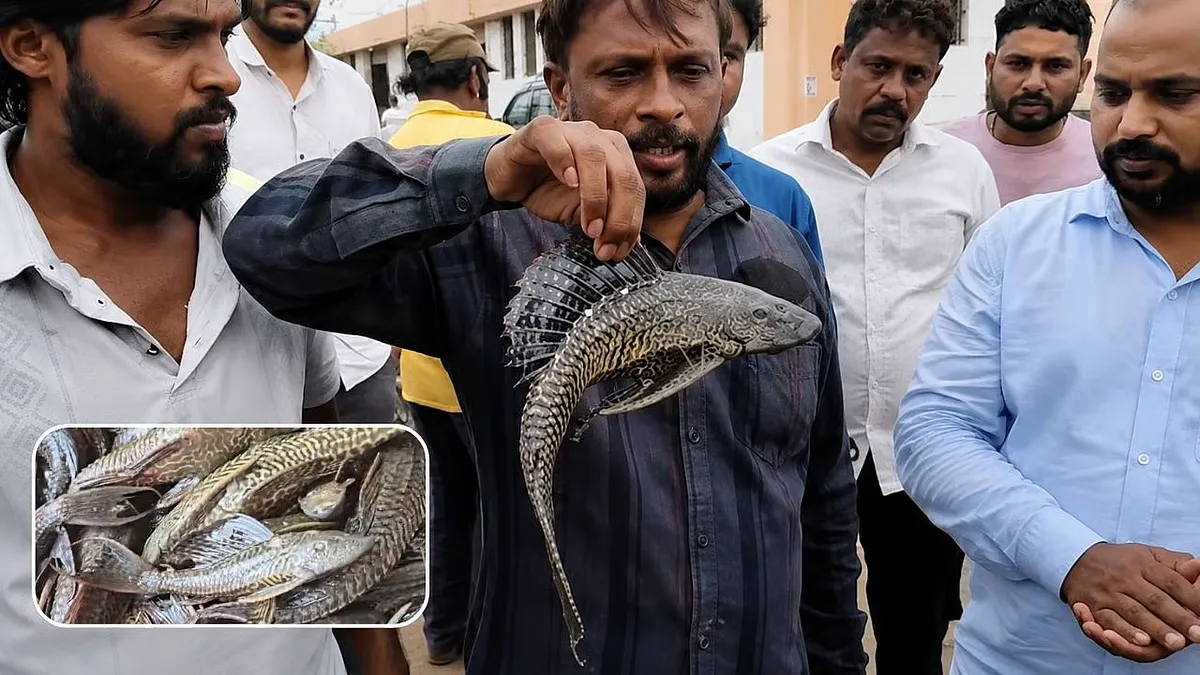
Ujani Dam, the largest in Maharashtra by storage capacity, was constructed on the Bhima River. Its reservoir once supported a rich diversity of native freshwater fish, including the predatory Maral (Channa marulius), the Gugali (Pachypterus species) and the Tambrya (Labeo fimbriatus). These species formed the backbone of a productive local fishery. Over time, however, the waters became dominated by non-native invaders: the suckermouth catfish (Pterygoplichthys species), commonly nicknamed the “helicopter fish” for its distinctive appearance; tilapia (Oreochromis species); and the Thai or African catfish known as Mangur (Clarias gariepinus).
The Scale of the Invasion
Surveys and catch data reveal the extent of the transformation. Native fish, which once constituted the overwhelming majority of the catch, have declined dramatically and now account for only a small fraction—around three per cent in some assessments. Invasive species make up the bulk of what fishermen haul in, with the suckermouth alone estimated at 30 to 40 per cent of total landings in certain periods. The invaders outcompete native species for food and habitat, prey on eggs and juveniles, and, in the case of the suckermouth, burrow into riverbanks and earthen structures, contributing to erosion and potential structural risks.
The impact on fishing communities has been severe. Nets are frequently damaged by the hard, spiny bodies of the suckermouth. Marketable native fish have become scarce, reducing incomes for families who rely on the reservoir. Estimates suggest that thousands of households across the three districts of Pune, Solapur and Ahilyanagar depend directly or indirectly on the Ujani fishery. The decline of indigenous stocks has therefore translated into economic hardship alongside ecological loss. Researchers have noted that dozens of native species have either disappeared or stand on the brink of local extinction after decades of pressure from invasives and other stressors.
A Community-Centred Response
Recognising the dual threat to nature and livelihoods, the Bombay Natural History Society, working with the state Fisheries Department, the Water Resources Department and supported by the Cipla Foundation, launched a structured intervention under its wetland restoration and fisheries development programme. The approach centres on the fishermen themselves. Local fishers are organised into coordinated groups that systematically target invasive species during regular fishing operations. Any native fish inadvertently caught are released back into the water. Workshops train participants to distinguish between invasive and indigenous species so that removal efforts remain precise and effective.
Incentives have been introduced to encourage participation. Fishermen receive a modest premium above the auction rate for every kilogram of suckermouth catfish they deliver. The collected invasive fish are channelled into processing units that convert them into organic fertiliser, turning an ecological problem into a useful by-product and creating an additional economic loop. This practical arrangement ensures that the removal effort does not simply discard biomass but generates value for the community.
Restocking Native Species
Removal alone is not sufficient. Parallel efforts focus on rebuilding populations of indigenous fish. Large numbers of native fingerlings have already been released into the reservoir. In one notable exercise, more than twelve million young fish were introduced as part of the restoration drive. Plans include the breeding and release of threatened and commercially valuable species such as the Deccan Mahseer and Indian major carps, timed to coincide with natural migration and breeding cycles. The long-term objective is to re-establish self-sustaining populations that can support both ecological balance and sustainable harvesting.
The project also addresses invasive aquatic plants such as water hyacinth that compound the problems created by alien fish. By tackling multiple stressors simultaneously—invasive fauna, invasive flora and habitat degradation—the initiative aims for comprehensive wetland recovery.
Why the Model Matters
Ujani represents more than a single reservoir intervention. It is being watched as a potential template for other inland water bodies across India that face similar invasions. The combination of scientific guidance, government departmental support, corporate social responsibility funding and, most importantly, the active involvement of fishing communities distinguishes the effort. Rather than imposing top-down solutions, the programme builds on the knowledge and daily presence of those who know the water best.
Success will depend on sustained effort over years. Complete eradication of established invasive populations is rarely feasible; the realistic goal is significant reduction and continuous management so that native species regain competitive space. Continued monitoring, repeated restocking and ongoing community engagement will be essential. Enforcement against illegal breeding and release of banned species such as the African catfish remains equally important, as fresh introductions can undo progress.
Looking Ahead
The battle of the fishes at Ujani Dam illustrates both the fragility of freshwater ecosystems and the potential of collaborative action. When invasive species dominate, biodiversity declines and local economies suffer. When communities are equipped, incentivised and supported to reverse the trend, recovery becomes possible. The fishermen of Solapur and Pune are now central actors in restoring a resource that has sustained them for generations. Their nets, once filled predominantly with unwanted invaders, are gradually becoming tools of ecological repair. If the model succeeds, Ujani may once again support a balanced community of native fish—and the people who depend on them.
Read more – grammarthink.com