Nana Patekar is widely known for his powerful performances, distinctive voice and intense portrayals of soldiers and other demanding characters. But one lesser-known chapter of his life goes beyond the cinema screen. During the 1999 Kargil War, Patekar spent time with Indian Army personnel and became associated with a Quick Reaction Team after seeking permission to join the troops.
In a 2024 interview with The Lallantop, Patekar spoke about his experience during the conflict. He said he spent around 60 days with the Indian Army and was eventually part of a Quick Reaction Team. He also made it clear that he would not discuss operational details of his time there.
His account offers a rare look at how his personal connection with the armed forces extended beyond the roles he played on screen.
Why Nana Patekar Wanted to Join the Kargil War
When the Kargil conflict broke out in 1999, Patekar said he wanted to contribute directly to the war effort. At the time, George Fernandes was India’s Defence Minister.
According to Patekar’s account, he approached the authorities about joining the troops. His initial attempt faced an obvious obstacle: he was a civilian. The Army could not simply deploy a civilian alongside regular soldiers in an active conflict.
Patekar has recalled that he had already undergone military-style training and had experience with firearms. His association with the armed forces had also developed during the preparation for his film Prahaar, which required extensive military training.
After seeking permission from George Fernandes, Patekar was eventually allowed to spend time with Army personnel in the Kargil region.
His Connection With the Indian Army Began Before Kargil
Patekar’s association with the military was not something that suddenly appeared during the Kargil War.
For his 1991 film Prahaar: The Final Attack, which he directed and starred in, he underwent extensive military training. The film revolved around an Army officer and commando training, requiring Patekar and others involved in the production to understand military discipline and combat preparation.
Reports about his background say that Patekar trained with the Maratha Light Infantry while preparing for the film. His training included commando-related preparation and weapons practice.
This experience gave him an unusual familiarity with military life for someone whose primary profession was acting.
It also helps explain why Patekar felt he could contribute when the Kargil conflict began. However, his previous training did not make him a regular frontline soldier, and his participation still required appropriate permission.
The Role of George Fernandes
George Fernandes was Defence Minister during the Kargil War and played a central role in India’s defence administration during the conflict.
Patekar has recalled contacting Fernandes after being told that civilians could not be accepted for the role he wanted. According to his account, Fernandes initially also pointed out that civilians were not permitted to participate in the fighting.
Patekar nevertheless continued to seek a way to contribute. He ultimately received permission that enabled him to join Army personnel in the conflict area.
The episode is significant because it shows that his involvement was not simply a publicity appearance. He sought formal permission before joining the troops.
Becoming Part of a Quick Reaction Team
One of the most notable details from Patekar’s account is his association with a Quick Reaction Team, or QRT.
In the interview, Patekar described himself as eventually becoming a member of the Quick Reaction Team and referred to it as an elite force. He also connected his decision to a simple desire to do something for the country.
A Quick Reaction Team is designed to respond rapidly when an urgent situation develops. Such teams require readiness, discipline and the ability to respond quickly under difficult circumstances.
Patekar’s statement about being part of a QRT has attracted considerable attention because it adds an unusual dimension to the story of an actor who was already known for portraying military characters.
Around 60 Days With the Troops
One of the clearest details from Patekar’s interview is the length of his involvement.
He said he spent approximately 60 days with the Indian Army during the Kargil War. India Today’s recent report, which revisited his 2024 interview, also states that he spent 60 days with the Army and served alongside the Maratha regiment.
This was a significant period to spend in a conflict environment, particularly given the difficult terrain and conditions associated with the Kargil region.
Some later reports have described shorter periods of time near the Line of Control, while other accounts refer to his broader 60-day association with the Army during the conflict. Because the details come primarily from retrospective accounts of Patekar’s own recollections, it is important not to add operational claims that he himself has not publicly confirmed.
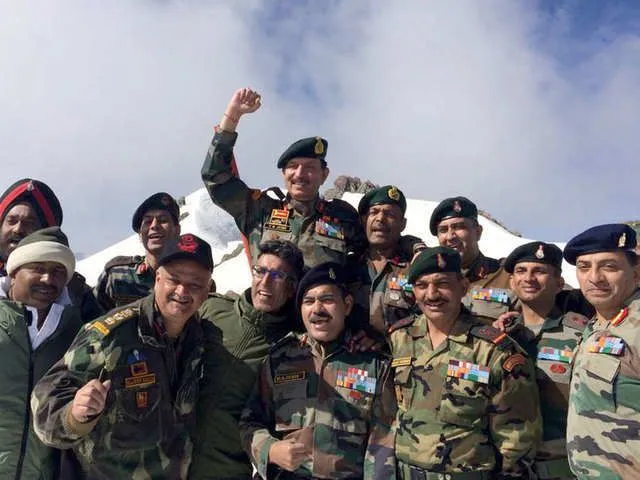
Why He Refused to Discuss Operational Details
Patekar’s account also contains an important element of restraint.
While discussing his experience, he did not provide operational information about what he and the troops did during the conflict. This is understandable given the nature of military operations.
The distinction between publicly discussing an experience and revealing operational information is important. Patekar has spoken about his desire to serve, his time with the Army and his association with the QRT, but he has not presented his account as a detailed description of military operations.
That makes the available information relatively limited, but it also prevents the story from becoming a collection of unverified battlefield claims.
His Military Experience Was Different From His Film Roles
Nana Patekar has played characters associated with the armed forces and intense national-security stories, which can sometimes make it difficult to separate an actor’s screen image from his real-life experiences.
The Kargil episode, however, was not a film assignment.
His participation occurred during an actual war, after he sought permission to be with Army personnel. That makes the experience fundamentally different from military preparation for a movie.
His earlier training for Prahaar may have helped him understand aspects of military discipline, but the Kargil conflict presented circumstances that no film set could fully replicate.
The Importance of Kargil in India’s Military History
The Kargil War took place in 1999 after Pakistani soldiers and armed intruders occupied strategic positions on the Indian side of the Line of Control in the Kargil sector.
The Indian Army launched Operation Vijay to recapture the occupied positions. The conflict was fought at extremely high altitudes and involved difficult terrain, making it one of the most demanding military operations in India’s recent history.
George Fernandes was Defence Minister during the conflict, and the war became a defining episode in India’s modern military history.
Remembering Patekar’s involvement therefore requires understanding the larger context. He was not simply visiting soldiers during a routine military exercise; he sought to be with troops during a national conflict.
Beyond Celebrity Patriotism
Celebrities frequently express support for the armed forces through public statements, fundraising, appearances or patriotic films. Patekar’s Kargil experience stands apart because, according to his own account, he sought permission to spend an extended period with Army personnel during the conflict.
His decision also reflected a personal connection with military training that had existed before the war.
At the same time, it is important not to exaggerate his role. Patekar was an actor and civilian who received permission to accompany and support Army personnel; his participation should not be portrayed as equivalent to the service of career soldiers who were trained and deployed as part of the armed forces.
That distinction makes the story more credible rather than less meaningful.
What Nana Patekar’s Kargil Story Tells Us
The story of Nana Patekar’s 60 days with the Army during the Kargil War remains an unusual chapter in Bollywood history. His decision to seek permission from Defence Minister George Fernandes, his association with the Maratha regiment and his eventual involvement with a Quick Reaction Team reveal a side of the actor that is rarely discussed alongside his film career.
His experience also demonstrates how preparation for a film can sometimes create a lasting connection with a profession far removed from entertainment. The military training undertaken for Prahaar gave Patekar familiarity with Army life, while the Kargil conflict gave that connection a real-world dimension.
Most importantly, Patekar’s own decision not to discuss operational details reflects an understanding that some experiences from a war zone are not meant to become public stories.
For audiences who know Nana Patekar primarily as an actor, his Kargil experience adds another layer to his public life. His time with Indian troops during the 1999 conflict remains a remarkable example of a celebrity stepping away from the film set and seeking, with official permission, to stand alongside the country’s armed forces during a difficult period.
Read more – lasandino.com