A well-designed study timetable transforms scattered effort into steady progress. Many students begin with strong intentions but struggle to maintain daily consistency. The difference often lies not in motivation alone, but in creating a realistic schedule that respects energy levels, includes recovery, and adapts to real life. This guide explains how to build an effective study timetable and develop the habits needed to follow it day after day.
Why a Structured Timetable Matters
Without a plan, study time easily expands or shrinks according to mood and distraction. A timetable provides clarity about what to study, when to study it, and how long to spend on each task. It reduces decision fatigue, helps balance multiple subjects, and creates a rhythm that makes starting easier. Over time, the schedule becomes a supportive framework rather than a rigid constraint.
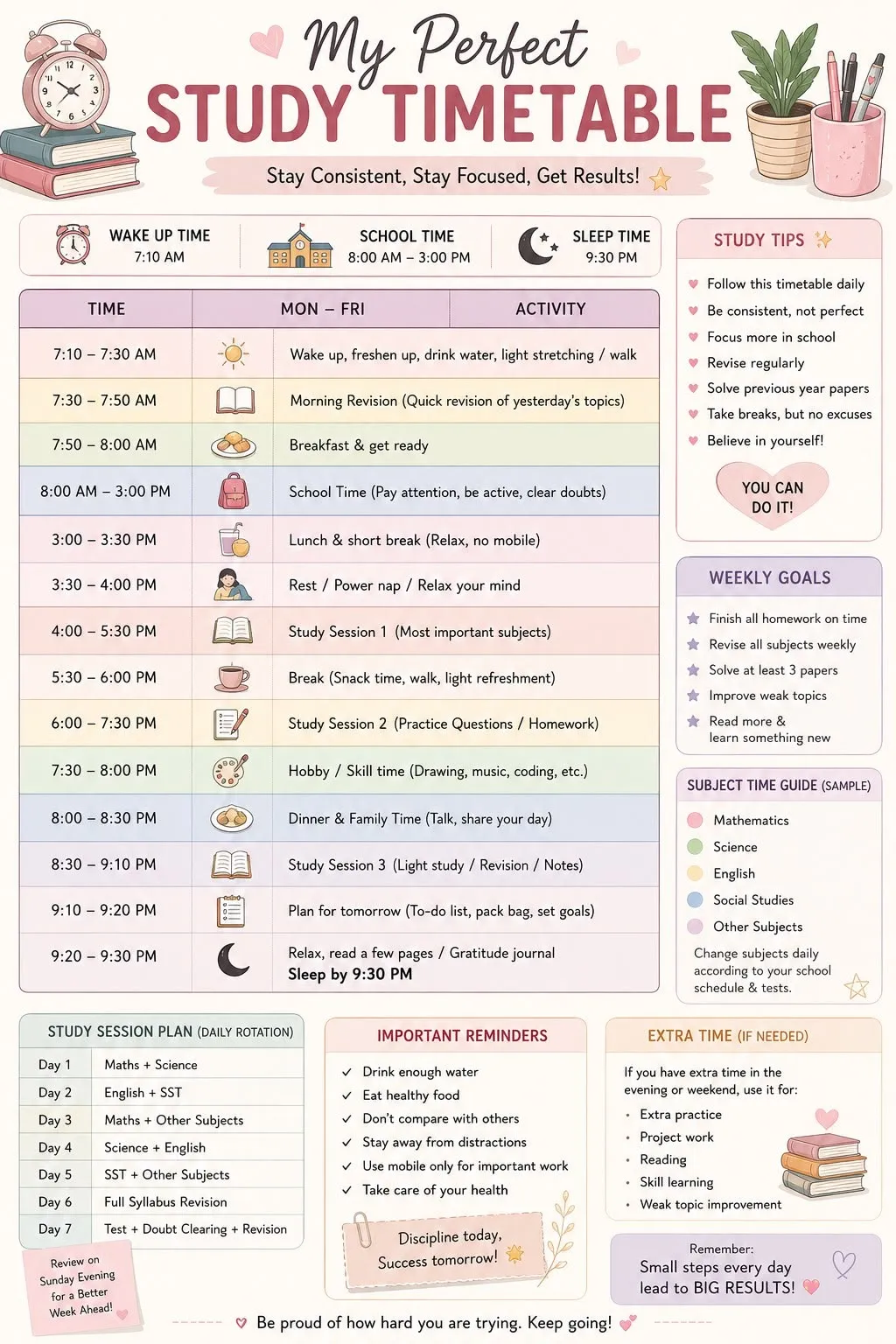
The most effective timetables are personalised. They account for individual energy patterns, academic deadlines, and non-negotiable commitments such as classes, work, or family responsibilities. A perfect timetable is not the one that looks most impressive on paper; it is the one that can be followed consistently.
Step 1: Clarify Goals and Priorities
Begin by listing all subjects or topics that need attention. Identify upcoming deadlines, exam dates, and areas of relative strength and weakness. Allocate more time to challenging subjects while ensuring stronger areas still receive regular review. Clear weekly goals—such as completing specific chapters, practising a set number of questions, or reviewing lecture notes—give the timetable purpose.
Breaking larger goals into smaller daily targets makes progress measurable and less overwhelming. When each study block has a defined outcome, sessions feel more productive and easier to start.
Step 2: Understand Personal Energy Patterns
Not all hours of the day are equal. Most people have periods of higher focus and periods of lower energy. Observe when concentration comes most naturally—morning, afternoon, or evening—and schedule demanding tasks during those windows. Routine or lighter review can fill lower-energy times.
Matching task difficulty to energy levels improves both efficiency and consistency. Forcing complex work into periods of natural fatigue often leads to frustration and avoidance.
Step 3: Design a Balanced Weekly Structure
A sustainable timetable includes more than study blocks. It should also protect time for sleep, meals, physical movement, social connection, and genuine rest. Neglecting these elements usually leads to burnout and eventual collapse of the schedule.
Start by blocking fixed commitments. Then place study sessions into the remaining available time, keeping them realistic in length. Many students benefit from focused intervals of 25 to 50 minutes followed by short breaks. Longer unbroken stretches can work for some, but only if concentration remains high.
Leave small buffers between sessions. Unexpected delays and tasks that take longer than planned are normal. A timetable with no flexibility quickly becomes stressful and difficult to follow.
Step 4: Assign Specific Tasks to Specific Times
Vague entries such as “study maths” are less effective than precise ones such as “practise algebra problems from chapter 5” or “review and summarise lecture notes on cell biology.” Specificity reduces procrastination and makes it easier to begin.
Rotate subjects to maintain variety and prevent mental fatigue. Interleaving different topics across the week can also strengthen long-term retention compared with studying one subject in isolation for long periods.
Include regular review sessions. Returning to earlier material at spaced intervals supports memory far better than last-minute cramming.
Step 5: Build in Breaks and Recovery
Planned breaks improve focus during study periods. Short pauses to stretch, walk, or rest the eyes help maintain concentration. Longer breaks for meals and genuine downtime prevent the schedule from feeling punishing.
Sleep deserves particular protection. Consistent, adequate rest supports memory consolidation and emotional regulation. A timetable that regularly sacrifices sleep for extra study hours usually becomes counterproductive.
Strategies to Stay Consistent Every Day
Creating the timetable is only the first step. Consistency depends on supporting habits and realistic expectations.
Start with a schedule that feels slightly easier than the ideal. It is better to follow a moderate plan reliably than to abandon an ambitious one after a few days. Once the routine feels stable, study blocks can gradually expand.
Use simple tracking. Crossing off completed sessions or keeping a brief daily log provides a sense of progress and highlights patterns. Visual evidence of consistency reinforces the habit.
Prepare the environment in advance. A ready workspace, necessary materials, and reduced distractions make it easier to begin at the scheduled time. Decision points are where many good intentions fail; removing friction helps.
Anticipate obstacles. Identify common disruptions—fatigue, social invitations, low motivation—and decide in advance how to respond. Having a minimum version of the plan for difficult days prevents total abandonment. Even a shorter focused session maintains momentum.
Review and adjust weekly. A timetable should evolve with changing workloads, energy levels, and feedback from experience. Rigid adherence to a plan that no longer fits creates unnecessary stress. Flexibility within structure supports long-term consistency.
Handling Missed Days Without Losing Momentum
Missing a planned session is normal. The critical response is to resume at the next opportunity rather than trying to compensate with excessive catch-up that leads to exhaustion. Consistency over weeks matters more than perfection on any single day.
Self-criticism after a missed session often reduces motivation further. A practical, forward-looking approach—acknowledging the miss and returning to the plan—preserves progress.
Tools and Techniques That Support the Habit
Some students prefer digital calendars with reminders. Others work better with paper planners. The best tool is the one that will actually be used. Colour-coding subjects or priorities can make the schedule easier to read at a glance.
Techniques such as time-blocking and focused work intervals help protect study periods from interruption. Combining these methods with the personalised timetable strengthens daily execution.
The Longer-Term Benefits of Consistency
A realistic study timetable followed consistently reduces last-minute pressure, improves retention through regular review, and builds confidence. Students gain a clearer sense of control over their workload and develop habits that extend beyond exams into professional life.
Progress compounds. Small daily sessions completed regularly usually outperform occasional long bursts of intensive effort. The timetable becomes less of an external demand and more of a personal system for steady advancement.
Conclusion: Design for Reality, Not Perfection
A perfect study timetable is one that balances ambition with sustainability. It reflects personal energy patterns, protects essential recovery, assigns clear tasks, and remains flexible enough to survive ordinary disruptions. Consistency grows from starting realistically, tracking progress simply, preparing the environment, and returning quickly after setbacks.
By treating the timetable as a living tool rather than a rigid contract, students create conditions for reliable daily effort. Over time, that steady approach produces stronger results, lower stress, and greater confidence in the ability to manage demanding academic work. The most effective schedule is not the one that looks ideal on paper—it is the one that is followed, adjusted, and sustained day after day.
Read more – topstablegames.com