International travel opens doors to new cultures, cuisines, and experiences, but success hinges on thorough preparation. A well-curated essentials checklist ensures you navigate airports, borders, and destinations smoothly while minimizing stress and unexpected challenges. Whether embarking on a first-time adventure or a seasoned journey, focusing on documents, health, clothing, electronics, and safety items creates a foundation for memorable trips.
The key is balancing preparedness with packing light. Overpacking leads to cumbersome luggage, while underpacking creates inconvenience abroad. Aim for versatile, multi-use items and always prioritize carry-on essentials in case checked bags are delayed.
Essential Travel Documents
Your documents form the backbone of any international trip. Start preparations months in advance.
- Passport: Ensure validity for at least six months beyond your return date for many destinations. Carry the original and digital/physical copies stored separately.
- Visas and Entry Permits: Research requirements via official government sources. Some countries need e-visas or Electronic Travel Authorizations (ESTA for the US, for example).
- Proof of Onward Travel and Accommodations: Airlines or border officials may request these.
- Travel Insurance Documents: Comprehensive coverage for medical emergencies, trip cancellation, and lost luggage is crucial. Keep policy details accessible.
- Driver’s License and International Driving Permit (IDP): Useful if renting vehicles; required in several countries.
- Vaccination Records and Health Documents: Include COVID-19 or other required proofs.
- Copies and Digital Backups: Photograph or scan everything and store in a secure cloud service. Leave copies with a trusted contact at home.
Enroll in programs like the Smart Traveler Enrollment Program (STEP) for real-time alerts from embassies.
Valid passport is the cornerstone, with validity often required for at least six months beyond your return date in many countries. Include necessary visas, Electronic Travel Authorizations (like ESTA), and proof of onward travel or accommodations. Carry copies of all documents separately, along with digital backups on your phone or cloud storage. For families, additional items like notarized consent letters for traveling with minors are crucial. Enroll in embassy alert programs for real-time safety updates. Always verify destination-specific requirements through official channels well in advance to avoid entry denials at borders.
Health and Medication Essentials
Pack prescription medications in original packaging with enough supply plus extras for delays, including a doctor’s note with generic names. A basic first-aid kit should contain pain relievers, anti-diarrheal medicine, antihistamines, antiseptic wipes, and motion sickness remedies. Include personal items like hand sanitizer, sunscreen, insect repellent, and any required vaccination records. Consult healthcare providers for destination-specific risks such as malaria or yellow fever. Reusable water filters help ensure safe hydration. This preparation prevents minor issues from ruining your trip and handles common travel ailments effectively.
Clothing and Personal Items
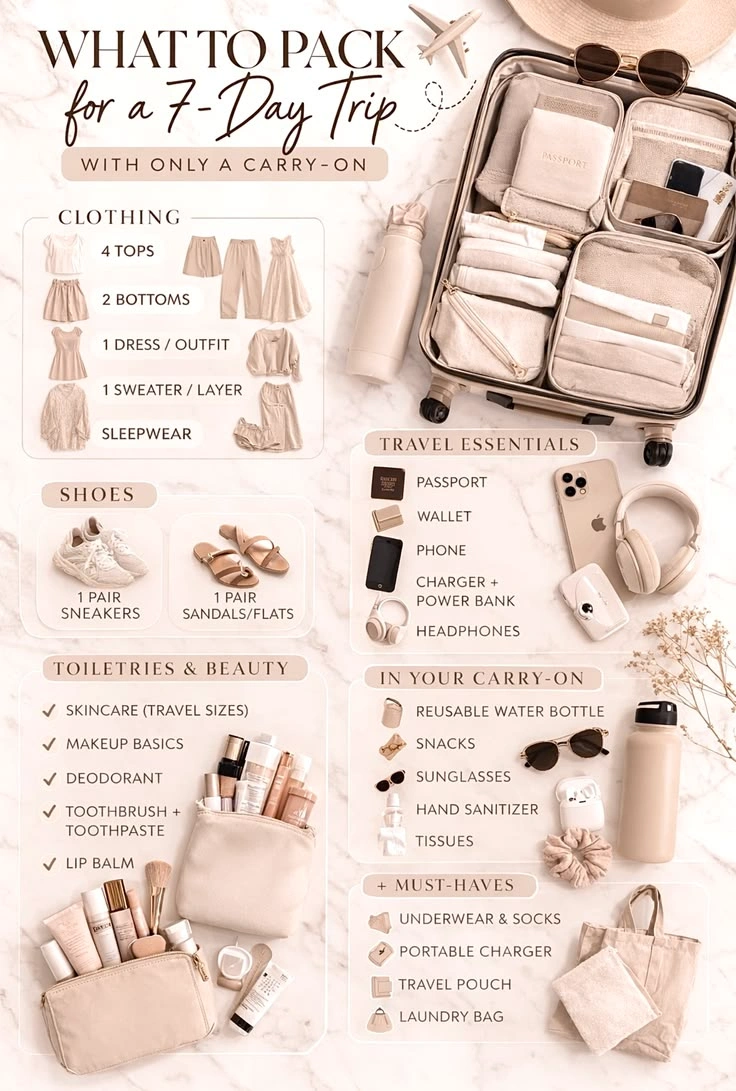
Focus on versatile, quick-drying fabrics like synthetic blends or merino wool that mix and match easily. Pack 3-5 tops, 2-3 bottoms, sufficient underwear and socks for 7-10 days, plus layers such as a lightweight jacket and comfortable walking shoes. Include multi-use accessories like a scarf, hat, and reusable bag. Toiletries should be in travel-sized, 100ml-compliant containers for carry-on. Roll clothes or use packing cubes for efficiency. Adapt based on climate, activities, and cultural norms for comfort and appropriateness throughout the journey.
Electronics and Adapters
A universal travel adapter is essential to handle different plug types worldwide, preferably with built-in USB ports for convenience. Carry a high-capacity power bank for long travel days and device chargers. Load your smartphone with offline maps, translation apps, and digital document copies. Noise-canceling headphones or earplugs enhance comfort on flights. Check voltage compatibility to protect devices. Portable locks and cables add security for luggage and hostel use. These items keep you connected and powered reliably across borders.
Money and Security Items
Notify banks of travel dates and carry cards with no foreign transaction fees, plus backups. Have small amounts of local currency and emergency reserves in major currencies like USD. Use a money belt or hidden pouch for valuables and an RFID-blocking wallet to prevent electronic theft. Portable door locks or cable locks secure belongings in accommodations. Keep an emergency contacts list handy. These measures protect against pickpockets and loss while maintaining access to funds.
Carry-On vs. Checked Luggage Strategy
Prioritize passport, medications, one change of clothes, electronics, snacks, and a reusable water bottle in your carry-on for delays or lost baggage. Use compression socks, travel pillow, and eye mask for long-haul comfort. Checked bags suit bulkier items like extra shoes or larger toiletries. Employ TSA-approved locks and packing cubes for organization. This strategy ensures essentials remain accessible and minimizes inconvenience from airline mishaps. Test-pack in advance to balance weight and needs.
Pre-Trip Planning and Safety Tips
Research travel advisories, local laws, customs, and cultural etiquette thoroughly. Share your itinerary with trusted contacts and confirm all bookings. Arrange reliable airport transfers and download useful apps for navigation and currency. Pack sustainably with reusable items and consider travel insurance covering medical and cancellation issues. Stay vigilant in crowds and use registered transport. For solo travelers, review gender-specific safety advice. Proper planning turns potential risks into smooth, enriching experiences.
Final Checklist Categories Summary
Organize into clear categories: documents, health, clothing, electronics, money/security, and miscellaneous. Tailor based on trip duration, season, and activities—such as adding swimwear for beach trips or sturdy shoes for hiking. Review and test-pack early to spot gaps. This structured approach prevents oversight and promotes efficient packing. Regular updates to the checklist accommodate changing travel norms and personal preferences. It empowers confident, hassle-free international adventures.
Read more – socialmedixy.com