
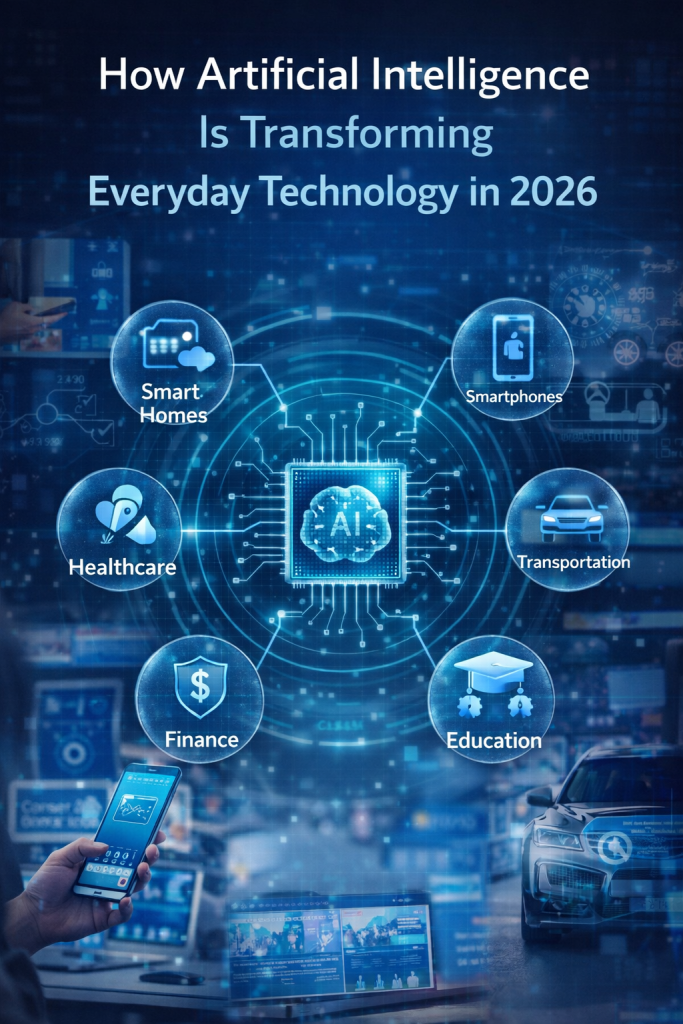
Artificial Intelligence (AI) has evolved from a futuristic concept into a core component of everyday technology. By 2026, AI is no longer confined to research labs or large enterprises; it is deeply integrated into smartphones, homes, workplaces, healthcare systems, transportation networks, and financial services. Advances in machine learning, natural language processing, computer vision, and automation have enabled AI systems to perform complex tasks with increasing accuracy and efficiency.
The rapid adoption of AI is driven by improved computing power, cloud infrastructure, edge computing, and access to vast datasets. Businesses and consumers alike benefit from smarter, faster, and more personalized technology experiences. Below is a detailed exploration of how AI is transforming everyday technology in 2026.
Table of Contents
ToggleAI in Smartphones and Personal Devices
Smartphones remain one of the most visible examples of AI integration in daily life. In 2026, AI powers voice assistants, predictive text, real-time language translation, and advanced photography enhancements. Machine learning algorithms optimize battery usage, app performance, and system security.
AI-driven cameras automatically adjust lighting, recognize scenes, and enhance image quality through computational photography. Biometric authentication, such as facial recognition and fingerprint scanning, has become more secure and accurate through AI improvements. Personal devices now adapt to user behavior patterns, offering proactive suggestions and improved user experiences.
Smart Homes and IoT Automation
Artificial Intelligence plays a central role in smart home ecosystems. AI-powered devices such as smart speakers, thermostats, lighting systems, and security cameras communicate through the Internet of Things (IoT) to create automated environments.
In 2026, smart homes can learn user preferences and adjust temperature, lighting, and energy usage accordingly. AI-driven security systems analyze video feeds to detect unusual activity and send instant alerts. Energy efficiency has improved through intelligent monitoring systems that reduce unnecessary power consumption. These innovations enhance convenience, safety, and sustainability in everyday living.
AI in Healthcare and Medical Technology
Healthcare has seen significant transformation due to AI technologies. Machine learning algorithms assist in medical imaging analysis, disease detection, and predictive diagnostics. AI systems can analyze large volumes of patient data to identify patterns that may indicate early signs of illness.
Wearable health devices use AI to monitor heart rate, sleep quality, and physical activity in real time. Telemedicine platforms leverage AI chatbots to triage symptoms and guide patients to appropriate care. In 2026, AI continues to support healthcare professionals by improving accuracy, reducing workload, and enabling personalized treatment plans.
Transportation and Autonomous Systems
AI is revolutionizing transportation systems worldwide. Advanced driver-assistance systems (ADAS) use computer vision and machine learning to improve road safety. Features such as lane detection, adaptive cruise control, and collision avoidance rely heavily on AI algorithms.
Autonomous vehicles continue to develop through AI-powered sensors and real-time data processing. Public transportation systems utilize AI for route optimization and traffic prediction, reducing congestion and fuel consumption. Logistics companies employ AI to enhance delivery efficiency and supply chain management. These advancements are reshaping mobility and improving safety standards.
AI in Business and Workplace Productivity
Artificial Intelligence has become a key driver of workplace efficiency. AI-powered tools automate repetitive tasks such as data entry, scheduling, and customer support. Natural language processing enables intelligent chatbots and virtual assistants to handle inquiries and improve customer experience.
Data analytics platforms use AI to generate actionable insights, helping businesses make informed decisions. Predictive analytics assists in demand forecasting, inventory management, and financial planning. In 2026, AI not only boosts productivity but also allows employees to focus on strategic and creative tasks rather than routine operations.
Financial Services and Fraud Detection
The financial sector heavily relies on AI for risk assessment, fraud detection, and customer service. Machine learning models analyze transaction patterns to identify suspicious activity in real time. This proactive approach significantly reduces financial fraud and cybercrime risks.
AI-powered robo-advisors provide personalized investment recommendations based on user goals and market analysis. Credit scoring systems leverage AI to evaluate financial behavior more accurately. By enhancing efficiency and security, AI has strengthened trust and transparency within financial services.
Personalized Digital Experiences
Personalization is one of the most noticeable impacts of AI in everyday technology. Streaming platforms, e-commerce websites, and social media networks use AI algorithms to recommend content and products tailored to individual preferences.
Recommendation systems analyze browsing history, user interactions, and behavioral data to deliver relevant suggestions. This level of customization enhances user engagement and satisfaction. In 2026, personalization extends beyond entertainment to education, fitness, and online learning platforms, making digital experiences more relevant and efficient.
AI in Education and Learning Technologies
Education technology has evolved with AI-powered learning platforms that adapt to student performance. Intelligent tutoring systems analyze strengths and weaknesses to provide customized learning paths.
AI-driven language learning apps offer real-time feedback on pronunciation and grammar. Automated grading systems assist educators by evaluating assignments efficiently. In 2026, AI enhances accessibility by supporting students with disabilities through speech recognition and text-to-speech technologies. These innovations promote inclusive and personalized education.
Cybersecurity and AI Defense Systems
As digital threats grow more complex, AI has become essential in cybersecurity. AI-powered systems monitor network activity, detect anomalies, and respond to potential threats automatically.
Machine learning models identify malware patterns and prevent unauthorized access in real time. By analyzing large datasets, AI improves threat intelligence and strengthens defense mechanisms. In everyday technology, enhanced security ensures safer online transactions, data protection, and privacy preservation.
Ethical Considerations and Responsible AI
While AI brings significant benefits, ethical considerations remain critical. Issues such as data privacy, algorithmic bias, and transparency require careful attention. Governments and organizations are developing regulatory frameworks to ensure responsible AI development and deployment.
In 2026, there is increased emphasis on explainable AI systems that allow users to understand how decisions are made. Businesses prioritize ethical guidelines to maintain trust and accountability. Responsible AI practices ensure that technological advancements benefit society without compromising fairness or security.
Conclusion
Artificial Intelligence is fundamentally transforming everyday technology in 2026. From smartphones and smart homes to healthcare, transportation, finance, and education, AI enhances efficiency, personalization, and security across multiple sectors. The integration of machine learning, automation, and advanced analytics has redefined how individuals interact with technology daily.
However, the continued growth of AI also requires responsible implementation and ethical oversight. By balancing innovation with accountability, AI can continue to improve quality of life, streamline operations, and create smarter digital ecosystems. As technology evolves, Artificial Intelligence will remain at the center of everyday transformation, shaping a more connected and intelligent future.
