Concerns about a child’s height are among the most common reasons parents seek medical advice. A shorter stature than classmates or cousins often triggers anxiety, yet height must be interpreted in context. As a paediatric endocrinologist would emphasise, the key is not absolute height at a single point in time but the child’s own growth pattern and genetic potential. Understanding the difference between normal variation and a problem that requires evaluation can prevent unnecessary worry while ensuring timely care when it is needed.
Height Must Be Judged Against Genetic Potential
Adult height is strongly influenced by genetics. The most useful starting point is therefore the mid-parental height, an estimate of a child’s expected adult stature based on the heights of both parents. This target provides a personalised reference range rather than a comparison with population averages or peers.
A child whose current height falls within a reasonable range of the mid-parental target and who is growing steadily along a consistent percentile line is usually following a normal trajectory. Conversely, a significant discrepancy — for example, a child whose height is well below the genetic expectation — warrants closer attention even if the absolute height does not appear extremely low.
Accurate measurement of both the child and the parents is essential. Reported heights can be unreliable; ideally, parents should be measured with a calibrated stadiometer during the consultation.
Growth Velocity Matters More Than a Single Measurement
Growth is a dynamic process. A single height reading on a chart provides limited information. What matters more is growth velocity — how many centimetres a child gains over a defined period, typically six to twelve months.
Before puberty, children generally grow at least 4 to 5 centimetres per year. During the pubertal growth spurt the rate increases. A sustained velocity below expected levels for age, or a clear downward crossing of percentile lines on the growth chart, is a more reliable indicator of concern than being shorter than classmates. Serial measurements plotted on a standardised growth chart allow the pattern to become visible.
Children who were born small for gestational age and fail to show adequate catch-up growth by the age of two to four years also require evaluation.
Common Normal Variants
Many children who appear short are healthy and simply following familial patterns or a delayed tempo of growth.
Familial short stature occurs when a child is short but growing at a normal rate and has short parents. The height is consistent with the family’s genetic potential, bone age is usually appropriate for chronological age, and no further pathology is present.
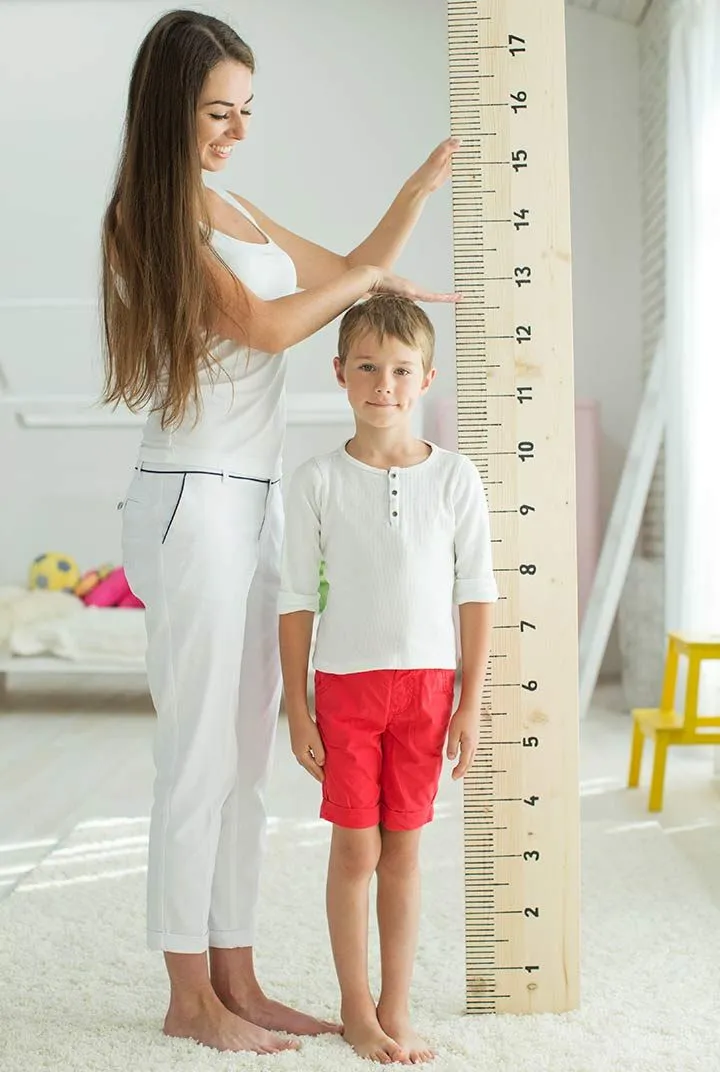
Constitutional delay of growth and puberty is another frequent finding. These children are often called “late bloomers.” They grow slowly in childhood, enter puberty later than average, and experience their growth spurt later, ultimately reaching a normal adult height appropriate for their family. A family history of delayed puberty is common.
Recognising these variants is important so that healthy children are not subjected to unnecessary investigations or medicalisation.
When Medical Evaluation Is Warranted
Certain patterns and associated features raise the possibility of an underlying issue and justify referral to a paediatric endocrinologist. These include:
-
Growth velocity below approximately 4.5 cm per year before puberty or inadequate velocity during puberty.
-
Progressive downward crossing of percentile lines on the growth chart.
-
Height more than two standard deviations below the mean for age and sex, or substantially below the mid-parental target.
-
History of being small for gestational age without catch-up growth.
-
Symptoms such as persistent fatigue, pallor, chronic gastrointestinal problems, headaches, visual changes, or disproportionate body segments.
-
Delayed or absent signs of puberty at the expected ages, or other features suggestive of hormonal imbalance or chronic disease.
In these situations a structured assessment is appropriate. This typically includes a detailed medical and family history, careful physical examination, review of the complete growth record, and, when indicated, investigations such as a bone-age X-ray of the hand and wrist, blood tests for thyroid function, growth factors, coeliac disease, and other relevant markers.
The Role of the Paediatric Endocrinologist
A specialist consultation aims to distinguish normal variation from treatable conditions. The process is methodical: plotting all available measurements, calculating genetic target height, assessing growth velocity, and determining whether further testing is required. The goal is balanced — to identify children who may benefit from intervention while avoiding over-investigation of those who are simply following a normal, if slower, trajectory.
Conditions that can affect growth include hormonal disorders (growth hormone deficiency, hypothyroidism, excess cortisol), chronic systemic illnesses, nutritional deficiencies, genetic syndromes, and skeletal dysplasias. Early identification improves the likelihood of effective management, particularly while growth plates remain open.
Practical Steps for Parents
Parents who are worried about their child’s height should begin with accurate serial measurements recorded by a healthcare professional and plotted on a growth chart. Comparing the child only with peers or relatives of different genetic backgrounds is less informative than examining the individual growth curve and family heights.
Maintaining good overall health supports optimal growth. Adequate nutrition, sufficient sleep, regular physical activity, and management of any chronic conditions all contribute. However, these measures do not replace the need for professional assessment when red-flag patterns are present.
If concerns persist after primary-care review, a referral to a paediatric endocrinologist provides specialised expertise. Bringing previous growth records, parental height measurements, and a clear history of the child’s development makes the consultation more efficient and informative.
A Balanced Perspective
Most children who are shorter than their classmates are healthy and growing in accordance with their genetic endowment or a delayed but normal pattern. Reassurance based on careful data is often the most appropriate outcome. At the same time, a minority of children have underlying conditions that benefit from timely diagnosis and treatment. The skill lies in distinguishing the two groups through systematic evaluation rather than reliance on comparisons with peers.
Height is only one aspect of a child’s development. Focusing on consistent growth along an appropriate trajectory, overall health, and well-being provides a more accurate and less anxiety-provoking framework than absolute stature alone. When uncertainty remains, professional assessment offers clarity and, when needed, a path to effective support.
Read more – wellposhan.com