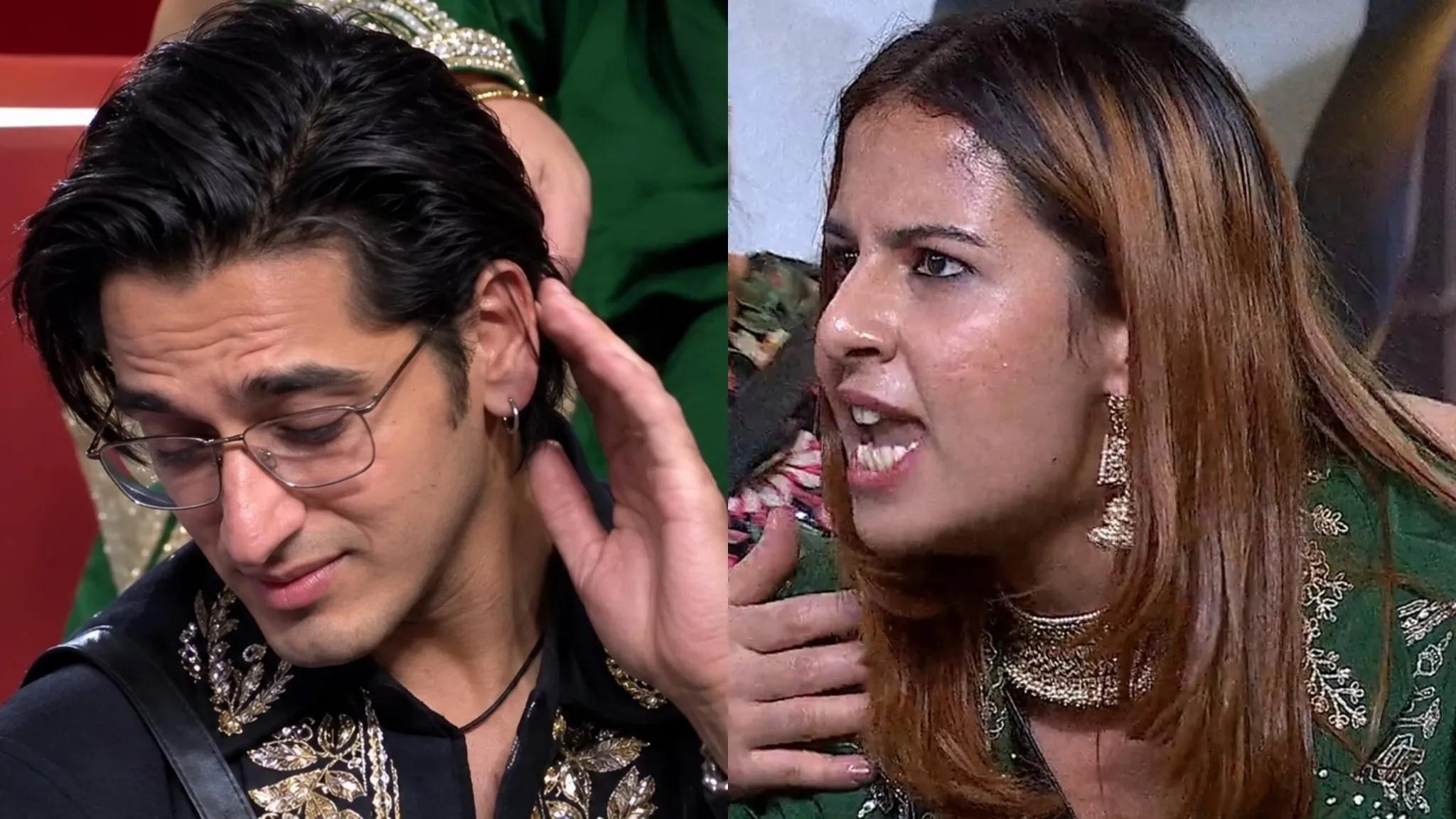
A heated exchange on Bigg Boss 20 between Rhiti Tiwari and Qazi Touqeer has triggered widespread criticism online. The daughter of Bhojpuri actor-singer and politician Manoj Tiwari faced sharp backlash after viewers accused her of using abusive and disrespectful language during the confrontation. Although she later apologised for one specific remark, the episode continued to dominate conversations on social media.
How the Argument Unfolded
The flashpoint came during a Weekend Ka Vaar episode after host Salman Khan revealed that Qazi Touqeer had staged a medical emergency inside the house. Qazi had earlier given housemates the impression that he was unwell and needed urgent attention. When the truth emerged that the episode was a deliberate act, several contestants expressed disappointment and anger. They said they had been genuinely worried about his health.
Rhiti Tiwari was among the most vocal. She called Qazi a “fake baba” and “disgusting,” and described his actions as a mockery of people who deal with mental health issues. She also twisted his popular catchphrase “I’m a rockstar baby” into “I’m a fraudster, baby.” When Qazi objected to the language and asked her not to abuse him, the exchange escalated.
Rhiti then said words to the effect of: “Who are you? Why are you going to press my mute button? Am I your father’s servant? Don’t you know who I am? Who are you talking to?” Qazi remained largely composed and requested her not to bring his father into the argument. Rhiti later apologised for the remark involving the father, but the broader tone of the confrontation had already drawn strong reactions.
Online Reaction and Criticism
Clips of the argument spread quickly on social media. Many viewers criticised Rhiti for what they saw as arrogance and an entitled attitude. Comments questioned her conduct, with some users arguing that her response went far beyond legitimate anger over the prank. Others pointed to the personal nature of the language, particularly the reference to Qazi’s father, as crossing a line even by the usually unrestrained standards of the show.
A section of the audience compared her behaviour to that of past contestants known for aggressive confrontations, suggesting that the intensity felt disproportionate. At the same time, Qazi’s calm demeanour during the exchange earned him praise from viewers who felt he handled the situation with restraint.
Celebrity Responses
The controversy moved beyond ordinary social-media commentary when public figures weighed in. Former Bigg Boss winner Gauahar Khan publicly backed Qazi, praising the grace with which he responded to the verbal attack. She suggested that the intensity of the reaction against him might stem from insecurity or jealousy once a contestant gains visibility. Filmmaker and composer Sajid Khan also criticised the manner in which Rhiti spoke to Qazi, adding to the pressure on the young contestant.
These interventions amplified the discussion and reinforced the perception among many viewers that Rhiti’s approach had been excessive.
Context Inside the House
Reality shows like Bigg Boss thrive on conflict, and emotional confrontations are an expected part of the format. Housemates live in close quarters under constant surveillance, and trust becomes a fragile currency. Qazi’s decision to fake a medical crisis clearly breached that trust for several contestants who had shown genuine concern. In that sense, anger was not surprising.
What drew particular criticism was the personal and hierarchical tone of Rhiti’s remarks. References to status, identity and family shifted the argument from a disagreement over behaviour to something that many viewers read as an assertion of superiority. In a show that already invites scrutiny of class, privilege and personality, such moments tend to travel far beyond the house.
Rhiti’s Position and the Weight of Public Attention
Rhiti Tiwari entered the show carrying the visibility that comes with being the daughter of a well-known public figure. In earlier conversations inside the house she had spoken about the pressures of that identity, including online hostility directed at her because of her father’s political profile. The latest controversy has added another layer of intense public examination.
Her apology for the specific remark about Qazi’s father indicated an awareness that the comment had gone too far. Yet in the fast-moving economy of social media, a single apology often struggles to contain the broader narrative once clips and reactions begin circulating. Viewers continued to focus on the overall tone of the confrontation rather than the later clarification.
The Larger Pattern on Reality Television
Episodes like this highlight a recurring tension on Indian reality television. Contestants are encouraged to be emotionally expressive and confrontational because conflict drives ratings. At the same time, audiences and external commentators frequently judge those same moments by everyday social standards of respect and restraint. When a contestant’s language is perceived as crossing into personal insult or entitlement, the reaction can be swift and severe.
The presence of celebrity children or contestants with famous last names intensifies the scrutiny. Any display of aggression is more readily interpreted through the lens of privilege, whether or not that interpretation is entirely fair. In Rhiti’s case, the combination of strong language, a reference to family status and the calm response from the other party created a narrative that proved difficult to counter.
What Comes Next
Inside the Bigg Boss house, the incident is likely to influence group dynamics and individual strategies in the coming days. Outside, the conversation will continue as long as fresh clips and reactions keep appearing. For Rhiti Tiwari, the episode serves as a reminder of how quickly a single heated exchange can define public perception in a format built on constant visibility.
For viewers, the controversy is another illustration of the complicated relationship between reality television, personal conduct and online judgement. The show will move on to new tasks and new conflicts. The questions raised about tone, respect and the limits of confrontation, however, tend to linger longer than any single weekend episode.
Read more – leventescortq.com