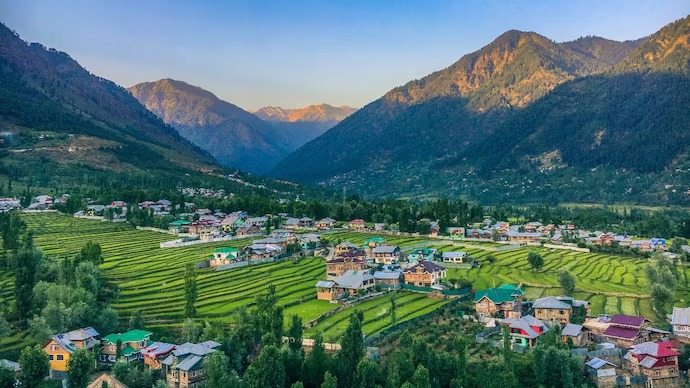
Why Border Villages Matter Now
India’s border villages are getting a very different kind of attention these days, especially among younger travellers. Prime Minister Narendra Modi recently encouraged young people to visit and stay in India’s border villages, saying that such experiences help them understand the country and its people more closely. His remarks came after the Viksit Vibrant Village Programme 2026 connected hundreds of young participants with frontier communities across Ladakh, Himachal Pradesh and Uttarakhand.
The idea is not simply about ticking another mountain destination off your travel list. These villages offer something that regular tourist towns often cannot provide, including local traditions, difficult terrain, fascinating food, old trade routes and a close look at life near India’s international borders.
The government’s Vibrant Villages Programme is also pushing tourism, better connectivity, livelihoods and cultural activities in selected frontier settlements. As of July 2026, 662 villages had been identified for priority development under VVP-I across Arunachal Pradesh, Himachal Pradesh, Ladakh, Sikkim and Uttarakhand.
So, if you are searching for unusual places to visit in India, these seven border villages deserve a serious look.
1. Mana, Uttarakhand
Mana is probably the easiest place to begin this journey because it combines accessibility with a strong sense of history. Located around three kilometres from Badrinath, the village sits at roughly 3,219 metres and is officially promoted by Uttarakhand Tourism as a tourism village near the Indo-Tibetan border.
There is plenty to see around the village without needing an extremely complicated expedition. The Saraswati River, Bhim Pul, Vyas Gufa and nearby trekking routes make the area attractive for both casual visitors and adventure lovers.
Mana also carries an important cultural message connected with India’s border strategy. It was once widely described as the “last village,” but the government increasingly uses the idea of border settlements being India’s “first villages” instead.
For younger travellers, Mana works well because a trip can be combined with Badrinath and other Uttarakhand destinations. Uttarakhand Tourism says the most suitable visiting period is generally May through early November, while heavy winter snowfall can make the region inaccessible.
2. Chitkul, Himachal Pradesh
Chitkul feels completely different from busy Himalayan tourist towns, and that is exactly why it stands out. Situated in Kinnaur district at around 3,450 metres, the village sits beside the Baspa River and is known as the last inhabited settlement on the Indo-Tibetan border.
The wooden houses, mountain slopes, river valley and traditional Kinnauri culture give Chitkul a very distinctive character. Visitors can explore the Mathi Temple, walk around the village and spend time beside the Baspa River.
The destination is particularly attractive for people who enjoy road trips because reaching Chitkul itself becomes part of the experience. The route through Kinnaur and Sangla offers dramatic mountain scenery almost throughout the journey.
Chitkul is also useful for travellers who want a border experience without choosing an extremely remote destination. Official tourism information describes it as a high-altitude village with cultural and adventure opportunities, including trekking and local cuisine experiences.
3. Turtuk, Ladakh
Turtuk offers a completely different side of Ladakh that many first-time visitors never see. The village lies in the Nubra region and is known for its Balti culture, apricot orchards and dramatic mountain surroundings.
Ladakh Tourism describes Turtuk as a hidden destination near the Line of Control, with a cultural identity that feels noticeably different from the more familiar Buddhist landscapes around Leh.
That cultural difference is one of the strongest reasons to visit. Travellers can see traditional homes, local food, agricultural practices and the lifestyle of communities living in a remote Himalayan environment.
Turtuk also makes sense for young travellers who want photography, slow travel and cultural exploration rather than only sightseeing. The journey itself takes you deep into Nubra’s landscapes, where barren mountains, green settlements and river valleys appear in surprisingly close contrast.
Because this is a sensitive border region, visitors should always follow current local permissions, security instructions and road advisories before travelling.
4. Kibithoo, Arunachal Pradesh
Kibithoo is for travellers who want something genuinely remote. Located in Arunachal Pradesh’s Anjaw district, the settlement stands close to the India-China border and offers dramatic mountain scenery along with important historical connections.
The district administration describes Kibithoo as one of the region’s remotest administrative centres, positioned beside the Lohit River at about 1,305 metres. The area has pine forests, waterfalls, wild raspberries and impressive mountain views.
Kibithoo also carries memories of the 1962 India-China war, giving the destination a historical importance that goes beyond its natural beauty.
Nearby Anjaw tourism highlights both Kibithoo and Walong as historic frontier settlements where visitors can experience mountain landscapes and Mishmi and Meyor cultural traditions.
This is not the sort of place where travellers should expect a polished tourist circuit. That is actually part of its appeal, but careful planning, local guidance and attention to security requirements are especially important here.
5. Lachen, Sikkim
Lachen brings together mountain scenery, traditional village life and access to some of North Sikkim’s most striking landscapes. The village sits at roughly 8,500 feet and has traditionally maintained a distinctive local governance system known as the Dzumsa.
The Government of Sikkim describes Lachen as a relatively small settlement that retains its village character despite becoming increasingly known to travellers. It also serves as a gateway towards destinations such as Gurudongmar Lake.
For visitors interested in culture, the village is especially interesting because its traditional systems have survived alongside tourism. Local handicrafts, wool products and community traditions add something beyond the usual mountain views.
There is one important practical point, though. North Sikkim has controlled access, and official tourism information says visitors travelling towards Lachen and other restricted areas need the appropriate permits and arrangements.
That means this is better suited to travellers who prefer planned trips rather than spontaneous road adventures.
6. Nako, Himachal Pradesh
Nako sits high in Kinnaur at around 3,660 metres, surrounded by the dry mountain landscapes that gradually lead towards Spiti. It is not as famous as Manali or Shimla, which makes the village appealing for travellers searching for quieter Himalayan destinations.
The biggest attraction is Nako Lake, sitting beside the village and surrounded by rugged terrain. Himachal Tourism also highlights the ancient monastery at Nako, which dates back to the period associated with Buddhist scholar Rinchen Zangpo.
The village has a completely different visual character from the greener valleys of lower Himachal. You get barren slopes, blue skies, traditional structures and a strong sense of high-altitude life.
Nako is also a useful stop for travellers planning a longer Kinnaur-Spiti journey. Instead of treating it as a quick photo stop, spending some time here allows visitors to understand how communities adapt to an environment where altitude, weather and distance shape everyday life.
7. Thang, Ladakh
For travellers who want to understand the idea of India’s “first villages” in a very literal way, Thang in Ladakh is an especially interesting destination.
The Ladakh administration has described Thang in the Turtuk area as India’s northernmost border village, located along the Line of Control. Officials have also highlighted its potential for eco-tourism and adventure tourism while stressing the importance of protecting its cultural identity.
The surrounding landscape is striking, but the real attraction is the experience of reaching a settlement positioned so close to the frontier. The Shyok River and stark Ladakhi mountains create an environment that feels very different from conventional holiday destinations.
Travellers should not treat Thang like an ordinary sightseeing stop, however. Border areas can have changing security conditions and access requirements, so checking official local guidance before travelling is essential.
Why Young Travellers Should Explore
The bigger reason behind the push towards border tourism is not simply tourism revenue. The government’s youth programme was designed around cultural exchange, community living, governance, village development and national integration, giving young participants direct exposure to frontier communities.
That makes these destinations interesting for students, photographers, creators, researchers, road-trippers and anyone who wants to understand India beyond major cities and popular tourist circuits.
The experience can also support local communities when travellers choose responsible homestays, local guides, regional food and locally made products. The Vibrant Villages Programme itself identifies tourism and cultural heritage as important areas for generating livelihoods in border communities.
And honestly, the biggest difference is the pace. These places are not designed around crowded shopping streets and endless tourist attractions. You arrive, slow down, talk to people, look around and notice how different everyday life can be at the edge of the country.
Plan Before You Head Out
Border travel needs more preparation than a normal weekend trip. Roads can close because of snow, landslides or weather, while certain destinations may require permits or specific identification.
Travellers should check the latest state tourism notices, district administration instructions and security advisories before leaving. Sikkim, Ladakh, Uttarakhand and Arunachal Pradesh can have different access rules, and those rules can change depending on the destination and season.
It is also worth remembering that responsible tourism matters more in fragile Himalayan areas. Avoid littering, respect photography restrictions, follow local instructions and do not enter restricted military or border zones simply because they look accessible.
The goal should be to experience these villages without disturbing the communities that make them special.
Conclusion: A Different Kind of India
India’s border villages offer young travellers something that ordinary holiday destinations rarely can provide. Mana brings mythology and Himalayan scenery, Chitkul offers Kinnauri culture, Turtuk reveals Balti traditions, Kibithoo carries powerful history, Lachen preserves community traditions, Nako delivers high-altitude tranquillity and Thang offers a remarkable frontier experience. These journeys can also help travellers understand why border communities matter to India’s larger development story. With the government actively encouraging youth participation and tourism in frontier regions, the opportunity to explore these places is becoming more visible.